
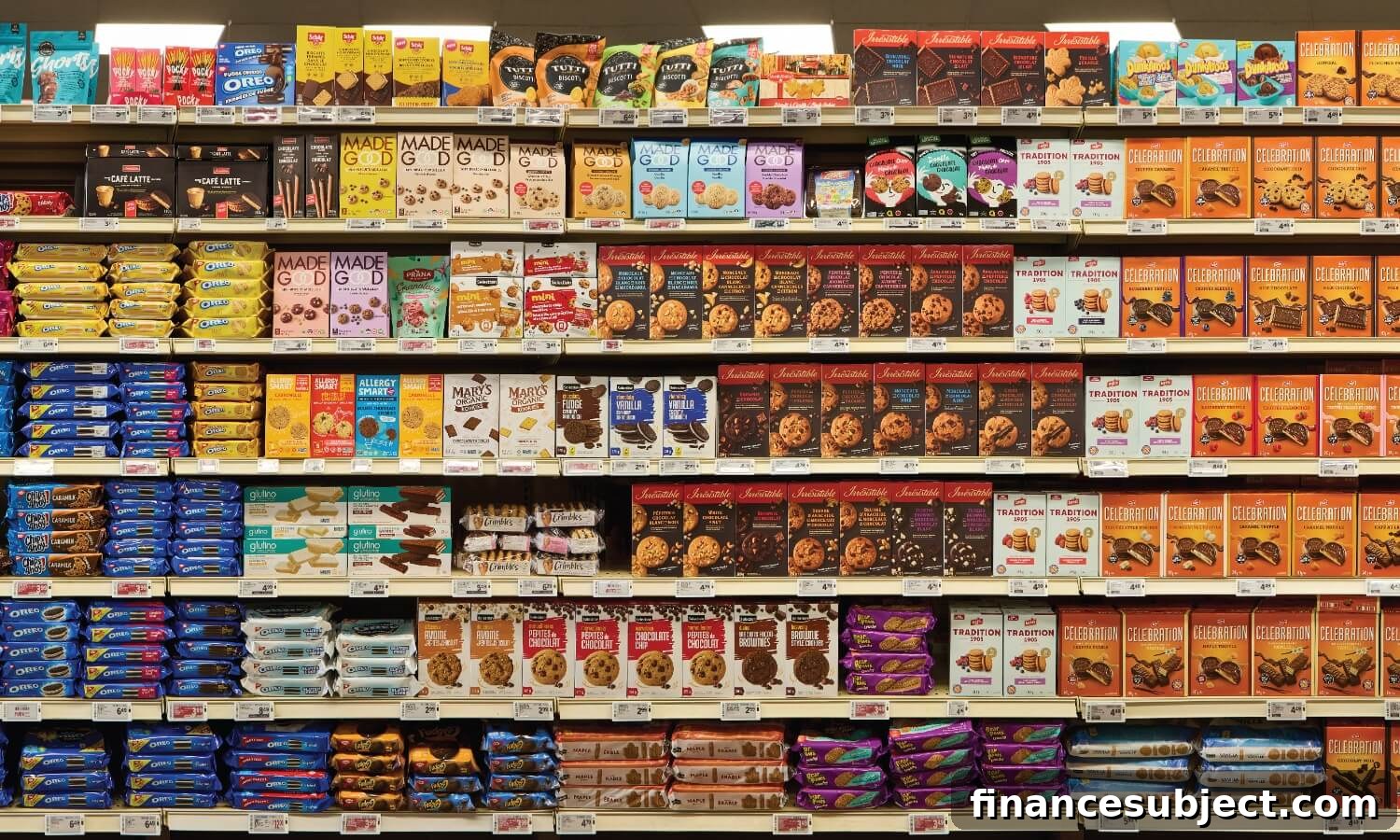
In recent years, more shoppers have been choosing private-label grocery products as a way to reduce household expenses—and that shift looks likely to persist. With renewed investment from retailers in their own brands, many consumers no longer assume store-brand items are inferior to national-name products.
Annie St-Laurent, senior director responsible for Metro’s private-label portfolio, says private brands are increasingly viewed as more than simple knockoffs. “The growth is really good in private label,” she notes as grocers expand and refine their in-house offerings.
Store brands such as Metro’s Irresistible and Selection, Loblaw’s No Name and President’s Choice, and Sobeys’ Compliments and Panache are typically priced below equivalent national-name products. That lower price, combined with improving perceptions of quality, helps explain why more shoppers are opting for private-label choices.
Grocery retailers responding with new products and more shelf space
A report from agriculture-focused cooperative bank CoBank observes that private-label brands are “having their moment.” Many consumers began shifting toward store brands as inflation pushed food prices higher and interest-rate increases tightened household budgets. Retailers have responded by broadening their private-label assortments, introducing new lines, and dedicating additional shelf space to their own brands.
Peter Chapman, founder of consulting firm SKUFood, says retailers are adding depth to private-label categories because they see real opportunity. That means not just more SKUs but a wider range of formats and price points to appeal to different shoppers.
Market research firm NielsenIQ reports that grocers are investing beyond product development—putting resources into branding and marketing for private labels. Metro, for example, is preparing to refresh its core private label, Irresistible, with a new logo, updated packaging, new flavours and a push to increase in-store visibility.
St-Laurent explains Metro’s goal is to ensure private-label products are easier for customers to find and recognize. She adds that private-label sales have been growing faster than national brands, as shoppers become more willing to try store-brand alternatives.
For Metro, private label is a strategic priority. Across the industry, retailers view their own brands not only as a source of better margins but also as a way to build customer loyalty—private labels can differentiate a store’s assortment and encourage repeat visits.
Consumer perception of private labels has improved
Many shoppers report changing habits. Christy Laverty of Burlington, Ontario, says she started buying more store-brand groceries as prices rose. While some national-name items remain non-negotiable in her household—ketchup and certain packaged meals, for example—she has switched to private-label canned vegetables, beans and dairy products to save money.
“Why spend another 50 cents on a can of kidney beans when you don’t need to?” she asks, noting she’s now willing to try the store-brand version of many products to see whether it meets her family’s needs.
Laverty adds that her assumption that private-label food meant lower quality has been challenged. “I started to kind of recognize that the store brand, private label isn’t necessarily less quality,” she says.
CoBank’s report points out that consumers’ views of store brands have improved dramatically since the last major private-label surge around the 2008 recession. That shift in perception suggests the current increase in private-label market share may have more lasting power than previous cycles.
Major grocers are responding publicly. Empire Co. Ltd., which operates Sobeys, FreshCo and Safeway among others, stated in its 2024 annual report a commitment to growing and enhancing its store-brand portfolio. Loblaw said in its 2023 report that customers’ heightened focus on value helped drive sales, thanks to the company’s strength in private labels, discount banners and targeted promotions; Loblaw even introduced a new discount banner under its No Name brand.
Industry observers expect retailers to sustain momentum through new product launches, marketing, promotions and dedicated shelf space. Chapman believes grocers will work hard to maintain private-label performance because consumers are giving those products more chances than before. The increased competition from strong private-label assortments may also push some national brands to run more frequent promotions or discounts to retain shoppers.
For price-conscious consumers, the difference can be significant. Kael Campbell of Victoria says switching to private-label products at stores like Costco, Walmart or Thrifty Foods has noticeably reduced his family’s grocery spending. “It really adds up,” he says, noting that store-brand items are often much cheaper while delivering very similar quality.
More about groceries:
- How Canadians can save money on gas, grocery, cellphone and other home bills
- CIBC Costco Mastercard review: Is it the best credit card for Costco in Canada?
- Costco and Walmart agree to sign grocery code of conduct
- Meal planning: the money-saving ingredient