

Kyle Prevost, creator of 4 Steps to a Worry-Free Retirement, Canada’s DIY retirement planning course, summarizes the week’s top financial headlines and provides practical context for Canadian investors.
Macklem signals the possibility of a soft landing
For the third consecutive month, the Bank of Canada (BoC) cut its policy interest rate by 25 basis points, bringing the key rate to 4.25%. While the cut itself was widely expected, the tone in Governor Tiff Macklem’s prepared remarks drew extra attention. Macklem said, “If we need to take a bigger step, we’re prepared to take a bigger step,” a phrase markets will scrutinize as they price potential future moves.
At the time of reporting, market pricing suggested a high probability of another 0.25% cut in October, and some economists projected that rates could fall to about 3% by next summer. Macklem described a potential “soft landing,” noting, “The runway’s in sight, but we have not landed it yet.” That captures the current shift in debate: it’s less about whether the BoC will cut rates and more about the pace and size of upcoming reductions, including the possibility of a larger 0.50% move should conditions warrant.
Rising unemployment and cooling wage growth should continue to ease price pressures in labour-intensive services. At the same time, lower variable-rate mortgage payments will relieve housing-cost inflation for many Canadians, producing a further disinflationary effect on shelter expenses.
If falling interest rates have you thinking about portfolio adjustments, consider reviewing low-risk investment options and ETF selections tailored to Canadian investors. Lower borrowing costs often shift investor appetite toward value and income-focused assets.
Will Couche-Tard expand globally?
Alimentation Couche-Tard (ATD/TSX) surprised markets with a bold bid to buy Seven & i Holdings, the parent of 7-Eleven. The proposed $38.5-billion cash offer could dramatically change ATD’s scale—from Canada’s mid-tier market cap ranks into the top echelons of global firms—if the deal were to succeed. But Seven & i rejected the offer, arguing it wasn’t in shareholders’ best interests and warning of potential U.S. antitrust hurdles.
The business case for the acquisition is clear in some respects. 7-Eleven’s operations in Japan enjoy much higher margins—reported as roughly 38%—than its international business, where margins are closer to 4%. Couche-Tard has demonstrated the ability to achieve stronger margins in fuel-heavy North American locations, suggesting room to lift returns outside Japan. For shareholders, the disparity in performance between Japan and overseas markets creates a potential case for strategic change.
Political and regulatory obstacles complicate any acquisition. Japan’s Foreign Exchange and Foreign Trade Act allows authorities to categorize companies as “core,” “non-core” or “protected.” Seven & i has reportedly sought “core” or “protected” status, which would greatly limit foreign takeover options. In the U.S., the Federal Trade Commission would assess whether a combined ATD and 7-Eleven would hold an anticompetitive share—ATD’s post-deal U.S. share was estimated around 13%—and that could prompt asset divestitures or other remedies.
Couche-Tard is nevertheless pursuing growth. The company recently closed a $1.6-billion acquisition of 270 convenience stores from Giant Eagle in the U.S., citing consolidation opportunities in a fragmented market and expressing readiness for further deals that fit strategically and financially. In its latest quarter, ATD reported adjusted earnings per share of $0.83 (slightly below forecasts) and revenue of $18.28 billion (above expectations), and shares moved modestly higher on the news.
Also read
Canada’s best dividend stocks
Can the rest of the market catch up to the Magnificent 7?
The so-called Magnificent 7—Alphabet, Amazon, Apple, Meta, Microsoft, Nvidia and Tesla—dominated returns for several years and continued to outpace many peers in early 2024. Charts tracking six-month, one-year and five-year performance highlight how concentrated market leadership became around these top tech names.
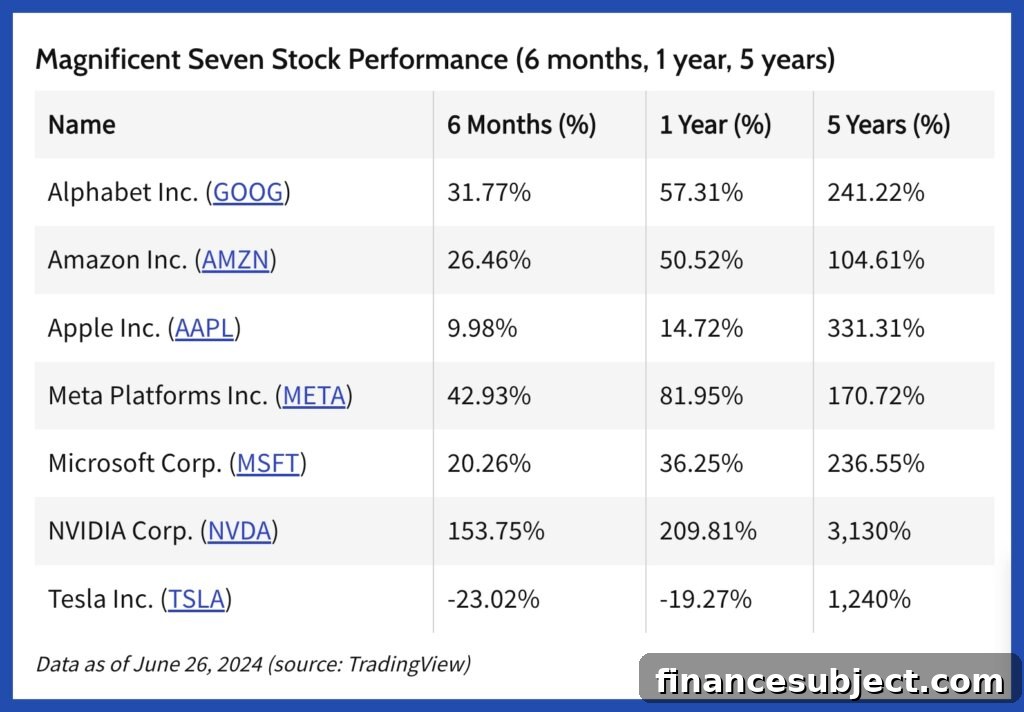
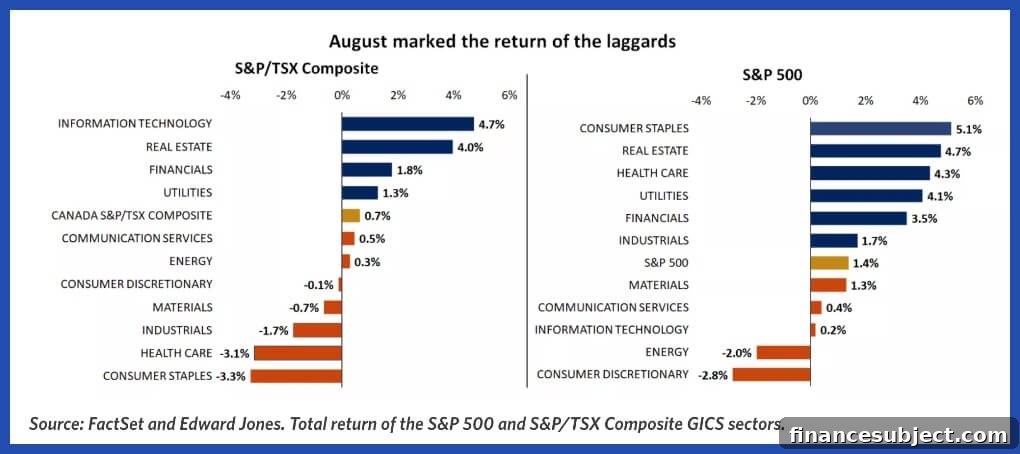
Signs suggest leadership may be broadening. Over recent weeks, returns for a broader set of sectors and indices have become more comparable to the Magnificent 7 and ETFs that track them. In August and recent months, performance across many S&P 500 sectors improved, indicating investors are redistributing capital into other areas of the market.
Despite questions about valuation levels—especially for some high-flying tech names—the fundamentals support continued gains. About 80% of S&P 500 companies exceeded analyst profit estimates for the second quarter, with aggregate earnings growth near double digits, suggesting the market’s rally is at least partly backed by stronger corporate earnings rather than speculation alone.
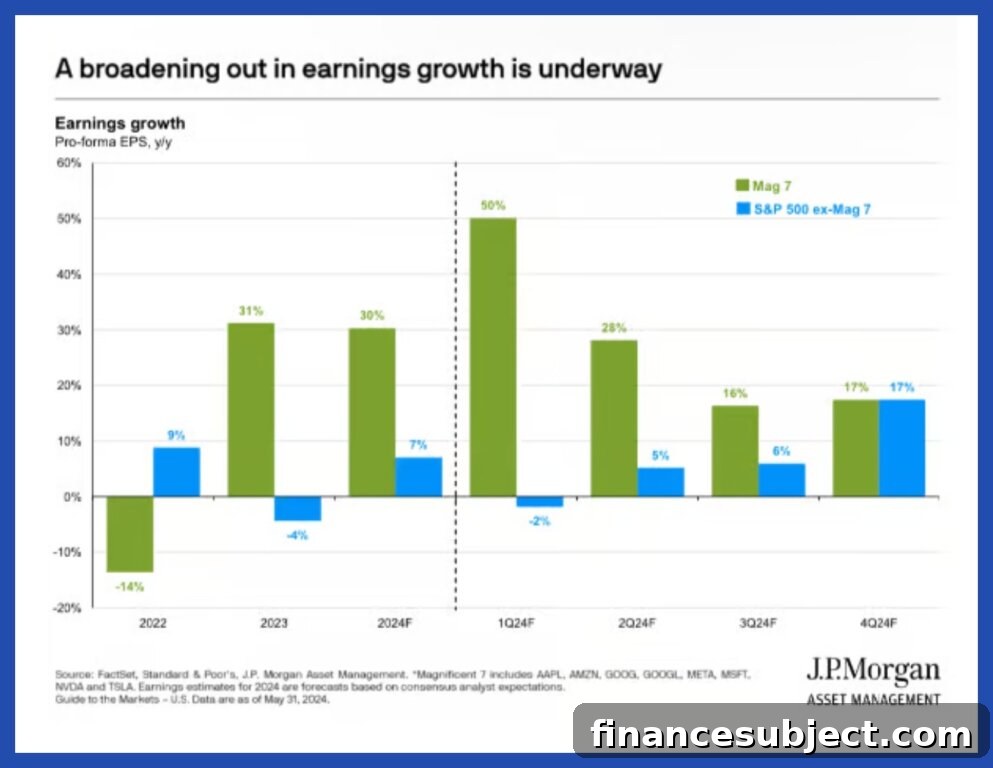
For Canadian and U.S. value investors, falling interest rates could encourage flows into more traditional market leaders and away from richly valued tech growth stocks. That rotation would help diversify leadership and could narrow performance gaps between mega-cap tech and broader indexes.
Dollar stores: Canada’s Dollarama stands out
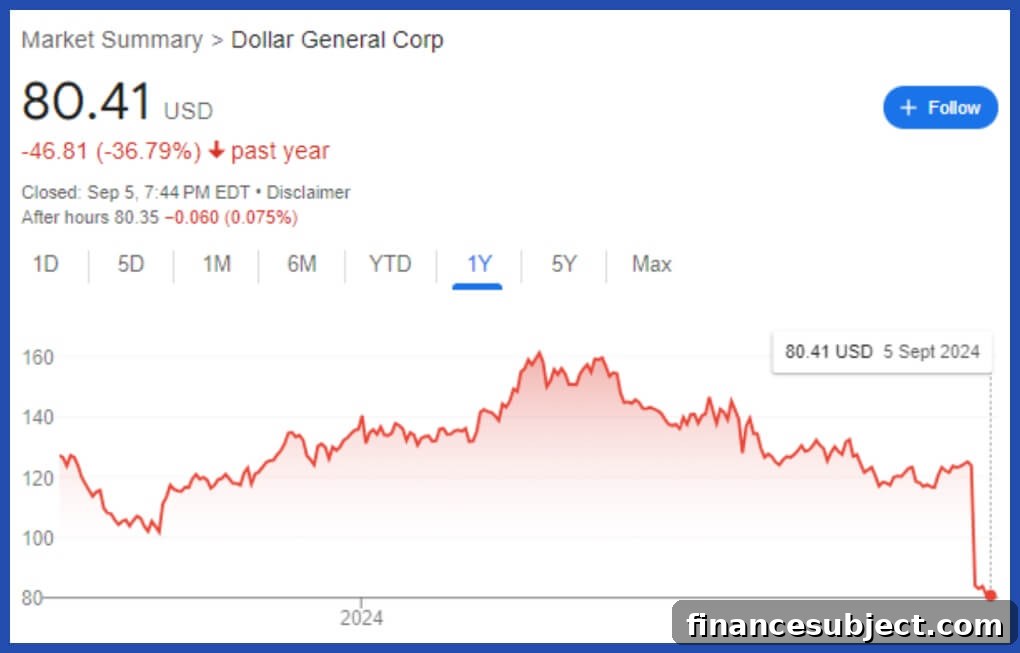
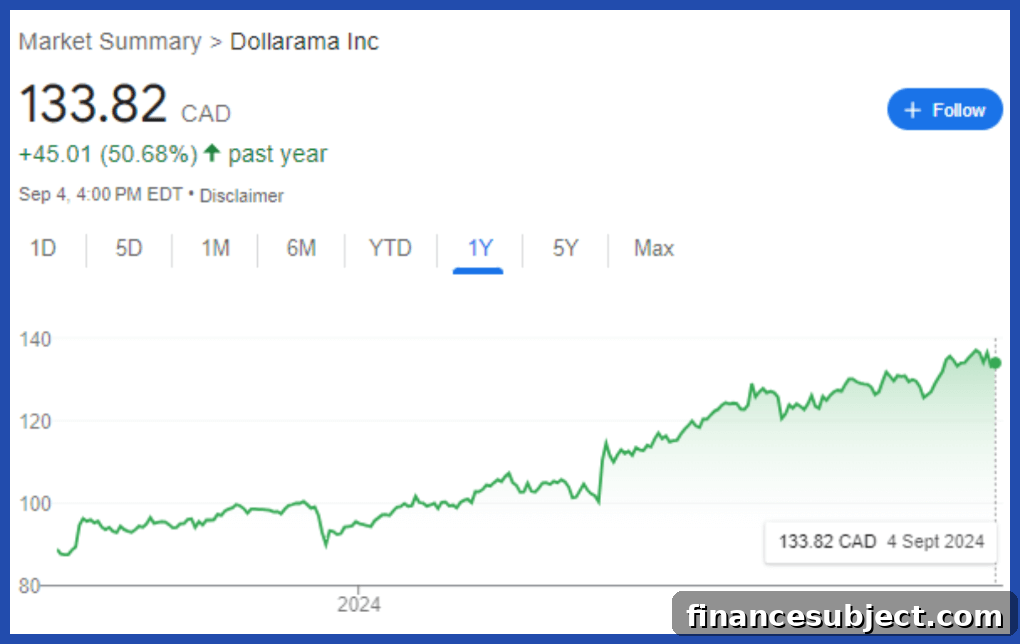
On the retail front, Canada’s Dollarama (DOL/TSX) has been outperforming its major U.S. discount peers, Dollar Tree and Dollar General. Recent results from U.S. dollar stores disappointed—Dollar Tree and Dollar General both missed analyst expectations and saw significant share-price reactions—while Dollarama has shown steady same-store sales growth and stronger margins.
U.S. dollar store earnings highlights
Figures are in U.S. dollars.
- Dollar Tree (DLTR/NASDAQ): Reported EPS of $0.67 (versus $1.04 expected) and revenue of $7.38 billion (versus $7.49 billion expected); shares dropped sharply.
- Dollar General (DG/NYSE): Reported EPS of $1.70 (versus $1.79 expected) and revenue of $10.21 billion (versus $10.37 billion expected); the share reaction followed a difficult earnings day.
Dollarama’s better relative performance appears driven by a few factors: less direct retail competition in Canada, steady demand for value-priced items among cash-strapped consumers, and strategic choices such as targeting Latin America for international expansion rather than competing head-to-head in a crowded U.S. dollar-store market.
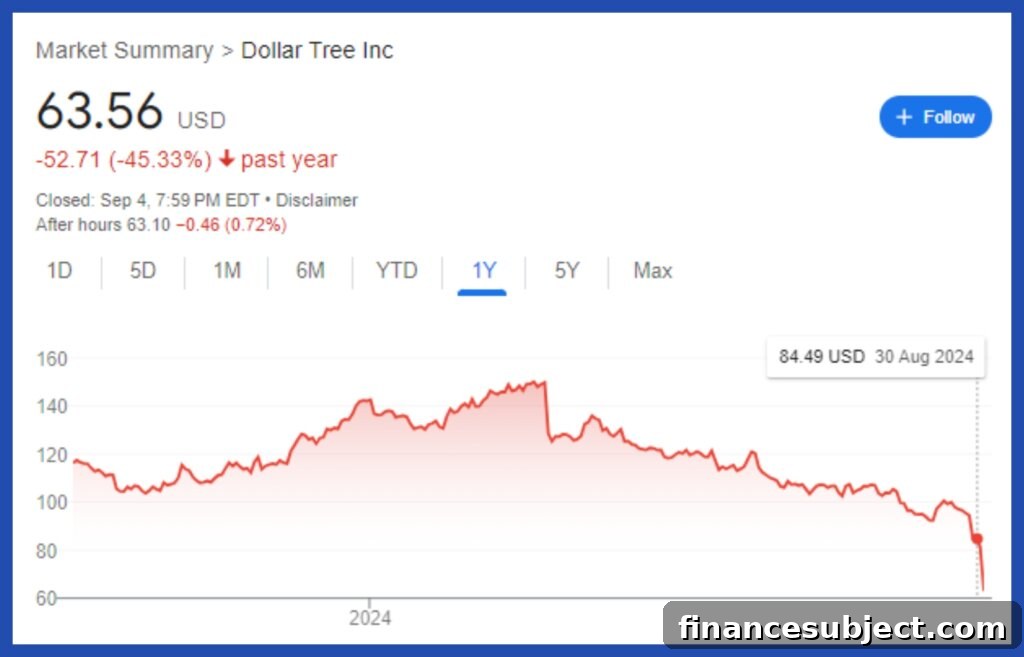
Source: Google Finance
Source: Google Finance
Source: Google Finance
Dollarama reported strong same-store sales growth in recent quarters, and with consumer behaviour in Canada and a temporary shift away from some large grocers, the chain may be benefiting from a favorable mix of lower competition and steady demand for low-cost essentials.
Also read
The best online brokers, ranked and compared
Read more about investing:
- Best ETFs in Canada
- Is VFV a good buy? What about other U.S. ETFs with even lower fees?
- Buying your first stocks in Canada
- How much is capital gains tax and other questions answered