
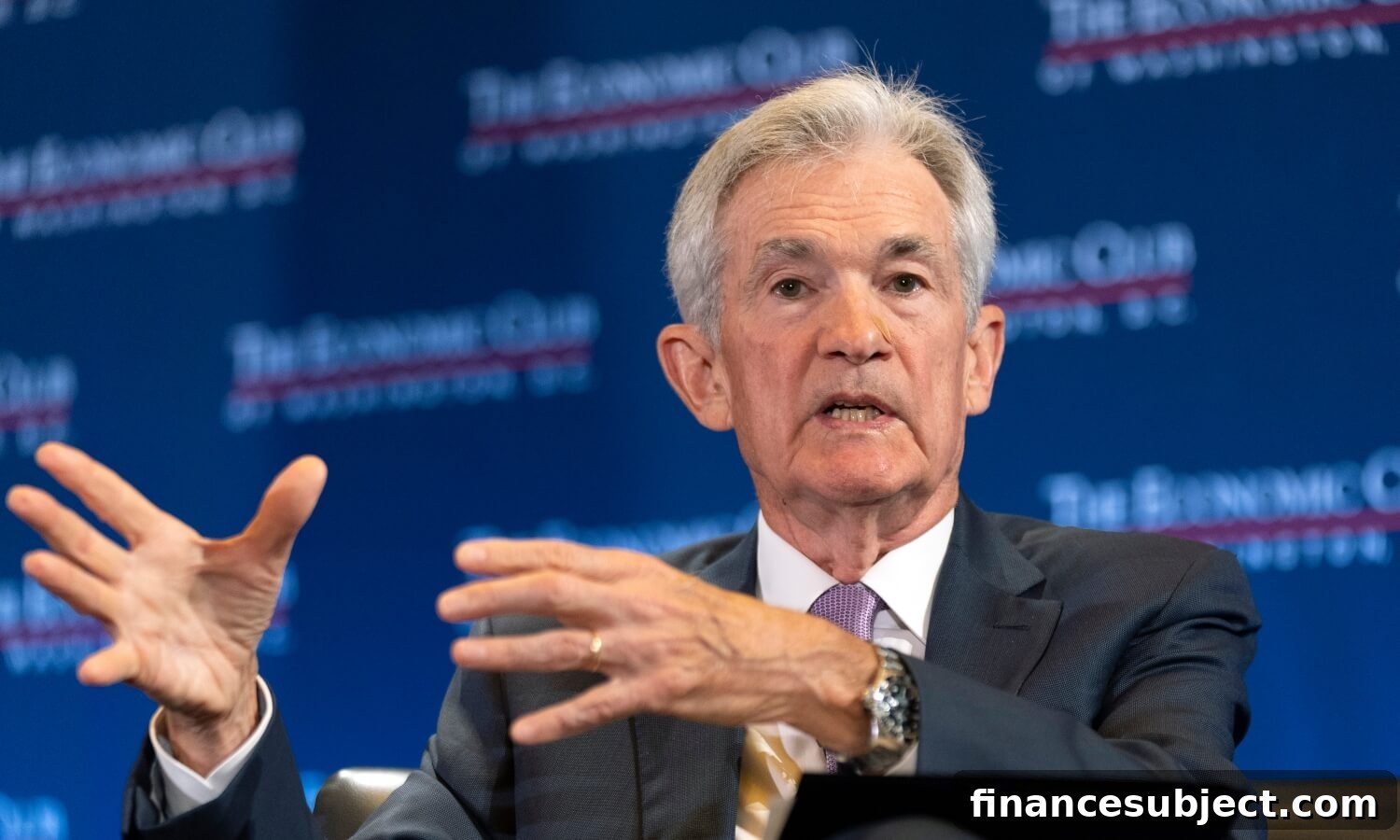
With inflation largely under control and hiring cooling, the Federal Reserve signaled it is ready to begin trimming its key interest rate from a 23-year high, Fed Chair Jerome Powell said Friday.
Powell did not set a date or specify the size of the initial cuts, but markets and economists broadly expect a modest quarter-point reduction in the benchmark federal funds rate when the Fed meets in mid-September.
Addressing central bankers and economists at the Fed’s annual Jackson Hole conference, Powell said the time had come for monetary policy to “adjust.” He added that the path is clear but that the timing and pace of cuts will be guided by incoming data, the evolving economic outlook, and the balance of risks.
Powell’s remarks suggested multiple reductions are likely, in line with market expectations, though he emphasized caution. After the sharpest price surge in four decades that strained household budgets, he said inflation now appears to be on a sustainable trajectory back toward the Fed’s 2% target.
“My confidence has grown that inflation is on a sustainable path back to 2%,” he said, underscoring the Fed’s improved assessment of price pressures.
What’s the U.S. inflation rate?
Using the Fed’s preferred inflation measure, headline inflation recently eased to 2.5%, down from a peak above 7% two years earlier and now only modestly above the central bank’s 2% objective.
Powell said that future rate reductions should be calibrated to preserve economic growth and sustain hiring, which has slowed in recent months. He stressed the Fed’s dual mandate—to promote price stability while supporting maximum sustainable employment—calling for a careful balance as policy shifts.
“We will do everything we can to support a strong labor market as we make further progress toward price stability,” Powell said, adding that there is reason to expect inflation can return to the 2% goal while keeping the labor market resilient.
Any cut in mid-September—coming less than two months before a presidential election—could spur political debate. The Fed has faced public scrutiny over the timing of rate moves in election years, but Powell reiterated that monetary policy decisions will be driven solely by economic data, not the political calendar.
He also acknowledged increased concern within the Fed about slowing job growth and a rising unemployment rate, explaining that officials are monitoring labor-market cooling even as they seek further declines in inflation.
“The cooling in labor market conditions is unmistakable,” Powell said, noting that job gains remain positive but have slowed. He made clear the Fed does not seek or welcome excessive weakening in employment.
Has the U.S. beaten inflation, then?
Powell framed the recent progress against inflation as a significant achievement: the Fed has brought down high inflation without triggering a recession or a sharp spike in unemployment—outcomes many had feared when price pressures surged.
He credited a combination of factors for this outcome, including the gradual unwinding of pandemic-era disruptions to supply chains and labor markets, along with a reduction in job vacancies that helped cool wage growth.
Powell also acknowledged earlier misjudgments. In the aftermath of the pandemic, many policymakers initially saw rising prices as transitory, expecting supply constraints to resolve quickly. Those frictions persisted longer than anticipated, and inflation remained elevated for an extended period.
“The good ship transitory was a crowded one,” Powell quipped, reflecting on how widespread that assumption once was among analysts and central banks. His remarks were directed to the economists and officials gathered at the conference.
State of the U.S. job market
Recent data have painted a mixed picture. A disappointing July jobs report showing weaker hiring and a rise in the unemployment rate to 4.3% sparked market worries about a possible recession and prompted speculation about larger Fed cuts. Some economists floated the idea of a half-point reduction.
But subsequent reports—highlighting a further easing of inflation and healthy retail sales—reassured markets. Traders moved to price in quarter-point rate cuts in September and November, followed by additional easing later in the year, and mortgage rates began drifting lower in anticipation.
Federal Reserve officials have said a larger cut would become more likely only if labor-market conditions deteriorate further, reinforcing that policy decisions will remain data-dependent.
Newsletter
Get free MoneySense financial tips, news & advice in your inbox.
Read more about the U.S. economy:
- What is the inflation rate in the U.S?
- Making sense of the markets this week: August 18, 2024
- Making sense of the markets this week: August 25, 2024