

Kyle Prevost, creator of 4 Steps to a Worry-Free Retirement, Canada’s DIY retirement planning course, summarizes the week’s financial headlines and explains what they mean for Canadian investors.
Are U.S. rate cuts on the way?
Canada’s interest-rate decisions are largely guided by domestic inflation, but U.S. inflation and monetary policy also matter. The Canadian dollar’s value and cross-border borrowing costs often move in step with U.S. policy, so persistent inflation south of the border could delay how quickly the Bank of Canada (BoC) can ease rates.
“The Canadian and American economies are very closely intertwined, especially when it comes to the cost of borrowing. Historically the BoC and the Fed have mirrored each other in terms of monetary policy (the act of cutting, holding, or hiking their benchmark interest rates).”
—Penelope Graham, mortgage expert
Markets were mostly flat after the U.S. Bureau of Labor Statistics reported that headline CPI fell 0.1% month over month and the 12-month inflation rate sits at 3.0%.
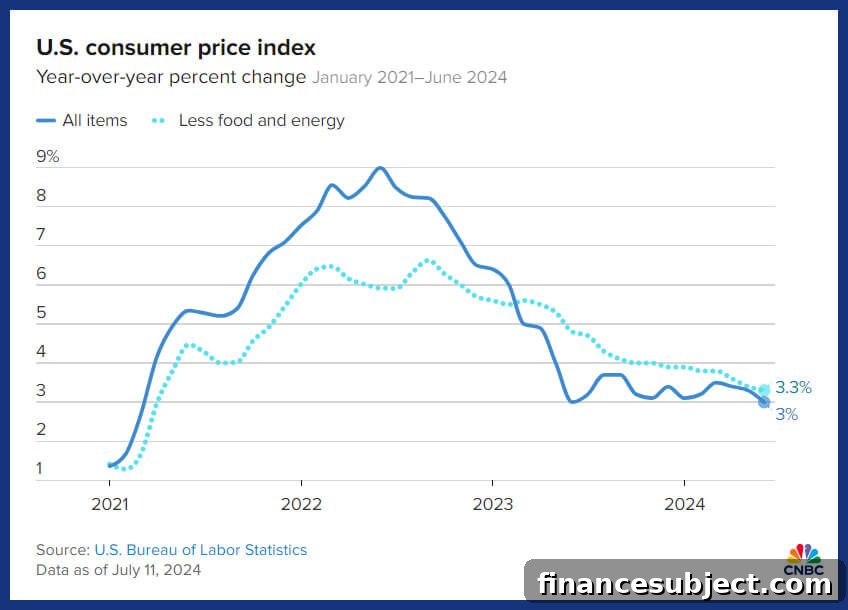
U.S. inflation highlights
The latest CPI report included these key points:
- Core CPI (excluding food and energy) rose 0.1% for the month and is up 3.3% year over year.
- Gasoline prices fell 3.8%.
- Food prices rose 0.2%.
- Shelter costs increased 0.2%.
- Used vehicle prices declined 1.5%.
- Real hourly earnings rose 0.4% for the month.
With inflation trending down and Federal Reserve Chair Jerome Powell warning about the risks of keeping rates too high for too long, markets now expect rate cuts later this year. The CME Group FedWatch tool, which interprets futures pricing, shows a strong likelihood of at least two Fed cuts before the end of 2024 and a meaningful probability of three cuts by year-end. That would be welcome news for indebted U.S. households—and also for Canadians hoping to see lower interest costs at home sooner rather than later.
—Kyle Prevost
Pepsi’s revenues taste flat
PepsiCo’s recent quarterly report disappointed investors with tepid revenue growth. The company is far more than a soda maker: it’s a global food and beverage conglomerate that includes Frito-Lay and Quaker as well as international drink brands and packaged foods.
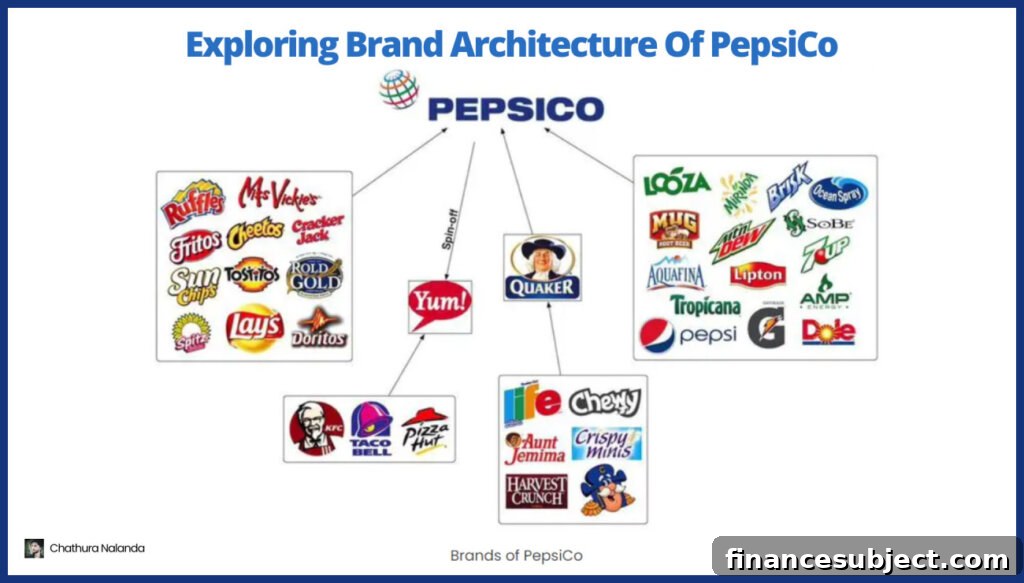
Pepsi earnings highlights
All figures U.S. dollars.
- PepsiCo (PEP/NASDAQ): EPS $2.28 (versus $2.16 expected) on revenue of $22.50 billion (slightly below the $22.57 billion estimate); shares fell nearly 2% in early trading.
Management pointed to softer demand in North America, where consumers are becoming more price-sensitive after years of price increases. Low-income shoppers in particular are trading down to private-label alternatives. Rising agricultural commodity costs also squeezed margins, and Quaker Foods North America saw a steep volume drop following earlier product recalls.
Sales in North America fell—Frito-Lay volumes were down roughly 4% and beverages declined about 3% year over year—but international sales grew by 7%. That balance helped offset some of the weakness at home and kept global organic revenue growth in positive territory. Analysts have also suggested newer weight-loss drugs could dampen snack demand in the future, which is another risk for companies reliant on packaged foods.
The broader takeaway: more consumers are acting on budget pressures at the checkout, and food-and-beverage firms will need to respond with sharper pricing strategies, promotions or supply-chain efficiencies to regain market share.
—K.P.
Delta’s earnings hit a little turbulence
Delta Air Lines reported results that were in line with expectations, but management lowered future revenue guidance, which weighed on the stock. Delta’s performance is closely watched as a gauge for wider travel demand and airline profitability.
Delta earnings highlights
Figures in U.S. dollars.
- Delta (DAL/NYSE): EPS $2.36 in the quarter (in line with estimates) on $15.41 billion of revenue (just shy of the $15.45 billion expected).
Revenue rose about 5.4% year over year, but net income fell nearly 30% due to higher operating costs. Delta said domestic discounting pressures and competitive dynamics affected yields. Notably, premium cabin fares rose sharply while coach fares edged up only marginally—evidence that higher-end travel remains resilient while mass-market price sensitivity is growing.
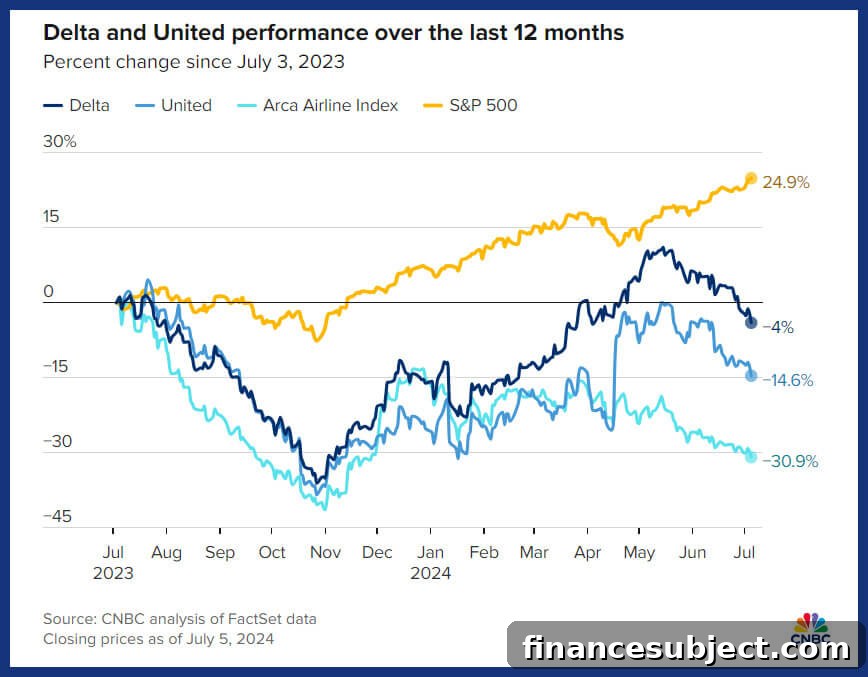
The stock fell on the guidance cut, underscoring how sensitive airline valuations are to forward-looking traffic and revenue assumptions. For Canadian travellers and investors, it’s a reminder that airfare dynamics can shift rapidly as competition and demand patterns change.
—K.P.
Amazon turns 30
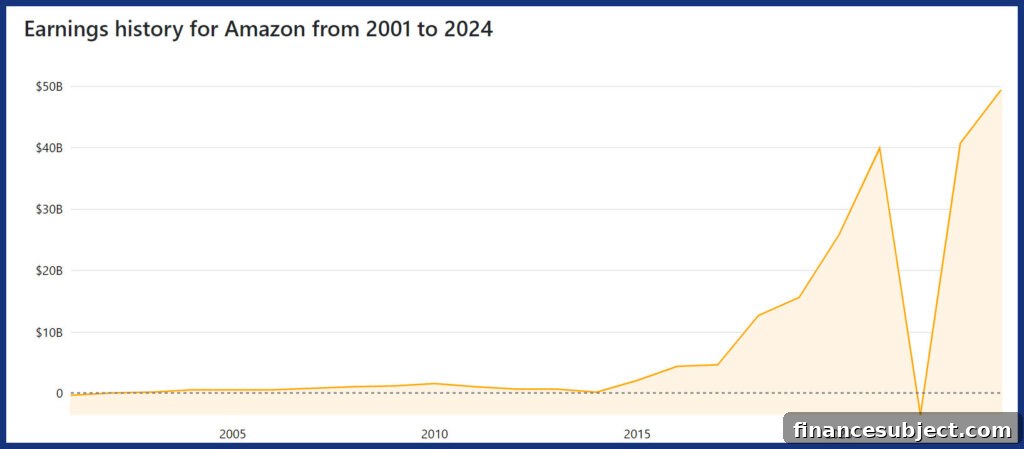
Amazon celebrates its 30th anniversary this year, having grown from an online bookstore into one of the world’s largest technology and retail businesses. The company now generates revenue from e-commerce, cloud computing, advertising and logistics, making it a dominant, diversified platform.
“Amazon is not too big to fail. In fact, I predict one day Amazon will fail. Amazon will go bankrupt. If you look at large companies, their lifespans tend to be 30-plus years, not a hundred-plus years.”
–Jeff Bezos
Prime details on Amazon
Key facts about Amazon (AMZN/Nasdaq):
- Amazon ranks among the world’s largest companies, with a market value measured in the trillions.
- Projected revenue for 2024 approaches the high hundreds of billions of dollars.
- The company employs roughly 1.5 million people in the U.S., making it one of the country’s largest private employers.
- Amazon made its first sale in 1995 and expanded rapidly into retail, cloud services and advertising.
- Third-party sellers provide a substantial portion of Amazon’s catalog and revenue.
- Amazon’s growth over three decades has transformed it from a niche online bookseller to a core part of many consumers’ daily lives.

For long-term investors, Amazon’s IPO in May 1997 is a striking example of compounding returns: a modest initial investment at the IPO would have grown astronomically after stock splits and sustained share-price gains. What Amazon looks like in another 30 years is uncertain, but the company’s scale and diversification make it a major force in retail, cloud computing and digital advertising today.
—K.P.
Mixed results for U.S. bank giants
Early earnings from major U.S. banks showed divergent outcomes. JPMorgan Chase posted a strong quarter with rising investment-banking fees and an accounting gain that boosted profits. Wells Fargo reported weaker profit results, pressuring its shares, while Citigroup beat profit expectations largely on strength in investment banking—even though its stock slipped after the report. These mixed signals suggest the banking sector remains finely balanced between capital markets strength and pressure on traditional lending margins.
—Jonathan Chevreau
Read more about investing:
- Best ETFs in Canada
- Maple Leaf to spin off a publicly traded company
- Buying your first stocks in Canada
- How much is capital gains tax and other questions answered
- Will the AI “gold rush” last?