

Kyle Prevost, creator of 4 Steps to a Worry-Free Retirement, Canada’s DIY retirement planning course, shares financial headlines and offers context for Canadian investors.
Nvidia continues to dominate
Artificial intelligence chip maker Nvidia saw its shares surge after another exceptional quarterly earnings report. The company’s results reinforced its rapid transition from a video-game graphics leader to a dominant supplier of AI hardware for data centres and enterprise customers.
Nvidia’s earnings report highlights
All numbers in this section are in U.S. dollars.
• Nvidia (NVDA/NASDAQ): Earnings per share of $5.16 (consensus was $4.64) and revenue of $22.10 billion (consensus $20.62 billion).
The growth story for this company is extraordinary. With its latest share-price rise, Nvidia reclaimed its spot among the world’s most valuable companies. Its market capitalization now dwarfs many long-established firms while its revenue base remains much smaller than some of those peers, illustrating the market’s heavy premium for future AI-driven profit expectations.
“Fundamentally, the conditions are excellent for continued growth.”
– Jensen Huang, Nvidia CEO
In the company release, Nvidia cited strong demand across enterprise software, consumer internet applications and multiple industry verticals including automotive, financial services and health care. While some commentators call the stock an AI bubble and note its high price-to-earnings ratio (around 89x), the pace of revenue and profit growth is the main argument for investors who justify the valuation.
Key takeaways from Nvidia’s quarterly results include:
- Net income rose dramatically year-over-year.
- Data centre sales jumped substantially to $18.40 billion.
- Gaming GPU revenue increased to $2.87 billion, reflecting continued consumer demand.
- Automotive chip sales declined modestly to $281 million.
- Crypto and other businesses grew to $90 million.
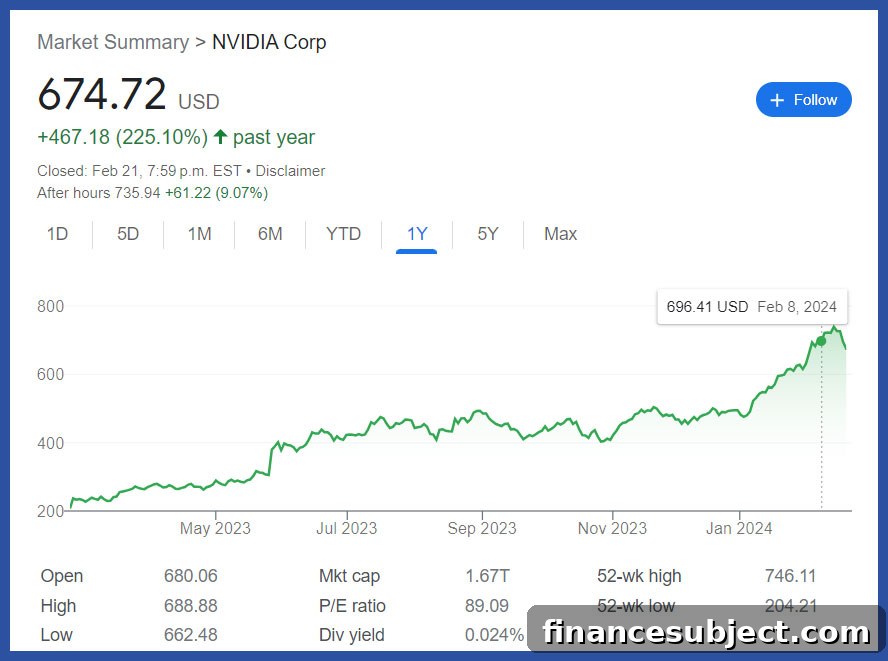
Nvidia’s impressive results sent the stock higher immediately after the report, underscoring investor enthusiasm for AI-related growth and the company’s central role in that market.
Walmart and Home Depot: Solid Q4 Earnings
This week two of the largest U.S. retailers released quarterly results that largely met or beat expectations, showing resilience in consumer spending and e-commerce adoption.
Retail earnings highlights
All numbers below are in U.S. dollars.
• Walmart (WMT/NYSE): Earnings per share $1.80 (versus $1.65 expected). Revenue $173.39 billion (versus $170.71 billion expected).
• Home Depot (HD/NYSE): Earnings per share $2.82 (versus $2.77 expected). Revenue $34.79 billion (versus $34.64 billion expected).
Walmart continues to demonstrate strong performance across its core business. Quarterly revenue grew 6% and e-commerce sales surged by a significant amount, reflecting ongoing shifts toward online shopping. Shareholders were also encouraged by a dividend increase.
Walmart announced a strategic acquisition of a television manufacturer for $2.3 billion, a move intended to boost its retail and advertising capabilities by improving access to customer viewing and purchase data. The acquisition aligns with Walmart’s broader effort to strengthen its private-label and media businesses, leveraging its scale to drive future sales events.
“Our market is on its way back to normal demand conditions. We’re not quite there yet, but the pressures we saw in 2023 are receding.”
— Richard McPhail, Walmart CFO
Home Depot reported a modest year-over-year sales decline of about 3% compared with the same quarter in the prior year, but that result was better than analysts’ more pessimistic expectations given high interest rates and slower housing activity.
Canadian earnings: who needs profits anyway?
Canadian corporate earnings this week produced mixed market reactions that illustrate how stock prices often reflect forward expectations rather than just the previous quarter’s numbers.
Canadian earnings highlights
Note: Nutrien reports in U.S. dollars and trades on the New York Stock Exchange as well as the TSX.
- Suncor Energy Inc. (SU/TSX): Earnings per share $1.26 (versus $1.07 predicted). Revenue $14.14 billion (versus $12.69 billion predicted).
- Nutrien (NTR/TSX, NYSE): Earnings per share USD $0.37 (versus $0.65 predicted). Revenue USD $5.40 billion (versus $5.20 billion predicted).
- Loblaw (L/TSX): Earnings per share $2.00 (versus $1.90 predicted). Revenue $14.53 billion (in line with expectations).
Investors often react to guidance and outlook, not only past results. That explains why Nutrien’s shares rose despite a miss on earnings—markets appear to be focused on future potash demand prospects—while Suncor’s stock traded lower at times even after a strong report because oil price and margin outlooks remain uncertain.
Nutrien highlighted lower potash prices compared with a year earlier, but management noted potential for price recovery and ongoing logistical challenges in some shipping routes that could support prices. Suncor set a new oilsands production record while reporting pressure on profit margins from weaker oil prices, and the company announced board leadership changes.
Interesting CPI data
Statistics Canada released January’s consumer price index (CPI) this week, and headline inflation came in lower than many economists expected. That softer reading prompted a notable decline in the five-year bond yield, which is closely watched by mortgage lenders and can influence five-year fixed mortgage pricing.
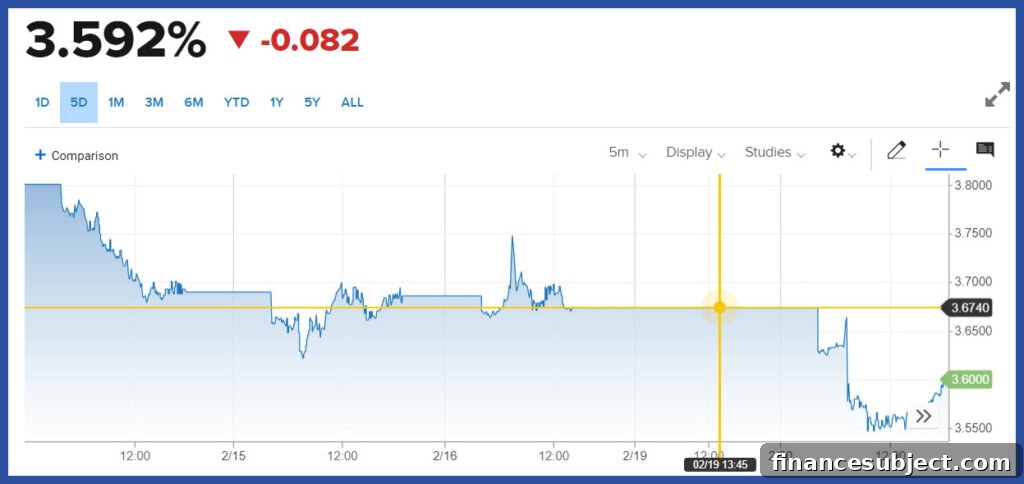
Key takeaways from the January CPI report include:
- Gasoline prices fell by about 4%.
- Mortgage interest costs remained the largest contributor to inflation, rising substantially year-over-year.
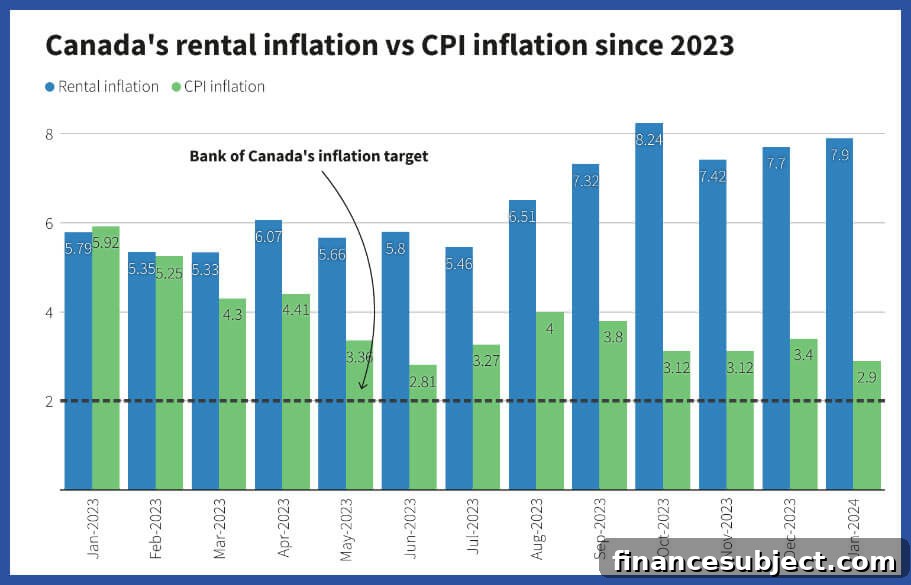
- Rent increased by close to 8% on an annual basis.
- Grocery prices rose by roughly 3.4%.
- Airline fares fell by around 14%.
- Clothing and footwear prices declined modestly.
The Bank of Canada’s preferred core measure (CPI-trim) remains above the 2% target, illustrating that while headline inflation eased, underlying inflationary pressures persist. That divergence highlights a practical problem for policymakers: much of the inflationary pressure comes from shelter-related costs, which the central bank cannot directly target without broader economic consequences.
Broadly speaking, Canadian inflation now looks like two separate trends: housing-related costs on one hand and most other consumer goods and services on the other. That split complicates the Bank of Canada’s decisions. It can either hold rates higher to cool housing demand at the risk of slowing the broader economy, or lower rates and risk reigniting housing price inflation and weakening its credibility as a defender of low inflation.
Without meaningful increases in housing supply, policymakers face a difficult trade-off. Structural fixes to housing availability would help take pressure off shelter costs, but such solutions require coordinated policy and time to implement.
Read more about investing:
- How might inflation impact your retirement plans?
- What is a cashable GIC?
- Will GIC rates keep going up in 2024?