

This week, Cut the Crap Investing founder Dale Roberts reviews the latest financial headlines and provides context for Canadian investors.
Is it a bear trap or a long-term bull market?
The market story over the past months has largely been about interest rates moving in slow motion. Consumers are eager to spend on experiences—travel, dining and entertainment—after years of restrictions, and that “revenge spending” is helping markets rally. Are these trends merely a short-term bounce or the start of a sustained bull market?
On my blog I laid out recent market developments. In early June I wrote that “the recession can wait,” noting that consumers and employers hadn’t yet behaved as if a recession were imminent. Economists and market commentators have repeatedly pushed out recession calls as data evolved.
Last week some analysts declared a new bull market in the U.S. The year-to-date returns have been strong, and historically strong early-year returns sometimes lead to solid returns over the next 6–12 months. As I noted previously, after rallying roughly 20% from lows, the S&P 500 has typically delivered mid-to-high single-digit returns over the subsequent six months and larger gains over the next year.
Still, there’s debate: is this the beginning of a long-term bull market or a bear-market trap? Lance Roberts of RIA Advisors argues it’s different this time. The truth is we won’t know whether a lasting bull run has begun until more time passes. Conflicting signals persist across economic and market data.
Charles Schwab’s Market Perspective summarized the divergence well: leading economic indicators point toward weakness while the S&P 500 has climbed, manufacturing remains soft while services are resilient, and central bankers have paused rate hikes but left the door open for more. Europe, for example, is experiencing recessionary conditions while some markets still trade like a bull market. Clarity is elusive; there are encouraging signs, but also real risks.
Investors holding cash while trying to time the market may find dollar-cost averaging a practical way to gradually get invested over the next year or two. Remove the guesswork and the emotional volatility—focus on a plan. Inflation remains the dominant macro force. Parts of inflation appear sticky, and central banks including the U.S. Federal Reserve and the Bank of Canada will be cautious about engineering a deep recession to force inflation back to 2%.
“I’ll take ‘Things Central Bankers Don’t Want Me To Say’ for $800, Alex.” — Frances Donald, Global Chief Economist, Manulife Investment Management (tweet, June 21, 2023)
My view is that inflation could settle in the 3%–4% range given wage pressures, de-globalization and the transition to cleaner energy—each of which has inflationary implications. Yet inflation is notoriously unpredictable, and past stagflationary episodes show large swings are possible. That uncertainty is what keeps central bankers vigilant.
High valuations usually lead to poor returns
We can’t time markets, but we can choose what we buy. Value-oriented investors focus on reasonable valuations with some growth. In mid‑2023 U.S. stocks look expensive by historical standards, and that elevated valuation is concentrated among a handful of mega-cap names driving much of the index gains.
The cyclically adjusted price-to-earnings (CAPE) ratio for the S&P 500 helps frame expected real returns over longer horizons. While we’re not at dot-com extremes today, current CAPE levels suggest muted long-term returns relative to cheaper historical periods. Forward metrics like the PEG ratio also show investors are paying up for growth.
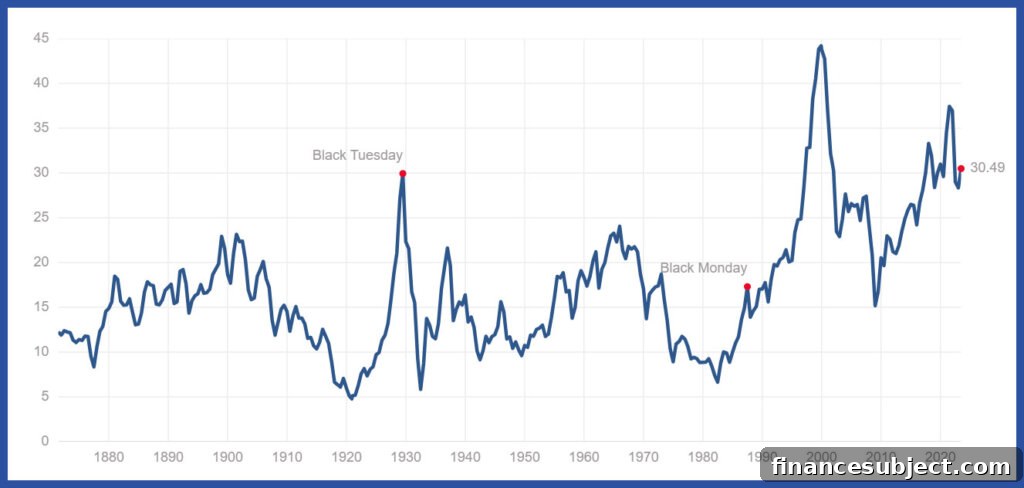
Price-to-sales and other valuation measures for the largest growth names have risen dramatically. For example, certain semiconductor and AI-related leaders are trading at very high multiples—ratios that leave little margin for error if growth slows.
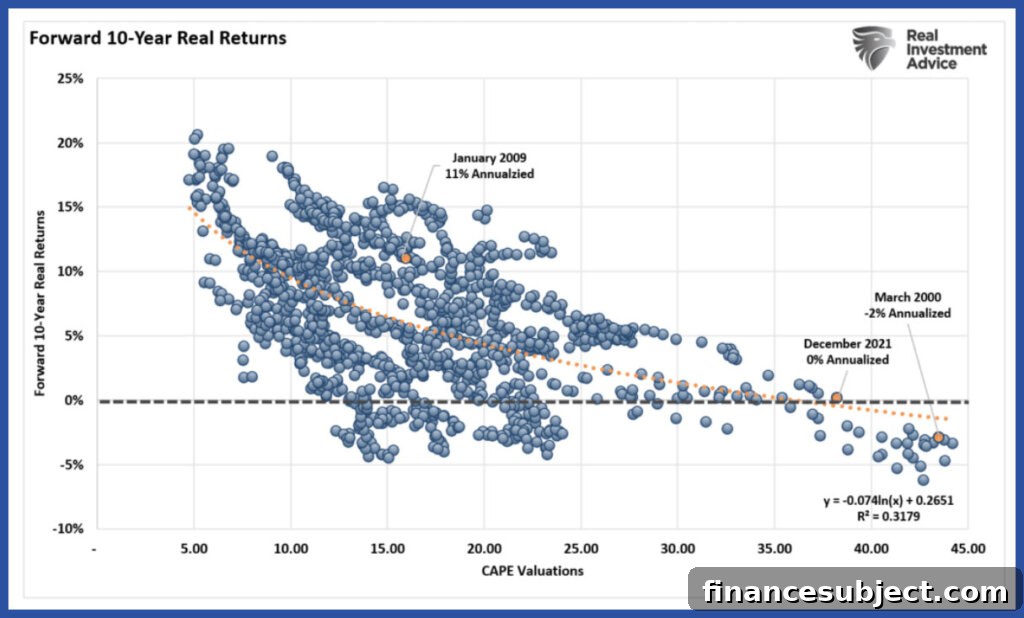
Personally, in semi-retirement I favour cheaper stocks and markets with more reasonable valuations. I avoid what I view as extreme valuations when possible. Recently I trimmed winners, including a partial sale of Microsoft in a registered retirement account, and set a higher limit to capture more gains if the rally continues.
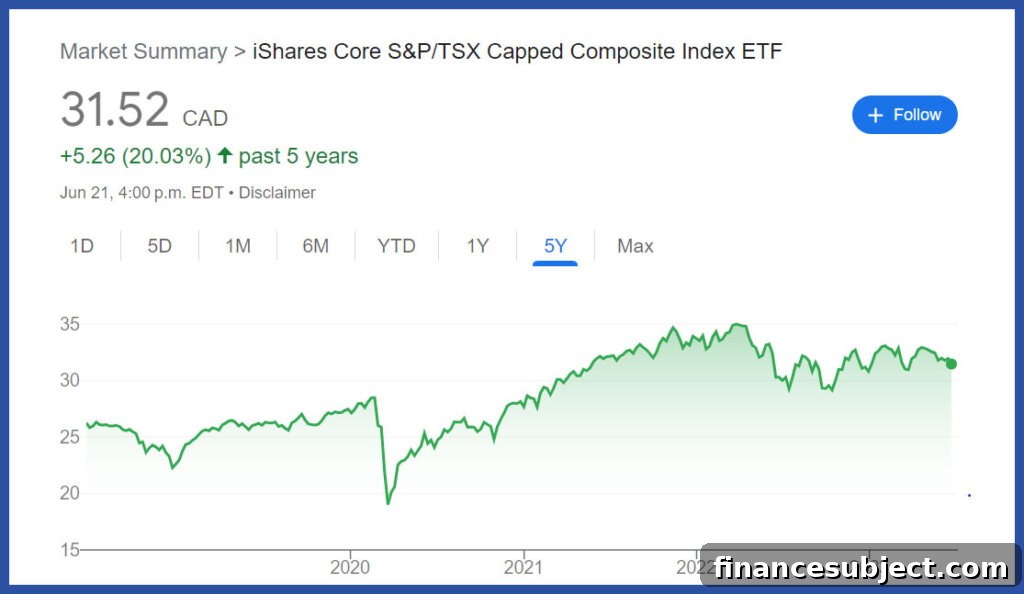
If you’re uncomfortable with the S&P 500’s concentration, consider the equal-weight S&P 500 (RSP) or value and high-dividend ETFs such as Vanguard’s VYM. Many investors also look outside the U.S.—international and emerging markets can offer more attractive valuations. Canadian equities, for example, are trading below their long-run price-to-earnings norms and often provide solid dividend yields.
Earnings from FedEx and Empire
Earnings highlights
- FedEx (FDX/NYSE): Revenue of USD 21.9B (-10.2% year-over-year) missed by about $760 million; non-GAAP EPS $4.94 (beat estimates by $0.07).
- Empire Co (EMP.A/TSX): Reported net earnings of CAD 182.9M, or $0.72 per share; dividend increased by 10.6%.
- Metro (MRU/TSX): Second-quarter non-GAAP EPS of $0.96 and revenue of CAD 4.55B (up 6.6% year-over-year).
FedEx reported weaker revenue and lowered its guidance as demand softened, though cost-cutting actions partially offset pressure. Management flagged continued demand weakness and cost inflation while noting some U.S. domestic package yield improvement. For full-year 2024, FedEx expects flat to low-single-digit revenue growth.
Several measures point to softer goods movement across the economy: truck tonnage and North American rail traffic have shown signs of decline. Consumers appear to be shifting spending toward services and experiences rather than goods—an early signal that higher borrowing costs may be restraining goods consumption.
“May marked the 14th consecutive monthly contraction for the Leading Economic Index (LEI), a streak historically seen in recessions such as those beginning in 1973 and 2007.” — Conference Board data cited by market commentators
On the Canadian front, Empire Company (parent of Sobeys) reported solid quarterly results despite a slight revenue decline versus last year’s quarter (which included an extra week). Same-store sales rose, and the company raised its dividend. Metro also posted strong results: food same-store sales rose 5.8% and pharmacy sales climbed 7.3%. Grocery retailers continue to act as reasonable inflation hedges for portfolios.
What’s up with bitcoin ETFs?
Crypto is back on many radars after BlackRock and other large asset managers filed documents for spot bitcoin exchange-traded products that would hold actual bitcoin. The prospect of major asset managers providing spot bitcoin products is bullish for demand, and Bitcoin’s price briefly crossed USD 30,000.
Some issuers are structuring their offerings as trusts rather than traditional ETFs, but the practical effect—additional institutional demand for bitcoin—remains similar. Canada was an early adopter of bitcoin ETFs, and the renewed U.S. interest is notable.
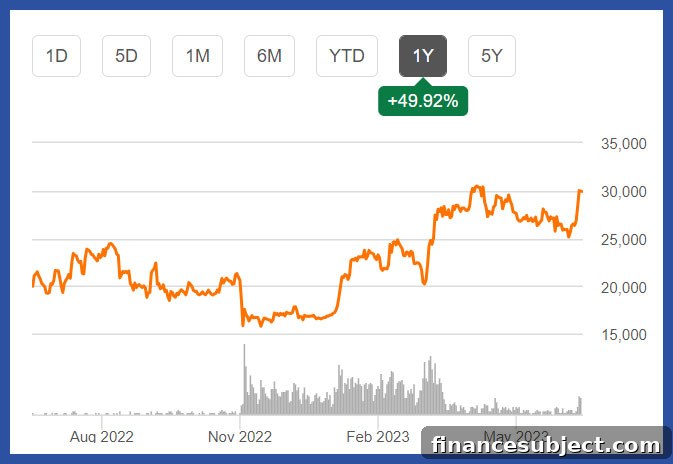
“The business models behind the vast majority of crypto tokens […] are ‘fraudcoins’ built solely on the ability to pump and dump them to the retail public.”
Bitcoin remains an extremely volatile asset class and faces political and regulatory scrutiny. Central banks are also exploring digital currencies, which changes the broader payments landscape. For investors who like crypto exposure, many recommend a small allocation—typically 2%–3% of a portfolio—while some see 5% as too aggressive. I maintain modest positions in bitcoin within registered accounts and continue to add to bitcoin and ethereum in tax-advantaged accounts over time.