

If rising living costs in Canada have left you facing growing debt, you are far from alone. Whether it’s student loans, a line of credit, a mortgage or credit card balances, few Canadians are completely debt-free. The average Canadian owes $21,183 in consumer debt (excluding mortgages), according to a December 2022 report from Equifax.
If you have multiple debts, it can be hard to know which to tackle first or which repayment strategy will work best. Below we explain how to calculate your total personal debt, how to use debt calculators to set a realistic plan, and three proven strategies to pay down what you owe.
How to calculate your debt
Knowing the full picture of your obligations is the first step to getting out of debt. Start by listing every outstanding balance: credit cards, lines of credit, personal loans, student loans and any other consumer debt. For each item, record the current balance and the annual interest rate.
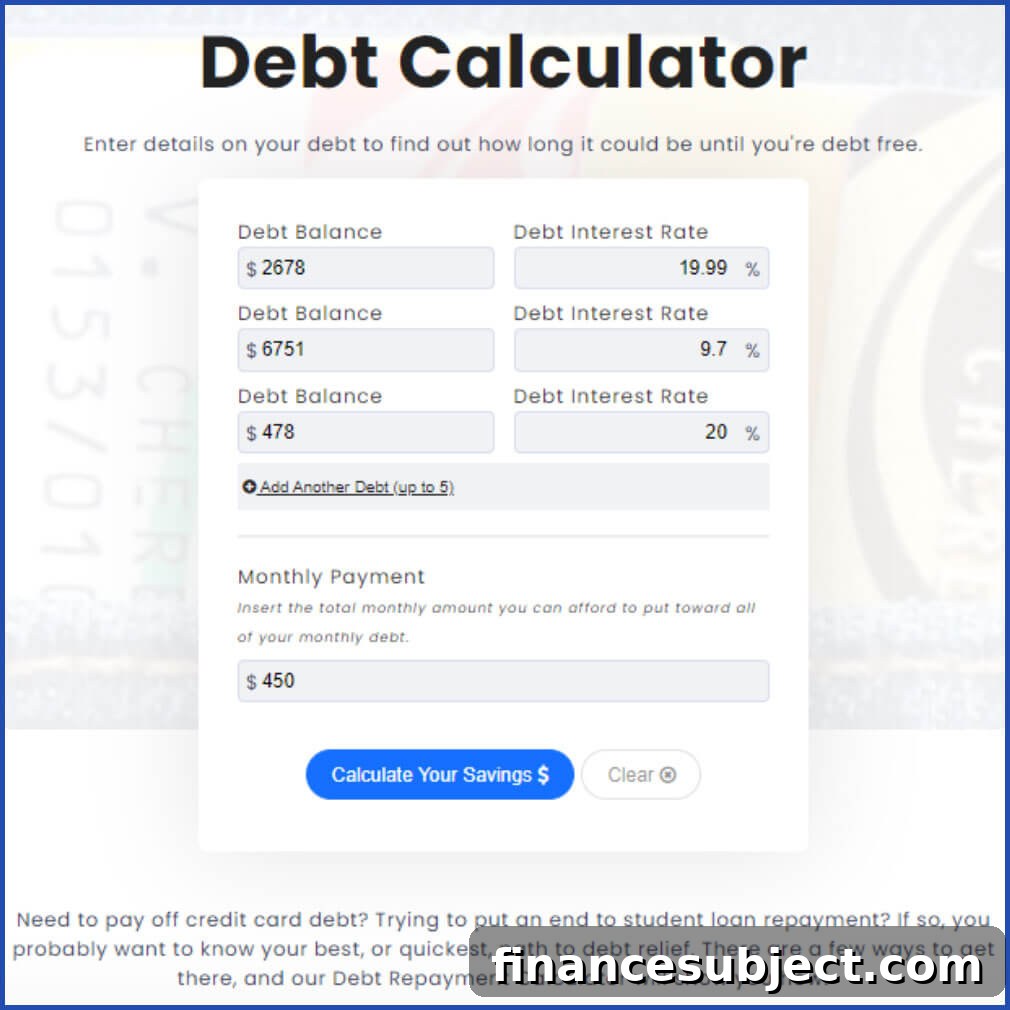
A debt calculator makes it simpler to estimate how long repayment will take under different scenarios. Enter each debt’s balance and interest rate into the tool, along with the total amount you can afford to pay toward debt each month. Many calculators let you simulate multiple debts and will estimate how long it will take to become debt-free based on those inputs.
Using a calculator helps in several ways:
- It converts multiple balances and rates into a single timeline so you can see the impact of your payments.
- It shows how increasing monthly payments shortens the payoff period and reduces interest costs.
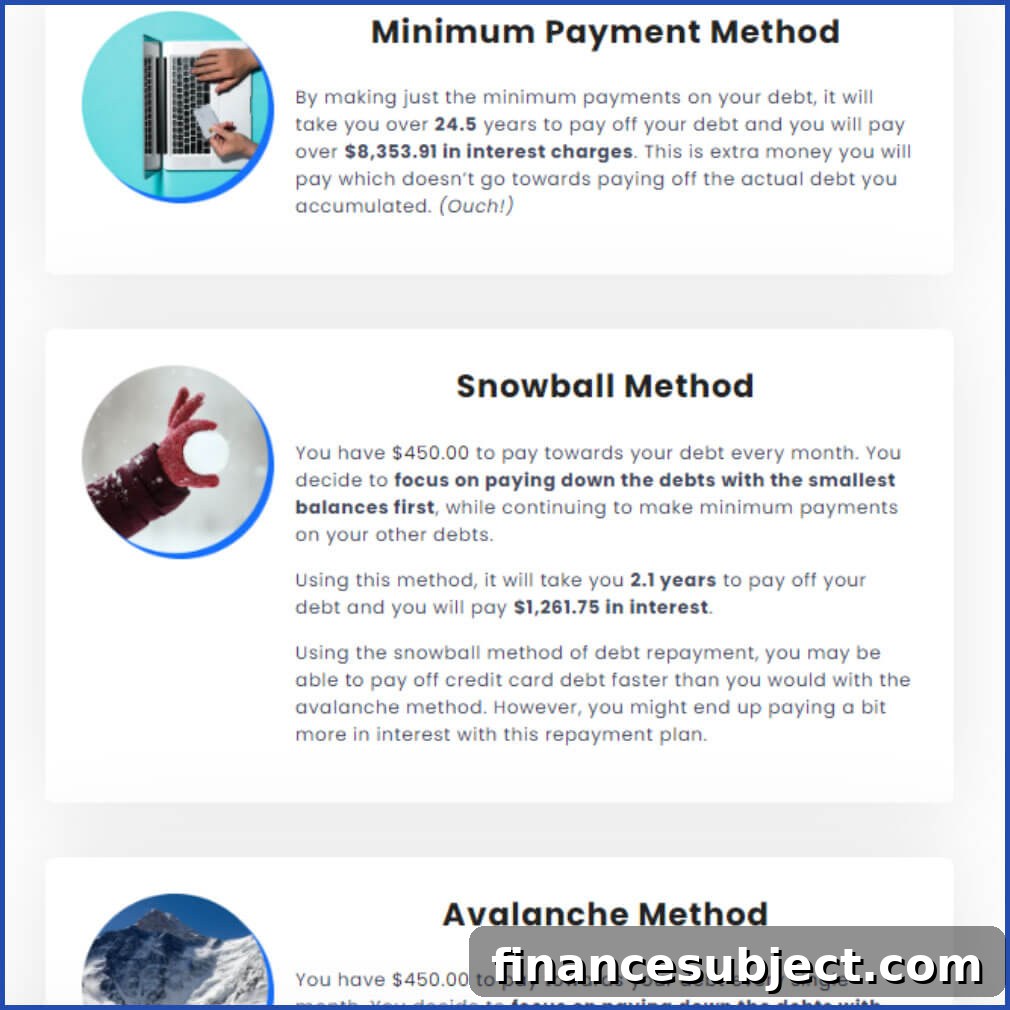
- It helps you compare repayment methods—such as paying minimums across the board versus focusing extra money on one account.
Keep in mind a debt calculator provides an estimate based on the data you supply. It usually does not factor in potential fees tied to specific repayment options, future changes in interest rates on variable accounts, or extraordinary charges. Use the results as a planning guide, not a guaranteed schedule.
Three effective debt repayment strategies
Rather than making inconsistent payments on various accounts, consider adopting one of these three structured approaches. Each has trade-offs; choose the one that balances financial efficiency with the motivation you need to keep going.
1. Avalanche method
The avalanche method prioritizes debts with the highest interest rates. You continue to make minimum payments on all accounts, but direct any extra money toward the debt charging the most interest. Once that debt is paid off, you take the freed-up funds and apply them to the next-highest rate debt, and so on.
Advantage: This approach typically minimizes total interest paid over time and can save you money if high-interest balances are significant. Disadvantage: Progress can feel slow early on if your highest-rate debt has a large balance, which may reduce motivation for some people.
2. Snowball method
The snowball method focuses on paying off the smallest balances first while continuing minimum payments on larger accounts. After eliminating a small debt, you roll its payment amount into the next smallest balance, producing momentum as debts disappear.
Advantage: The psychological boost of seeing individual debts paid off often increases commitment and reduces the chance of giving up. Disadvantage: It can cost more in interest than the avalanche method if you deprioritize high-rate accounts.
3. Debt consolidation
Debt consolidation combines two or more debts into a single monthly payment. Depending on your situation you might consolidate with a personal loan, a line of credit at a lower rate, or through other available options. Consolidation can simplify budgeting and, in some cases, lower the overall interest rate.
Which consolidation options are available depends on several factors:
- The type and mix of debts you have
- Your credit score and credit history
- Any assets you can use as collateral
- Your current income level
- Your ongoing monthly expenses
Note that consolidation can sometimes cause an initial dip in your credit score, but it can also be a step toward rebuilding stronger credit if managed responsibly. Always compare the total cost of consolidation—fees, interest and term—against continuing your current strategy.
If you’re unsure which path is best, consider contacting a non-profit credit counselling agency for free, confidential advice. These agencies can review your finances and propose a tailored repayment plan or negotiate with creditors where appropriate.
Credit Canada is a non-profit credit counselling agency that has been helping Canadians get out of debt and back into life for over 50 years. Their counselling is confidential, non-judgmental and free.
Further resources from Credit Canada
- How to consolidate debt
- How to calculate your debt-to-income ratio—and why you should know this number
- What happens to your debt when you die
- Can debt collectors discuss your debt with your family members?
- How long do debt collectors try to collect in Canada?
This article was created by a MoneySense content partner.
This piece is informational and was provided by a content partner based on their expertise. It was edited for clarity and relevance.