

Kyle Prevost, creator of 4 Steps to a Worry-Free Retirement, Canada’s DIY retirement planning course, summarizes the week’s financial headlines and provides context for Canadian investors.
Inflation continues to fall as temperatures rise
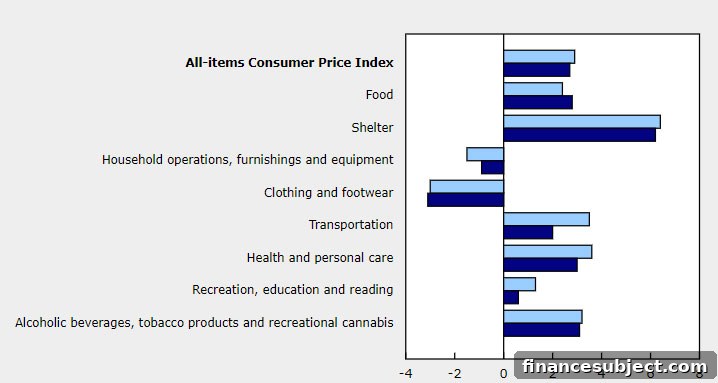
As summer heats up and many regions are setting new temperature records, Canadian inflation is moving the other way. Statistics Canada reported that the Consumer Price Index (CPI) rose 2.7% year over year in June. That decline in headline inflation supports the view that the Bank of Canada’s policies are having an effect.
Consumer price index June 2024 report highlights
Key takeaways from the monthly CPI release:
- Core CPI (excluding food and energy) remains slightly higher than headline inflation at 2.9% annually.
- Shelter costs continue to be the largest upward contributor, rising about 6.2% year over year.
- Service-sector prices increased roughly 4.8% annually.
- Durable goods experienced notable deflation, falling about 1.8% on an annualized basis.
- Clothing and footwear prices declined around 3.1%.
- Gas prices fell about 3.1% from May to June and have held relatively steady over the past year.
- Grocery prices rose approximately 2.1% annually—below the overall CPI rate.
Surveys of businesses and consumers show lower inflation expectations going forward, which is an important signal that the Bank of Canada has made progress in avoiding runaway inflation. While high interest rates in the early 1980s are part of economic folklore, current conditions suggest a different, more controlled path.
Lower inflation is welcome news broadly, but it won’t ease the burden for everyone. Canadians renewing mortgages or paying higher rents continue to feel pressure, and for many households those housing payments limit discretionary spending.
Falling inflation and softer inflation expectations give the Bank of Canada room to begin lowering rates gradually. Markets widely expect a modest cut—perhaps a 0.25% reduction—when the central bank announces its next decision.
Netflix subscribers must be nostalgic for TV commercials
Netflix’s quarterly results largely matched guidance. Profit and revenue were close to expectations, and the company reported stronger-than-forecast subscriber growth.
Netflix earnings highlights
Figures in this section are in U.S. dollars.
Netflix (NFLX/NASDAQ): Earnings per share of $4.88 (versus $4.74 predicted). Revenue of $9.56 billion (versus a $9.53 billion estimate).
Netflix reported 277.65 million total memberships, exceeding the 274.40 million consensus. Much of the growth came from the ad-supported tier, underscoring the company’s continued emphasis on advertising revenue. Management also highlighted investments in its own ad platform and interest in live sports rights—examples include NFL games on Christmas Day—which they believe will boost engagement and attract advertisers.
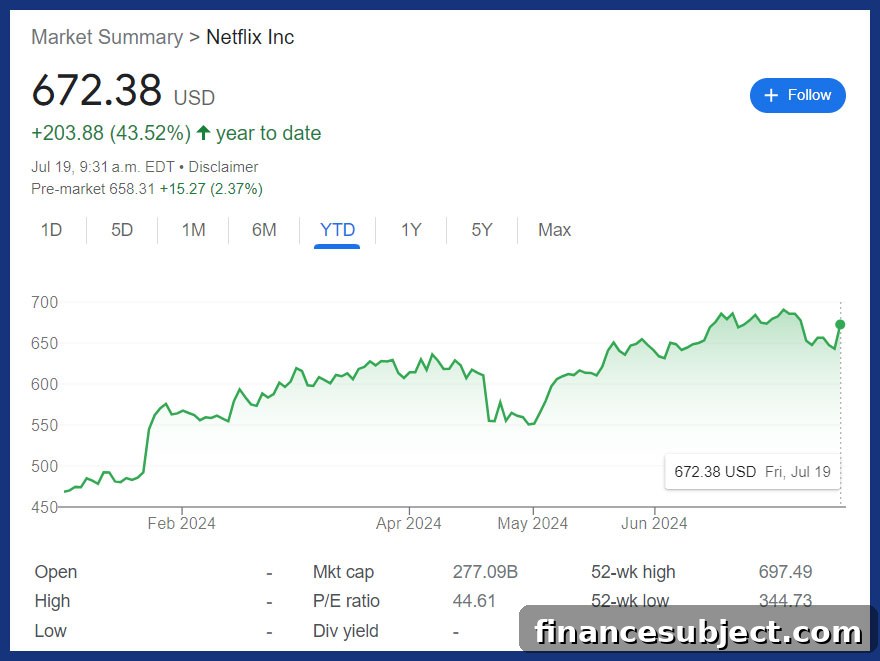
With the stock up more than 40% year to date and trading at a price-to-earnings ratio north of 44, investors are pricing in a lot of future growth. That makes execution on ad monetization and content strategies crucial if the company is to justify its valuation.
featured1-year GICLock in a guaranteed rate—example advertised at 3.50% for one year.go to site
featuredSavings accountHigh Interest Savings Account offer: 4.60% for 5 months on eligible deposits (limits apply).go to site
MoneySense is an award-winning personal finance publication that has guided Canadians since 1999. Our editorial team of experienced journalists collaborates with leading financial experts to provide clear, researched guidance. To help readers find competitive financial products, we compare offerings from major banks, credit unions and issuers. Learn more about our advertising and trusted partners.
Take that to the bank
U.S. banks reported broadly solid quarterly results as earnings season got underway. Profit beats were modest and many firms showed stronger advisory and investment banking activity.
U.S. bank earnings highlights
Figures below are reported in U.S. dollars.
- JPMorgan (JPM/NYSE): EPS $4.26 (vs. $4.19 predicted). Revenue $50.99 billion (vs. $49.87B).
- Bank of America (BAC/NYSE): EPS $0.83 (vs. $0.80 predicted). Revenue $25.54 billion (vs. $25.22B).
- Wells Fargo (WFC/NYSE): EPS $1.33 (vs. $1.29 predicted). Revenue $20.69 billion (vs. $20.29B).
- Morgan Stanley (MS/NYSE): EPS $1.82 (vs. $1.65 predicted). Revenue $15.02 billion (vs. $14.3B).
- Citigroup (C/NYSE): EPS $1.52 (vs. $1.39 predicted). Revenue $21.14 billion (vs. $20.07B).
- Goldman Sachs (GS/NYSE): EPS $8.62 (vs. $8.34 predicted). Revenue $12.73 billion (vs. $12.46B).
Four themes stood out across bank reports:
- Investment banking fees rose notably, reflecting renewed corporate activity.
- Provisions for credit losses increased as lenders prepare for potential defaults.
- Net interest income softened as spreads between deposit rates and lending narrowed versus a year ago.
- Management teams expressed cautious optimism about the near-term outlook while flagging macro risks.
JPMorgan’s CEO Jamie Dimon cautioned that geopolitical tensions and structural shifts could create economic challenges, even as some inflation progress was acknowledged. The firm’s CFO noted that consumer credit data looked relatively healthy, suggesting the economy might be slowing toward a soft landing.
Market reactions to bank earnings were muted, with most shares moving only a few percentage points. U.S. financial stocks have gained around 16% this year, and several large banks remain popular dividend plays among income-focused investors.
Healthy profit margins for J&J and UnitedHealth
Two major U.S. healthcare firms reported strong results this week.
Health stock earnings highlights
Figures in this section are in U.S. dollars.
- Johnson & Johnson (JNJ/NYSE): EPS $2.82 (vs. $2.71 predicted). Revenue $22.45 billion (vs. $22.30B).
- UnitedHealth Group (UNH/NYSE): EPS $7.16 (vs. $6.61 predicted). Revenue $100.08 billion (vs. $99.26B).
Shareholders welcomed the results, with both stocks rising a few percent after the announcements despite being down year to date. Johnson & Johnson also outlined plans to resolve long-running talcum powder litigation, with settlement discussions reportedly in the neighborhood of $11 billion. UnitedHealth said it continues to recover after a cyberattack that cost roughly $0.74 per share in the first quarter.
Read more about investing:
- Best ETFs in Canada
- Corus Entertainment announces further layoffs to reduce costs
- Hamilton steel maker Stelco sold to Cleveland-Cliffs for $3.4 billion
- Buying your first stocks in Canada
- How capital gains tax works in Canada and other common questions