

This month’s Retired Money column revisits two thoughtful perspectives on one of the biggest decisions people face: when to begin retirement. The first is from Plutus Award–winning U.S. author and blogger Fritz Gilbert, and the second is a Canadian take by Mark Seed of MyOwnAdvisor.
A Canadian perspective on the five factors of retirement
Fritz Gilbert first outlined his framework in April 2022 on his site, The Retirement Manifesto, in a post titled “The 5 most important factors in your decision to retire.” Gilbert, who won a Plutus Award for Best Retirement Blog, left corporate America in June 2018 at age 55 after a 30-plus year career. He also authored Keys to a Successful Retirement (Rockridge Press, 2020).
After I republished Gilbert’s post on my site with permission, it caught the attention of Mark Seed, who adapted the ideas for a Canadian audience and added his own practical reflections. Seed, who describes himself as semi-retired, relies on employer and government pensions as steady income while supplementing with dividends. His version appeared in mid-December under the title “5 Important Factors to Consider in Your Decision to Retire.”
All three of us—Gilbert, Seed and I—found the topic worth a deeper look. I’ve linked the original posts above so readers can explore the charts and details; below is a streamlined, practical summary of the core ideas.
Deciding on the timing
Gilbert frames retirement timing as five essential questions to answer before you make the move:
- Do you have enough money?
- Are you mentally prepared for retirement?
- Have you made a realistic estimate of your spending?
- Is your portfolio structured for withdrawals?
- What is your personal risk tolerance?
Take a moment to note short answers to those five questions for yourself—one or two words each can reveal a lot. My own short answers: yes, yes, yes, yes, medium.
There’s a sixth factor, but it doesn’t really matter
Gilbert identifies a sixth factor that many people treat as decisive but that, in practice, shouldn’t be: your age. Unlike legal age thresholds for activities such as voting or driving, there is no legal minimum or maximum for choosing when to stop working. If you have the financial resources and the psychological readiness, you can retire at any age.
Age is often overemphasized because it’s an easy number to anchor on. In reality, retirement timing depends more on preparedness across the five core factors listed above than on your birthdate. All three of us—Gilbert, Seed and I—consider ourselves semi-retired and continue to do work that we find meaningful.
I also co-authored a book, Victory Lap Retirement (Milner, 2019), with Mike Drak. Like Gilbert and Seed, we emphasize financial independence—“Findependence”—and the option to work by choice rather than necessity. That philosophy also appears in my novel Findependence Day and in the broader “work optional” approach to retirement planning.
FI, not RE
Many younger bloggers use the FIRE term—Financial Independence, Retire Early—but increasingly the emphasis has shifted toward FI: achieving financial independence and designing a life where work is optional. What many FIRE advocates actually do is leave traditional employment and build income through entrepreneurship, writing, speaking or part-time consulting rather than stopping all work entirely.
Yes, money’s still a biggie
Money remains the most concrete constraint, which is why Gilbert places it first. Seed expands on the financial side with charts that explore sequence-of-returns risk and a multi-bucket approach to holding assets. A typical three-bucket model separates funds into emergency cash, dividend-producing investments for income, and longer-term equity holdings such as ETFs to drive growth.
Beyond dollars and cents is the second crucial consideration: are you mentally prepared to leave full-time work? Retirement isn’t just about accumulating a nest egg. It also requires a plan for daily purpose and social engagement; otherwise, some retirees struggle with boredom or loss of identity.
Seed presses readers to answer practical lifestyle questions: How much will you travel? Where will you live? Will you downsize? How will you spend increased free time—more leisure, volunteering, or part-time work? His answers—travel a bit, base in Ottawa, already downsized, and a mix of entertainment and volunteer work—illustrate how lifestyle choices shape financial needs.
For spending estimates, Seed highlights the “crossover” or FIRE point: the moment when investment income consistently covers annual living expenses. That crossover is a useful way to visualize financial independence without relying solely on a target net worth.
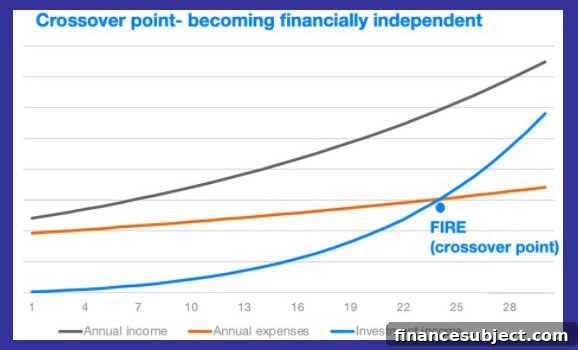
The fourth factor—portfolio readiness for withdrawals—underscores that decumulation is often more complex than accumulation. Retirement planning must consider tax-efficient withdrawals, pension timing, government benefits, and how to manage multiple asset classes to reduce sequence-of-returns risk.
Finally, factor five—risk tolerance—is about accepting uncertainty. As Gilbert notes, the future is unknowable, and retiring earlier typically carries more risk than waiting. The most common retirement risks to weigh include longevity risk, market risk, inflation risk and the risk of losing purpose or becoming bored if you stop working too soon.
Each prospective retiree will make a different trade-off among these risks and priorities. If asking these five questions helps you move beyond the simple rule “I’ll retire when I turn X” and toward a plan based on finances, mindset and lifestyle, it will have served its purpose.
More from Retired Money:
- Should you cash out your workplace pension when you leave a job?
- How retired parents can use the FHSA to help their adult children
- Is now the time for retirees to sell stocks and buy GICs?
- How much money do you need to retire in Canada? Is it really $1.7 million?