
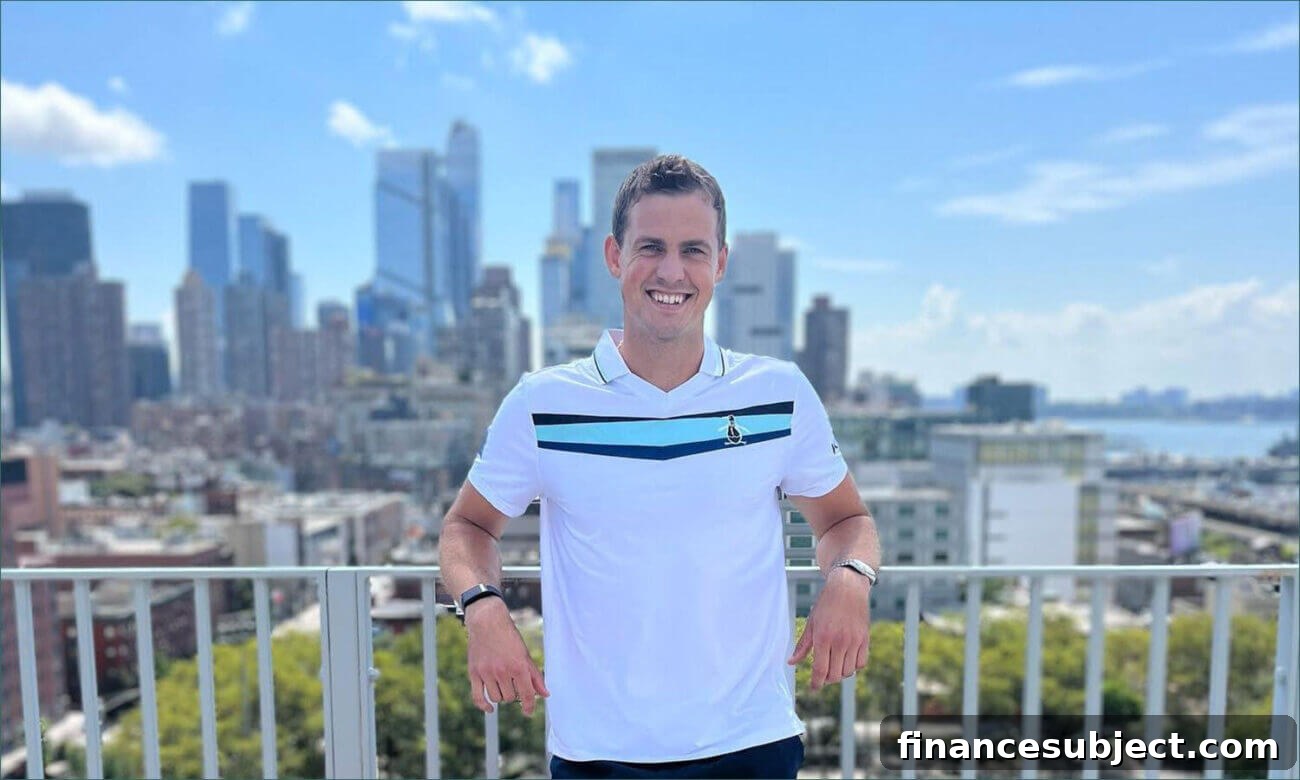
Vasek Pospisil began treating tennis like a full-time pursuit at the age of six and has since pursued excellence on and off the court. He has competed at the Olympics, Wimbledon, the U.S. Open and at the Tel Aviv Open, where he faced Novak Djokovic in a high-profile quarter-final. You can watch him play in the Calgary National Bank Challenger for the second time on Sunday, November 6, 2022. While he trains most days to maintain his competitive edge, Pospisil also spends considerable time managing his finances. Familiar with the inevitable ups and downs of investing, he prefers to put his money to work rather than let it sit idle in a savings account. Below, he shares his money philosophy, lessons learned from investments, and how he has learned to act when opportunities arise.
Who are your finance heroes?
I admire several investors and thinkers. One is Bill Ackman, whose strategies I’ve studied and whose approach I respect. I’ve also been influenced by Bill Perkins, who reframes the discussion about money and life in his book Die With Zero. Being around smart people has shaped my perspective—both on building wealth and on how to spend it to enrich life.
How do you like to spend your free time?
Time with friends and family recharges me. It sounds clichéd, but I find it’s an underrated way to spend downtime and to restore balance between work and personal life.
If money were no object, what would you be doing right now?
Even if money weren’t a concern, I likely wouldn’t change much about my life. I’m driven and passion matters more to me than income when it comes to tennis and my business pursuits. I enjoy the entrepreneurial aspects of what I’ve built in recent years, and I’d simply spend more time with close friends and family.
What was your earliest memory about money?
One of my earliest memories is a $10 hand-written gift card from my cousin when I was about seven or eight. I’d buy twenty-five cent candies at the corner store and watch the balance decrease—my first sense of having credit and spending my own money.
What’s the first thing you remember buying with your own money?
The first significant purchase I remember was an Apple laptop for personal use when I was 17. It felt like a meaningful step toward independence.
What was your first job?
My earliest professional role was as a tennis player at a very young age. Before that, I earned some money painting fences for my uncle in Vernon, B.C., which I used to buy Christmas gifts and to save.
What was the biggest money lesson you learned as an adult?
I once invested in a private startup that appeared poised to go public. I didn’t perform my usual level of due diligence and relied on a close friend’s recommendation. The company collapsed because leadership misused investor funds. The experience taught me to assess not only the business model but also the integrity and competence of the people running the company.
What’s the best money advice you’ve ever received?
On a trip I met someone who sold a business, moved into real estate, and now manages multi-family properties. His primary advice was to consider real estate investing—a suggestion that stuck with me because of its potential for stable returns and wealth building.
What’s the worst money advice you’ve ever received?
Hearing that you should simply put every paycheck into a savings account and let it sit is poor advice. While saving is essential, leaving all funds idle erodes value in times of inflation. It’s important to save some, then thoughtfully invest the remainder to grow wealth.
Would you rather receive a large sum of money all at once or a smaller amount regularly for life?
I’d choose a lump sum because it gives you flexibility. With a substantial amount up front, you can work with financial advisors or investment professionals to allocate capital in ways that can outperform a steady small payout over time. That said, careful planning and advice are crucial to avoid mistakes.
What is the biggest misconception people have about growing money?
The biggest misconception is believing that simply saving cash is enough to grow wealth. Inflation can diminish the purchasing power of money left in a savings account. Conversely, diving into high-risk investments without knowledge or guidance can be equally dangerous. The balance is deliberate, informed investing with risk management.
USE TOOL
Can you share a money regret?
During the 2007–2008 real estate crash I didn’t have the means to buy, and in 2013 I passed on investing in a multi-family apartment building. I don’t dwell on regrets, but those moments taught me that when solid information points to a good opportunity, you need the courage to act. I no longer hesitate as much when similar chances appear.
What does the word “value” mean to you?
Value includes anything that generates a return—whether financial or emotional. Bill Perkins emphasizes the worth of experiences: attending events, traveling, or simply taking time off can offer deep returns that go beyond monetary measures. Value is therefore personal and multi-dimensional.
What’s the first major purchase you made as an adult?
In my early 20s I bought an apartment in Florida where I trained during the off-season. It was my first piece of real estate, and after earning money on tour I invested in renovations.
What’s your take on debt?
Debt can be a powerful tool when used wisely—for example, borrowing to buy rental property that covers the mortgage and expenses can create leverage and returns. But debt becomes dangerous if misused, so having knowledgeable advisors and a clear strategy is essential.
What was your most recent splurge?
My most recent indulgence was a weekend trip to Las Vegas with a close friend. We had a fantastic time and created memorable experiences.
What is the last money-related book you read?
The last finance-related book I read was Die With Zero by Bill Perkins. It shifted how I think about spending and value—encouraging a balanced approach that prioritizes meaningful experiences throughout life instead of postponing enjoyment until retirement.
What is something you always have in your wallet?
I always carry my credit card and ID. I once spent a month traveling through Europe without using any cash at all.
What is your favourite possession?
A necklace my parents gave me for my 18th birthday. I rarely take it off, except for massages or physiotherapy.
What’s your next money goal?
I aim to reach a stage—around age 40 in my plan—where I no longer stress about the cost of decisions. Financial freedom, for me, means being able to focus on opportunities without constant concern over expense.
My MoneySense quick questions
Rent or own?
Own.
Buy or lease?
Buy, in most cases. Given current market conditions, there are times when leasing may be the smarter short-term option.
Save or invest?
Invest.
Budget or not?
Budget. You need a plan and discipline. Especially with investing, maintain a safety margin so that setbacks do not derail your life plans.
Read more My MoneySense profiles:
- “Dragons’ Den” tech titan Michele Romanow on taking risks and betting on yourself
- How dating expert Damona Hoffman handles her relationship with money
- Myron Genyk on his money values and being financially cut off at 20
- Ambitious Adulting’s Liz Enriquez on growing up low-income and the worst financial advice she’s received