
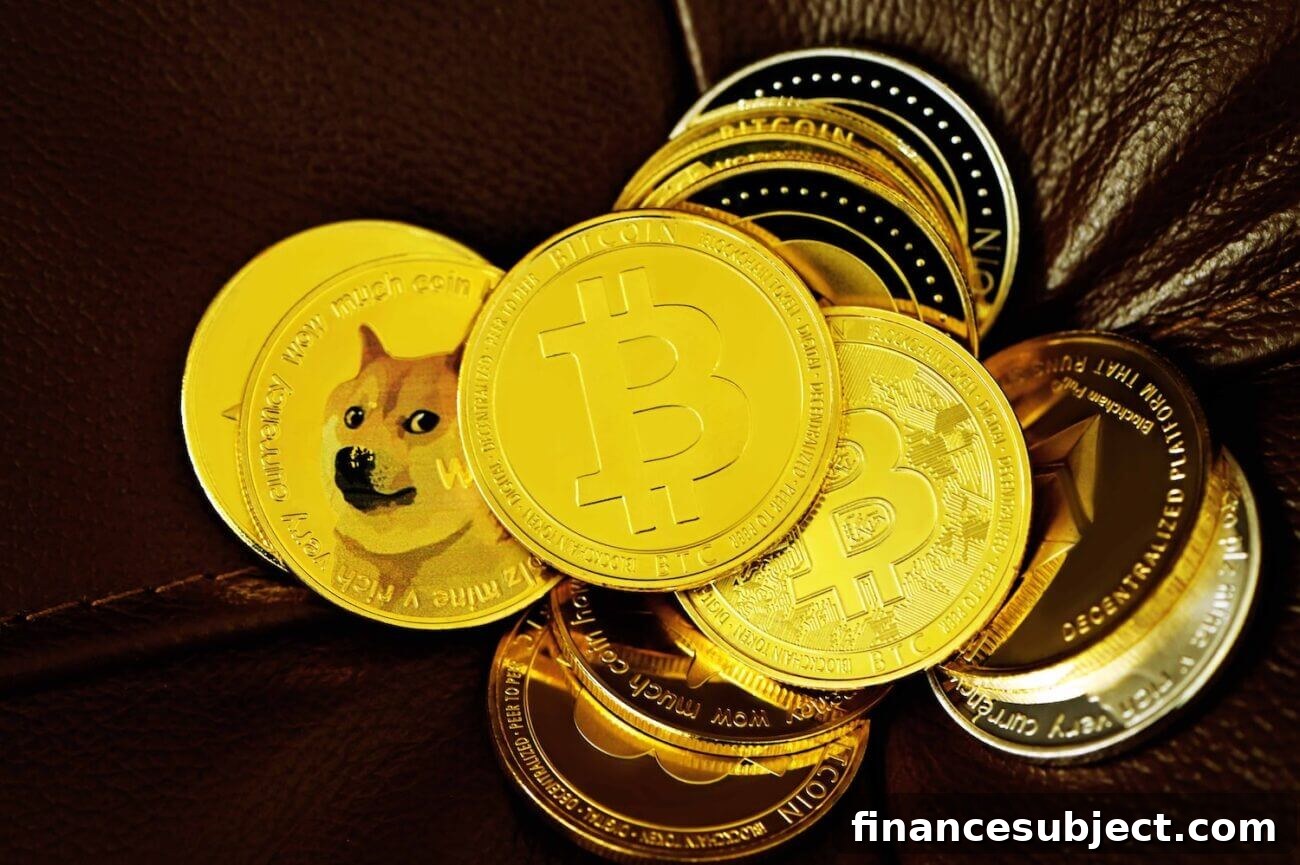
You can’t open a news site, watch a video or scroll through social media without seeing references to bitcoin, ethereum and a growing list of other cryptocurrencies. Friends and family may be talking about crypto investments, and headlines frequently highlight big price moves and new blockchain projects.
Whether cryptocurrency becomes a dominant financial system remains to be seen, but as investors, companies and governments increasingly engage with digital assets, now is a good time to understand what crypto is, how it works and what potential investment opportunities—and risks—it presents.
This guide covers the essentials of cryptocurrency, what to look for before investing and the main ways people participate in the crypto ecosystem.
What is cryptocurrency?
Cryptocurrency is a digital or virtual form of money. Individual units are typically called coins or tokens. The earliest and most widely known cryptocurrency is bitcoin, which was designed to enable peer-to-peer digital payments without relying on banks, payment processors or other intermediaries. With crypto, people can send and receive value across borders using only a device and an internet connection.
Beyond payments, many cryptocurrencies have additional features and use cases: platforms for decentralized applications, programmable money, tokenized assets and more. These uses depend on the design of the coin and the blockchain that supports it.
What are crypto consensus mechanisms?
Blockchains—the distributed ledgers that record crypto transactions—use consensus mechanisms to ensure transactions are valid and to prevent duplicate spending that would devalue the currency. The two most common mechanisms are proof-of-work (PoW) and proof-of-stake (PoS).
- Proof-of-work (PoW): Miners run specialized hardware to solve complex mathematical problems. The first miner to solve the puzzle adds a new block of transactions to the blockchain and earns a reward. PoW secures networks such as bitcoin but is energy intensive.
- Proof-of-stake (PoS): Validators lock up, or “stake,” their coins for a chance to be randomly selected to validate and add new blocks. PoS removes the competitive mining race and is generally far more energy efficient than PoW. Many networks are moving toward PoS to reduce energy consumption.
What is blockchain technology?
Blockchain is the underlying technology that records transactions in a secure, transparent and permanent way. It acts as a digital ledger that is shared across a network of computers so no single party controls the record.
Its decentralized structure, cryptographic protection and immutability make blockchain useful for more than cryptocurrencies. In addition to payments, blockchain finds applications in voting, asset transfers, proof of ownership, contracts and other processes where tamper-resistant recordkeeping matters.
Because the ledger is distributed and protected by cryptographic algorithms, once a transaction is confirmed it is extremely difficult to alter. That security is one reason both developers and financial institutions are exploring blockchain-based services.
How is crypto used?
Crypto adoption is still evolving. While cryptocurrencies are not yet a mainstream replacement for cash or bank accounts, they are widely used as speculative investments, a mechanism for cross-border remittances and as native tokens for decentralized applications (dApps) that deliver financial services—lending, insurance, automated contracts and more.
Many proponents view crypto primarily as a way to store value and move funds quickly and cheaply without intermediaries. Over time, digital assets could be used more broadly for financial transactions, programmable money and tokenization of real-world assets.
What are altcoins?
After bitcoin’s launch in 2009, thousands of other digital coins emerged. These alternatives—called altcoins—aim to improve on bitcoin’s features or serve new purposes. Ethereum introduced smart contracts and a platform for dApps; other chains target faster transactions, lower fees, specialized finance or novel consensus models.
Some coins are widely adopted and considered “blue chip” within the crypto market, while many smaller projects remain experimental and carry greater risk. Popular tokens include well-known names such as bitcoin and ethereum, as well as a range of other networks that offer distinct technical features or niche utilities.
Before buying any altcoin, research the project’s technology, team, tokenomics and use cases. Understand how it differs from competitors and whether it has a realistic path to adoption.
Crypto risks to consider
Cryptocurrencies are historically volatile. Prices can swing dramatically in short periods, and while some digital assets have delivered strong long-term returns, they can also suffer sudden declines.
There are additional risks beyond price swings: security breaches of exchanges and wallets, loss or theft of private keys, transfer errors and operational failures. Holding crypto directly requires careful custody practices; storing assets on third-party exchanges carries counterparty risk if that platform is hacked or becomes insolvent.
If you buy and hold crypto, protect your private keys, use strong security measures (including two-factor authentication) and vet any exchange or service provider’s security controls before trusting them with funds.
Other crypto-related investments
Beyond buying tokens directly, investors can access crypto exposure in several ways. Decentralized finance (DeFi) offers blockchain-based alternatives to traditional finance—decentralized lending, borrowing, yield farming and automated market-making are examples of DeFi primitives that attract capital and innovation.
Non-fungible tokens (NFTs) represent unique digital items such as art, music, virtual real estate and collectibles. NFTs are a growing market that pairs blockchain provenance with creative and collectible value.
Investors also gain indirect exposure through exchange-traded funds (ETFs), stocks of companies involved in blockchain or crypto, and structured products. Staking is another option: by locking certain coins in a network, holders can earn rewards or interest, though staking introduces lock-up and protocol risks.
How to get started in crypto investing
For beginners who want to buy crypto, a user-friendly trading platform can be a practical starting point. When evaluating platforms, prioritize security features, clear fee structures, customer support and a selection of reputable coins.
Consider custody options carefully: you can hold coins in your own wallet (self-custody) or keep them on an exchange (custodial). Self-custody gives you full control but requires safe management of private keys. Custodial services are convenient but expose you to counterparty and operational risks.
Start with a clear plan: decide how much of your portfolio you are willing to allocate to this high-risk asset class, diversify across established tokens if appropriate, and avoid investing money you cannot afford to lose. Research each asset thoroughly and consider consulting a financial advisor experienced with digital assets.
Further reading and resources
- What records do crypto investors need for taxes?
- Ten cryptocurrencies to know about
- Is mining cryptocurrency right for you?
- How to buy Polygon (MATIC)
This article is sponsored.
This is a paid post that is informative but may also feature a client’s product or service. These posts are written, edited and produced by MoneySense with assigned freelancers.