
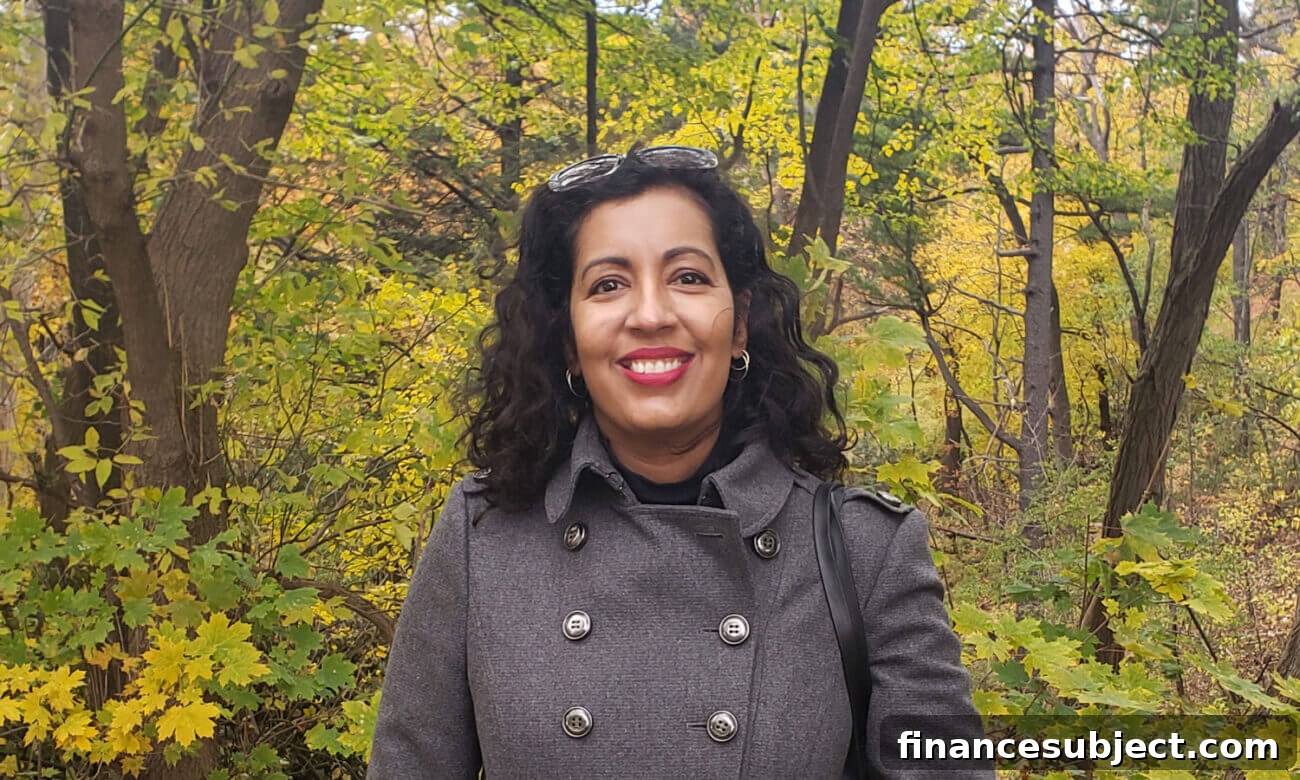
Renée Sylvestre-Williams is a freelance journalist whose byline often appears on MoneySense. She writes about personal finance with a lifestyle perspective, making complex topics like investing, taxes and financial planning clear and relatable. If you appreciated her responses in this installment of My MoneySense, consider her book Money Myths and her biweekly newsletter, The Budgette, which offer practical advice for solo earners and independent professionals.
Who are your finance heroes?
I don’t really have finance heroes. I enjoy reading about how other people reached their goals, but I try not to measure myself against their timelines. Personal finance is personal—those lists that say how much you should have saved by a certain age can be motivating when you’re on track and discouraging when you’re not. I prefer to focus on my own progress.
How do you like to spend your free time?
Right now, my free time is a mix of reading, exercising, attempting to learn Spanish, and spending cautious time with friends. I also watch more television than I probably should. Overall it’s a quiet blend of hobbies, self-improvement and downtime.
If money were no object, what would you be doing right now?
I’d largely be doing what I do now—writing about personal finance and producing my newsletter—but with more freedom to choose projects and locations. Ideally, I’d split my year between different countries, renting short-term places in the Caribbean, Europe and Asia so I could work while experiencing new cultures.
What’s the first thing you remember buying with your own money?
My earliest purchase memories are small things—movie tickets or perhaps a book.
What was your first job?
My first job was as a sales associate at a bookstore in a mall. It was fun because when I wasn’t helping customers I was reading in the aisles. I told myself I was reading so I could recommend the books accurately, but mostly I loved being surrounded by stories.
What was the biggest money lesson you learned as an adult?
I wish I had started investing earlier. Beginning in my 20s rather than my 30s would have made a meaningful difference thanks to compound interest. That extra decade really adds up.
What’s the best money advice you’ve ever received?
Markets cycle, so if you believe in your investment plan, resist the urge to cash out during downturns. I began investing around the 2008 financial crisis and have weathered subsequent crashes and volatility. Staying the course has been difficult at times, but it’s usually the right move for long-term portfolios.
What’s the worst money advice you’ve ever received?
I didn’t get a lot of bad advice—mostly basic guidance like “pay your credit card in full each month” and “make a budget.” What I wish I’d heard earlier was practical investing guidance. That would have been more useful in my twenties.
Would you rather receive a large sum of money all at once or a smaller amount regularly for life?
I’d prefer a smaller, steady payment—weekly or monthly—for life. It’s easier to manage cash flow that way. That said, I do have a plan for hypothetical windfalls; I play the occasional lottery with friends, but I think steady income beats a single lump sum for day-to-day financial stability.
What do you think is the most underrated financial advice, tip or strategy?
You don’t need a lot of money to start investing. Open a low- or no-fee account or try a robo-advisor if you want a hands-off solution. And don’t check your investments every day—especially during bear markets. Constant monitoring increases stress and encourages impulsive decisions.
What is the biggest misconception people have about growing money?
The biggest misconception is that you must be wealthy to begin investing. That’s not true. Modern platforms have lowered barriers and made it possible to start with modest sums. The earlier you start—even with small investments—the more time compound growth has to work for you.
Can you share a money regret?
I regret spending most of the money I saved while teaching English in Japan nearly 20 years ago on short-term pleasures. With the benefit of hindsight, I would have allocated a larger portion to investments while still allowing myself some enjoyment. That balance is key.
What does the word “value” mean to you?
Value for me is durability and repeated use. I’ll spend more on a quality top I’ll wear for years rather than buying cheaper items that wear out quickly. That approach only works because I’m able to save and budget for it—everyone’s choices should reflect their circumstances without judgement.
What’s the first major purchase you made as an adult?
My condo was my first large purchase. I began house hunting in March 2009, closed in June and moved in that summer. One of the funniest things was agonizing over flooring color for months—I had samples laid out in different light until I finally chose the one I love.
What’s your take on debt?
I avoid debt when possible and prioritize paying down high-interest “bad” debt like credit cards. Some debt can be strategic—borrowing to grow a business or investing in education and tools can pay off if done thoughtfully.
What was your most recent splurge?
I recently took a week-long cottage trip with friends. I saved for it ahead of time and didn’t budget while I was there—sometimes a planned splurge is the point.
What is the last money-related book you read?
I re-read Worry-Free Money by Shannon Lee Simmons. I appreciate her pragmatic tone; her perspective is a helpful reminder that you don’t have to punish yourself over money decisions. Shannon also helps with my taxes and financial planning, so I value her approach.
What is something you always have in your wallet?
I keep some cash on hand. Outages and card machine failures happen, and having cash can save the day when electronic payments aren’t available.
What is your favourite possession?
I’d say my condo. It’s my space—shared with the bank, of course—but it gives me control and stability. Owning limits my travel flexibility to some extent, and it requires maintenance, but it also protects me from rent increases.
What’s your next money goal?
I’m focused on paying off my mortgage within the next few years and building an emergency fund equivalent to one year’s living expenses.
My MoneySense quick questions
Rent or own?
Own.
Buy or lease?
It depends on your financial situation and goals.
Save or invest?
Both. Keep an emergency savings buffer while investing for long-term growth.
Budget or not?
I mostly budget. It helps me prioritize saving, investing and the occasional treat.
Read more My MoneySense profiles:
- How dating expert Damona Hoffman handles her relationship with money
- From being wired to spend to the emotional attachment to money, Shaun Maslyk unpacks how psychology can affect finances
- Ambitious Adulting’s Liz Enriquez on growing up low-income, the worst financial advice she’s received and more
- What a mutual fund flop, part-time jobs and a box of Nerds taught Sandy Yong about managing her money