
Rampant inflation is the top concern for many investors. A common defence is index-linked government bonds—known in the UK as linkers—which adjust their coupons and principal in line with RPI inflation.
Index-linked gilt tracker funds are the easiest way to gain exposure to linkers. But UK linker funds can present a mismatch between what investors expect—direct inflation protection—and what they actually get: substantial interest-rate risk. That risk arises because many UK linker funds are heavily weighted to long-dated bonds that mature decades from now, making them highly sensitive to changes in market interest rates.
Fluctuating prices and yields
Bond prices and yields move inversely. When market interest rates fall, existing bonds with higher coupons become more attractive and their prices rise, lowering their yields. Conversely, when market rates rise, prices fall because existing coupons look less generous compared with newly issued bonds. For liquid government bonds, these shifts often occur quickly as markets reprice expectations about future rates.
Most government bonds have fixed maturity dates noted in their names. For example, UK Treasury 4.5% 2034 will be redeemed in 2034 and pays a 4.5% coupon until then. Importantly, the more coupon payments remaining until maturity, the more a bond’s price will move when interest rates change. Long bonds—those with many years to maturity—carry greater sensitivity than short bonds.
Duration and risk
The key metric is duration, which a fund should publish on its factsheet. Duration indicates a fund’s sensitivity to interest-rate changes: higher duration means greater volatility. For example, a duration of 23 implies an approximate 23% price fall if market rates rise by 1%, and the same magnitude of gain if rates fall by 1%.
Alarmingly, the average duration for UK linker funds available to retail investors is in this high-risk range. Vanguard’s UK Inflation-Linked Gilt Index Fund, for instance, has a duration of 23, with 80% of holdings maturing beyond ten years and the longest security maturing in 2068. Long-duration linker funds benefited while interest rates trended down for decades, but a sustained rise in real yields could cause steep capital losses that undermine the inflation protection investors expect from linkers.
How far could rates rise?
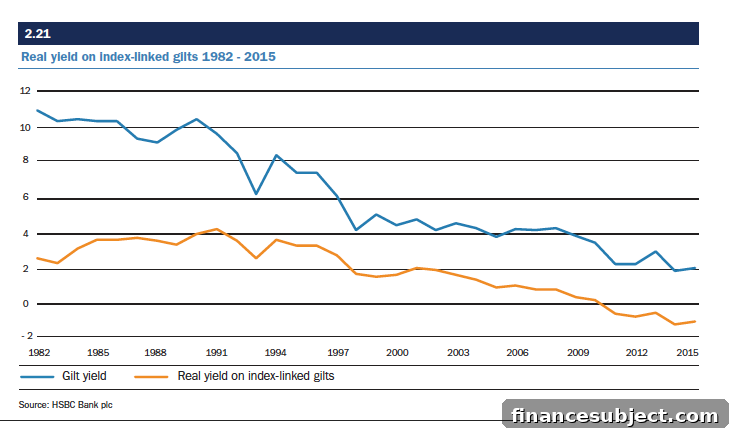
Market interest rates—the yields investors require across the yield curve—are distinct from Bank Rate set by the Bank of England. Market yields reflect expectations about the economy, supply and demand for bonds, issuer credit quality, and maturity profiles. What matters to linker funds is the prevailing real yield: the return investors demand after accounting for inflation. Historically real yields have been much higher than current levels.
A return to a 2% real yield on linkers would significantly reduce the market value of long-duration funds. That helps explain why risk ratings on linker fund documents are often as high as for equity funds despite gilt credit quality. Fund managers with experience in this market warn that moves in real yields, not inflation, are likely to be the dominant driver of returns for long-duration linker funds.
Distorted market
Real yields on UK linkers are unusually low, in part because UK pension funds have been buying linkers aggressively to match inflation-linked liabilities. This structural demand from pension schemes has pushed valuations to extreme levels and driven yields down as supply has struggled to keep up. Regulation encouraging pension funds to immunise liabilities has amplified this trend, making a rapid, one-way rebound in yields less certain.
What’s the answer?
Long-duration linker funds are not the straightforward inflation hedge many investors assume. Consider these alternatives for inflation protection:
- Short-dated UK linker funds with lower durations.
- A ladder of individual linkers held to maturity.
- Real assets such as property, gold, or commodities.
- Shorter-duration global inflation-linked bond funds, hedged to sterling to avoid currency risk.
Short-dated UK linker funds
Suitable short-duration UK linker funds are scarce for DIY investors. Some intermediate-duration products exist but are often available only through adviser networks or carry high ongoing charges. If you know of a suitable retail-accessible fund, it may be worth investigating.
A linker ladder
Building a ladder of individual linkers means buying bonds with maturities that match your future spending needs and holding them to redemption. The inflation adjustment is paid at maturity, so interim price volatility is irrelevant if you don’t need to sell early. The downsides are gaps in available maturities, typically two- to three-year increments, and accepting negative real yields today in exchange for inflation protection at a known future date.
Rolling short-term linkers
A rolling ladder reinvests maturing linkers into new short-dated ones, creating a DIY short-term bond fund that limits duration risk. This approach reduces exposure to capital losses if forced to sell, but it requires active management and may incur platform and dealing costs.
Other real assets
Assets like commodities, timber, property, precious metals, and equities are often promoted as inflation hedges. Short-term evidence suggests only some commodities and timber correlate well with inflation over three-year windows, but volatility and limited data are drawbacks. Equities can outpace inflation over long periods but may suffer during high-inflation episodes. These assets can form part of a diversified inflation strategy, but none are a perfect hedge on their own.
Shorter-duration global inflation-linked bond funds
Currency-hedged global linker funds can offer lower duration and better diversification than domestic long-dated linkers. They invest in inflation-linked bonds from developed markets—primarily the US and a range of other countries—and typically present lower volatility because interest-rate movements across multiple markets tend to offset shocks in any single country. For many investors, a sterling-hedged global linker allocation can provide some inflation protection with reduced duration risk. Be mindful of tax differences: the inflation uplift on UK linkers is usually tax-advantaged in UK-domiciled funds, whereas global linkers may be taxed differently and are often best placed in tax-efficient wrappers.
Examples of products include passive global linker trackers with modest ongoing charges and a few active short-duration global linker funds, each with different durations, credit compositions, and levels of UK exposure. Check duration, costs, and the percentage of holdings that are actually inflation linked before investing.
Conclusion
Long-duration UK linker funds can expose investors to substantial interest-rate risk that may erode their inflation protection. For retirees needing precise inflation-matching income, a ladder of individual linkers or inflation-linked annuities may be preferable. Accumulators seeking diversification and lower duration risk should consider shorter-duration global inflation-linked funds (currency-hedged), a rolling ladder strategy, or a modest allocation to real assets. Whichever route you choose, understand duration, duration-related risks, and how a product fits your time horizon and tax situation before committing capital.
Take it steady,
The Accumulator
- Government bonds are also known as gilts in the UK[↩]
- A full technical explanation of duration and convexity is beyond the scope of this article[↩]
- The chart referenced uses a historical linker real yield series as a benchmark[↩]
- KIIDs are Key Investor Information Documents[↩]