

If you’re planning to move to Canada or you’re newly arrived, choosing the right city is one of the most important decisions you’ll make. Below we profile six Canadian cities that offer strong job markets, diverse communities and practical information about living costs and housing: Toronto, Ottawa, Vancouver, Edmonton, Calgary and Halifax. Use this guide to compare employment prospects, rent and home prices so you can narrow down your options and focus your search.
Methodology
Data used in this guide comes from public sources and was current as of early 2024. Cost-of-living estimates are from Numbeo (March 2024). Average rental figures are from the Canada Mortgage and Housing Corporation (CMHC) (October 2023). Home purchase figures come from local real estate boards cited for each city. Auto insurance costs were drawn from the Insurance Bureau of Canada. All numbers can change over time—use these figures as a starting point for further research.
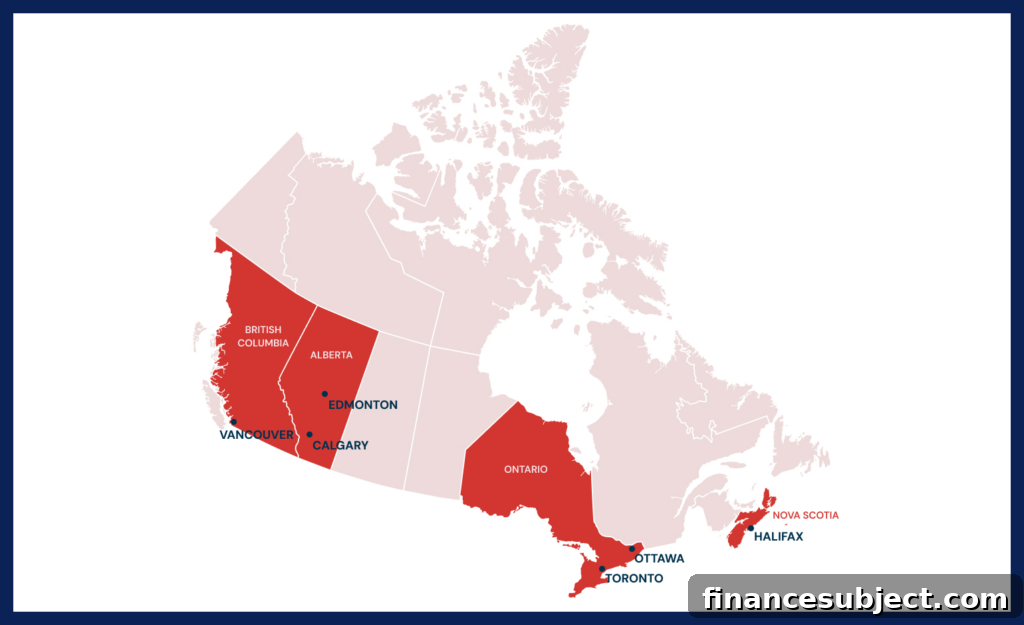
Why move to Toronto, Ontario?
Toronto is Canada’s largest city and a major international hub for finance, technology and professional services. The wider Greater Toronto Area (GTA) includes Durham, Halton, Peel and York regions, bringing the total population close to 6.5 million and offering a wide range of neighbourhoods for newcomers.
Beyond banking and finance, the city has strong sectors in tech, health care, insurance, telecommunications, real estate and media. Toronto also offers abundant cultural institutions, sports teams and immigrant communities, which can make settling in easier for new arrivals.
Job opportunities in Toronto:
Growing roles and sectors include:
- Technology: software engineers, DevOps, program managers, network technicians, business analysts
- Finance: accountants, financial analysts, payroll specialists, financial advisors, internal auditors
- Health care: registered nurses, pharmacy technicians, medical receptionists and administrative roles
- Engineering: project engineers, civil and structural engineers, automation and mechanical engineers
Cost of living: Toronto’s non-housing monthly cost for a family of four was estimated at about $5,545 in March 2024; for a single person, about $1,526. Average annual auto insurance in Ontario was $1,780 (mid-2023).
Cost of housing: Average rent for a one-bedroom was $1,691 and $1,958 for a two-bedroom (October 2023). The Toronto Regional Real Estate Board reported a February 2024 benchmark price of roughly $1,072,528 in the City of Toronto and $1,108,720 across TRREB regions; detached homes and condos vary significantly by neighbourhood.
Why move to Ottawa, Ontario?
As Canada’s capital, Ottawa blends government and public-service employment with private-sector strengths in technology, aerospace and defence. The city is bilingual in many areas and offers cultural attractions such as museums, festivals and historic sites like the Rideau Canal.
Job opportunities in Ottawa:
- Technology: software engineers, security analysts, program managers, DevOps and network roles
- Aerospace & defence: scientists, engineers, project managers, procurement and legal specialists
- Tourism and services: hotel and event managers, marketing professionals, translators
Cost of living: Non-housing costs for a four-person family were around $5,657 in March 2024; for a single person, about $1,580. Ontario’s average annual auto insurance was $1,780 (mid-2023).
Cost of housing: Average rent for a one-bedroom was $1,409 and $1,693 for a two-bedroom (October 2023). The Ottawa Real Estate Board reported a February 2024 benchmark price near $628,500 overall, with single-family homes and apartments priced differently across neighbourhoods.
Why move to Vancouver, British Columbia?
Vancouver is known for its mild climate, dramatic natural scenery and strong creative industries, especially film and television production. The city’s multicultural population and emphasis on sustainability make it popular with newcomers who want urban amenities close to outdoor recreation.

Job opportunities in Vancouver:
- Technology: software developers, program managers, DevOps and network engineers
- Film and creative industries: production coordinators, editors, videographers, graphic designers and media specialists
Cost of living: Vancouver had the highest non-housing cost among the six cities, with about $5,885 per month for a family of four and $1,610 for a single person (March 2024). Average annual auto insurance in British Columbia was about $1,411 (2022).
Cost of housing: One-bedroom rent averaged $1,697 and two-bedrooms $2,187 (October 2023). The Real Estate Board of Greater Vancouver reported a February 2024 benchmark price around $1,183,300 across property types, with detached houses and condos priced higher or lower depending on location.
Why move to Edmonton, Alberta?
Edmonton is Alberta’s capital and an important centre for energy, mining and resource-related industries. It also offers a strong arts scene, festivals and extensive parks and river valley trails, making it an appealing option for families and outdoor enthusiasts.
Job opportunities in Edmonton:
- Energy sector: drilling and rig personnel, technicians, engineers, project managers
- Technology & services: data engineers, systems analysts, QA managers, business development and market research roles
Cost of living: Non-housing costs were estimated at $4,972 per month for a family of four and $1,417 for a single person (March 2024). Average annual car insurance in Alberta was about $1,651 (mid-2023).
Cost of housing: Average rent for a one-bedroom was $1,134 and $1,398 for a two-bedroom (October 2023). The benchmark property price across property types was approximately $376,700 (January 2024), with detached homes and condos varying by neighbourhood.
Why move to Calgary, Alberta?
Calgary sits near the Rocky Mountains and combines a strong energy sector with growing technology and service industries. The city is known for the Calgary Stampede and easy access to mountain recreation, while offering a wide range of employment opportunities.

Job opportunities in Calgary:
- Energy and oil & gas: field workers, technicians, machinists, engineers and project managers
- Other in-demand roles: registered nurses, truck drivers, heavy-duty mechanics, accountants, restaurant and sales managers
Cost of living: Estimated non-housing monthly costs were about $5,560 for a family of four and $1,575 for a single person (March 2024). Average annual car insurance in Alberta was roughly $1,651 (mid-2023).
Cost of housing: Average rent for a one-bedroom was $1,463 and $1,691 for a two-bedroom (October 2023). The Calgary Real Estate Board reported a February 2024 unadjusted benchmark price near $585,000 across property types; detached homes and condos vary by area.
Why move to Halifax, Nova Scotia?
Halifax, on Canada’s Atlantic coast, blends maritime history with a growing tech sector and a lively cultural scene. The city’s waterfront, historic sites and welcoming neighbourhoods make it attractive for newcomers seeking a smaller-city feel with urban amenities.
Job opportunities in Halifax:
Common in-demand roles include:
- Technology: software developers, information systems analysts, database and network technicians
- Health care: physicians, registered nurses, licensed practical nurses, home support workers and early childhood educators
- Sales and service: chefs, cooks and hospitality staff
- Trades and transport: automotive service technicians, carpenters, contractors and truck drivers
Cost of living: Non-housing costs were estimated at $5,268 per month for a family of four and $1,485 for a single person (March 2024). Average annual auto insurance in Nova Scotia was about $1,229 (mid-2023).
Cost of housing: One-bedroom rent averaged $1,323 and two-bedroom $1,628 (October 2023). The Nova Scotia Association of Realtors reported a February 2024 benchmark home price around $398,700, with single-family homes and apartments showing different averages by neighbourhood.
Where should you live in Canada?
Your best city will depend on career opportunities, housing budget, lifestyle preferences and language needs. Large cities like Toronto and Vancouver offer broader industry diversity but higher living costs. Ottawa, Halifax, Calgary and Edmonton can offer lower housing costs and strong regional industries. Compare job availability, commute times and community supports when you decide.
For up-to-date job listings and labour market information, consult Canada’s official resources and local municipal newcomer guides for practical help with settlement, licences and community services.
Newsletter
Get free MoneySense financial tips, news & advice in your inbox.
Read more about moving to Canada:
- Best jobs in Canada for immigrants: the top industries in demand
- How to prepare your finances before you arrive
- Common questions newcomers ask about working in Canada
- Finance terms in Canada vs. other countries
- What to look for in a home inspection when buying your first Canadian home
This article is sponsored.
This is a paid post produced by MoneySense and contributors. It provides general information and may reference a client’s product or service; readers should research and verify details before making financial or relocation decisions.