
A few notable reads and commentary from around the web.
When politicians move into investment decisions, it is often a useful signal to consider doing the opposite.
Politicians are not investors or traders
Take Gordon Brown’s sale of Britain’s gold reserves: it coincided with a market low, after which gold climbed dramatically for a decade. Political decisions are usually driven by different incentives than those of long-term investors.
Politicians’ first priority is re-election
That incentive structure tends to favour short-term fixes over long-term stability. Policies that look prudent today can create burdens for savers and future taxpayers later.
Politicians prioritise national interests over individual investors
That’s appropriate in a democracy, but it’s also a warning to anyone investing for the long term: policy choices can redistribute wealth across generations and economic groups.
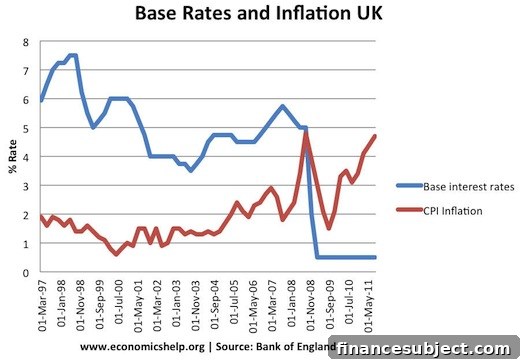
Imagine you did everything right: you saved steadily, bought an annuity with part of your retirement pot and kept cash aside for emergencies. Instead of rewarding savers, many Western governments have, through ultra-low interest rates, tried to stabilise fragile financial systems and ease the burden on indebted households. From a short-term macro perspective that may be defensible, but it disadvantages those living on fixed incomes and anyone without debt to be eroded by inflation.
It is against that background that Chancellor George Osborne’s consideration of 100-year government bonds (gilts) should be judged. The idea is to issue “super-long” gilts that lock in today’s record-low yields for a very long time — potentially even without a fixed redemption date — if investors show sufficient demand. For the government this is sensible: locking in low interest payments reduces future debt service costs if yields rise.
From the issuer’s point of view this is clever; from the investor’s view it is risk-laden. Buying a century-long bond assumes interest rates and inflation expectations remain benign for generations. That is a bold assumption. History shows how wildly economic conditions can change over a century: wars, monetary regime shifts, and sustained inflation episodes have all happened within a hundred-year span.
Super-long gilts can appear safe, but they are exposed to inflation risk. Inflation ahead of redemption erodes the real value of coupons and principal. Historical examples — such as World War I-era war loans — demonstrate how investors can lose purchasing power over very long periods.
Undated and very long-dated gilts have, until recently, been treated as curiosities; the financial crisis changed that perception as prices for these instruments rose and yields fell. That reversal is a reminder that market orthodoxies can be overturned when conditions change. Still, the core economic intuition remains: locking money away at very low yields for a century is a risky proposition for savers seeking real returns.
The end of the great bond bull market?
Low yields have persisted in many advanced economies for years, and some argue that ultra-low bond yields are dangerous assets poised to correct. If bond yields rise in future decades, the holders of long-dated gilts will face significant capital losses and, more importantly, savers will find their income eroded in real terms by inflation.
These are unusual times — near-zero policy rates sustained for years are historically exceptional. If you stretch a chart of interest rates back centuries, the current “flatlining” near zero is strikingly anomalous. That makes decisions about locking in yields for very long periods particularly consequential.
For individual investors and advisers, practical responses vary. Some have already reduced government bond exposure in favour of equities, inflation-protected assets or shorter-duration fixed-income instruments. Others remain committed to a fixed asset allocation that includes bonds for diversification. Both positions have merit depending on risk tolerance and investment horizon.
If you can be flexible, consider alternatives to long-duration government bonds: shorter-term fixed-rate savings, high-quality corporate bonds with reasonable coupons, or cash instruments that benefit from rising short-term rates. Institutions often cannot move easily into these short-term opportunities, but retail investors can exploit competitive fixed-rate savings when available.
Cash and short-dated savings are not perfect substitutes for bonds — cash won’t rise when equities rebound — but holding a higher cash allocation can reduce portfolio volatility and provide flexibility when yields eventually normalise.
On George Osborne’s proposal
Critics who claim that 100-year gilts are a way to offload debt onto future generations miss a practical point: the debt is already incurred either explicitly or implicitly through pension and social commitments. The policy question is at what interest rate that debt is carried. If long-term gilts are issued at multi-century low yields, taxpayers may benefit in the short to medium term from lower debt servicing costs. Whether that benefit outweighs the long-term risks to savers depends on future inflation and interest-rate paths.
It is also worth noting that regulatory or political pressures that steer pension funds toward gilts can shape demand for government debt and affect pricing — an important consideration when a government contemplates very long-duration issuance.
Selected reads from investing blogs
- On magical thinking and investing — Swedroe / Index Universe
- The folly of greater fuel efficiency: Jevons’ Paradox — The Psy‑Fi Blog
- Hubble, bubble, index trouble — The Psy‑Fi Blog
- How to determine your risk tolerance — Bible Money Matters
- Why smart people fail to beat the market — Rick Ferri
- The NewBuy mortgage guarantee and its risks — Simple Living in Suffolk
- How low can the stock market go? — Wade Pfau
- Cash: the worst performing asset (relative) — iii blog
- Is rebalancing the Achilles’ heel of passive investing? — Can I Retire Yet?
- How much truly safe retirement income do you need? — Oblivious Investor
- Nine ways to use your money after the mortgage is paid off — Len Penzo
- Three reasons to control your own assets — Hope to Prosper
Book of the week: Carmen Reinhart and Ken Rogoff’s 2011 study of financial history, This Time Is Different, examines how governments have repeatedly tried to inflate away debts and the costs that imposes on savers.
Mainstream media highlights
- The American economy: signs of recovery — Economist coverage
- 45 years of rising dividends — Motley Fool
- Growing financial rift between young and old — Financial Times
- Income prospects are brighter abroad — Financial Times
- Policy choices and their economic distortions — Financial Times commentary
- Regulatory intervention on interest-only mortgage risks — Telegraph analysis
- ISAs versus pensions: the trade-offs — Independent guidance
- Efforts to curb stamp duty tax avoidance — Telegraph reporting
- Damien Hirst and dynamics in the art market — Guardian
- The real cost of rising university fees — Guardian analysis
Want to keep sharpening your financial knowledge? Consider subscribing to curated investment commentary and updates.
Flatlining: a prolonged period of near-zero interest rates