
What caught my eye this week.
When former Chancellor George Osborne announced increases to stamp duty and reductions in mortgage interest tax relief for landlords, many dismissed the move with a shrug.
“They’ll just raise the rents!” some scoffed. “Generation Rent can pick up the tab.”
But it turns out that having ridden one of the biggest asset-price booms in UK history doesn’t automatically make someone an economic strategist. Rental values are falling across large parts of the country, and there are growing signs that some landlords are exiting the market.
A graphic published in today’s Financial Times shows a notable change in the relationship between new buy-to-let mortgage originations and the outstanding stock of buy-to-let lending. The data indicate:
“… growth in outstanding buy-to-let mortgages is failing to keep pace with new mortgages being granted, in a reversal of the broad relationship between the two over the past decade.
This strongly suggests some buy-to-let mortgages are being redeemed as investors sell rental properties.”
Here’s the graph:
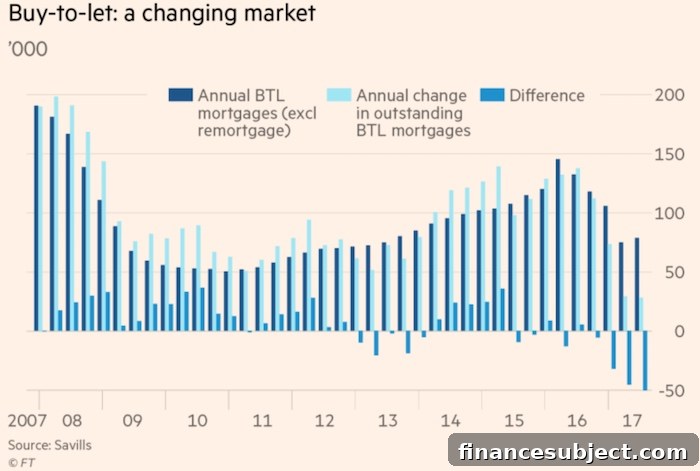
Source: FT/Savills
My own experience supports what the chart implies. One reason posts on Monevator have been a little sparse lately is — confession time — I’ve been house-hunting myself.
Yes, I know the irony. If nothing else, a long-time bear finally looking to buy might be a sign the market’s momentum has changed. I’ll write more about why I’ve decided to pursue a purchase soon, but for now I can report anecdotally that landlords are much less visible in the market than they used to be.
An estate agent in the part of London where I’m searching told me that half of previous sales went to landlords; now they are far less common. That reduction in investor demand is simple good news for first-time buyers, who have for years struggled against a landlord advantage built on interest-only mortgages, tax relief and deeper cash reserves.
I don’t believe landlords are villains — many are responsible, professional landlords who provide a vital service. There is also a case to be made for some tax relief in certain circumstances. But on a nation with chronic housing shortages, I think owner-occupiers should be prioritised where possible.
Overall, I welcome policies that reduce the attractiveness of buy-to-let investment and the market signals that accompany those policy changes. Higher taxes and reduced relief will likely cool prices or at least stall growth, and the economics of letting property will be rebalanced to a lower, more realistic level.
Property has delivered enormous, often generational gains to many people, particularly those over forty. That windfall may be waning; investors and savers should be thinking about where to find new opportunities as the housing cycle evolves.
News
Note: Some links point to search results. On desktop these searches can help you access articles that may be paywalled on mobile. See the footnote below for a tip.
‘$300m in cryptocurrency’ accidentally lost forever due to bug – Guardian
Gas and electricity fuel prices have risen at three times the rate of inflation – Guardian
Investors shun UK equity markets, seek shelter in bonds – Telegraph
Budget could remove valuable tax perks for investors [Search result] – FT
UK could theoretically ignore Brexit and remain aligned with EU rules, Article 50 official suggests [Search result] – FT
How Nationwide raised annual pension contributions to 23% of staff salaries – Guardian
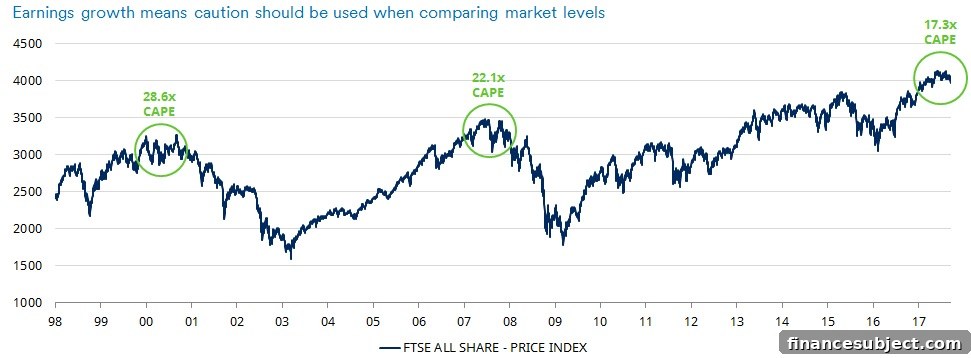
UK market valuations are higher than in many places, but expected future returns remain muted – Value Perspective
Products and services
The online brokers making mortgages quicker and less stressful – Guardian
Paragon Bank launches easy-access account offering a competitive 1.31% – ThisIsMoney
Get an extra £100 when you invest £5,000 with RateSetter via an affiliate offer – RateSetter
How to evaluate funds using Morningstar’s updated style box – Morningstar
Investment trusts’ discounts narrow as demand rises [Search result] – FT
NS&I to increase Premium Bonds prize fund rate to 1.4% from December – ThisIsMoney
Barclays admits to posting PIN numbers with some new debit cards – Guardian
Comment and opinion
Thoughts on whether it makes sense to cash out of the stock market – A Wealth of Common Sense
How good decision-making combined with compounding produces large outcomes over time – Of Dollars and Data
Mean, median and mode life expectancy: what they mean for retirement planning – Oblivious Investor
Merryn: Paradise Papers signal a shift in public attitudes to tax avoidance [Search result] – FT
The reality behind three common indexing questions – Vanguard blog
How movements in the bond market are influencing stock investors – Bloomberg
Order to withdraw savings in retirement to minimise tax charges – ThisIsMoney
How the UK’s wealthiest really feel about paying tax – Guardian
Where is the line between speculative stock-picking and investing? – Gannon on Investing
FANG futures and the risks of concentrated tech exposure – The Macro Tourist
Why I sold my Rio Tinto shares – UK Value Investor
Feeling giddy — and perhaps greedy — with markets at record highs – SexHealthMoneyDeath
The bank of Mum and Dad: the scale of parental help and the guilt that comes with it – Guardian
Off our beat
Animated visualisation: rapid ageing in the Western world – Visual Capitalist
Being a startup founder can feel like a minimum-wage job – Medium
The balancing act between creativity and productivity – Kottke
And finally…
“Are you going to be okay?” I asked Debbie as I packed for London. She sat on the bed watching me prepare to leave. “I’m leaving you with all the animals, and Kylie in a sulk. It’s a bit uncertain. The enclosures should be fine, but if Ziggy and I built it, it only comes with a 24‑hour guarantee, which runs out — um — about lunchtime. After that we can’t be held responsible.”
– Simon Dawson, Pigs in Clover
Like these curated links? Subscribe to receive them every Friday.
- Some articles may only be accessible via search-result pages on desktop, which can bypass paywalls that appear on mobile. To view desktop pages on a mobile browser, select the browser menu and choose “Request Desktop Site.”[↩]