
One problem with the word “risk” in investing is the emotional baggage it carries: bravery, cowardice, heroics. Framing investment decisions with those connotations is as unhelpful as loading potato skins with too much cheese and bacon.
Risk means different things in different contexts. Walking down a dark alley, a soldier on patrol, and Warren Buffett buying a company with billions are all called “risky,” but they are not the same type of risk. In everyday talk the term is vague, and that vagueness leads people to make choices based on feeling rather than on what will best meet their financial goals.
In my personal life I’m cautious—I have little appetite for dodgy restaurants or extreme activities. Yet when it comes to investing my tolerance for volatility is higher than most people I know. That might seem contradictory, but risk in finance is distinct from other real-world dangers and depends on time horizon, diversification, and one’s objectives.
Everyone takes risks when they invest. One friend treats shares like gambling and only punts occasionally on tech stocks, risking the loss of that portion of his capital. Others keep their money entirely in cash and face the risk that inflation will erode their purchasing power. I prefer a diversified, equity-heavy portfolio because over long horizons it typically offers a higher expected return for the risk taken.
You call that a reward?
Reward, the mirror of risk, also varies by person. My speculating friend won’t bother for modest long-term returns—he values immediate gains or reinvestment in his business. My mother, conservative by nature, doesn’t care much about rising dividends but lights up when the portfolio’s market value increases, even though she bought those shares mainly for income. A military person might view a protective vest as a life-saving reward, while for an investor the reward may be compound returns decades down the line.
Risk is personal
Risk tolerance is deeply personal, shaped by circumstances, temperament, and goals. Yet many people struggle to judge their own tolerance until they face a real market downturn, a job loss, or another shock. That’s why it’s important to prepare in advance.
Some critics argue that strategies like pound-cost averaging (dollar-cost averaging) are irrational, because statistically investing a lump sum immediately usually yields higher returns. But behavior matters: if spreading a lump sum over time prevents you from panicking and selling after a crash, that lower expected return might be the rational choice for your peace of mind. Emotional comfort is a legitimate factor in financial planning; it is not inherently irrational to accept slightly lower returns in exchange for reduced stress and a higher chance of staying invested.
Advisors face a tough job: most clients are more loss-averse than they admit. People hate losses more than they value equivalent gains. Few clients seek advice purely to accept a secure 3% real return; they want growth, but may not be emotionally prepared for large drawdowns. Helping clients match investments to temperament is as important as optimizing returns on paper.
Preparing for the downside
Predicting how you’ll react to a crash is hard. Reading about market cycles and historical returns can help you understand the range of possible outcomes and prepare mentally. You can also start small: trickle money into equities to build experience without exposing your entire nest egg at once. But beware of waiting too long—time in the market matters, and procrastination can reduce the potential for long-term rewards.
Some people are naturally comfortable taking big risks and shrugging off losses; others will be crippled by a significant drop in their portfolio. Knowing which camp you fall into helps in designing an appropriate plan. If someone is reckless with short-term speculation, the best practical advice might be to secure long-term savings through pensions or other protected accounts.
How to explore your own risk tolerance
Here are practical ways to understand and test your comfort with investment risk:
Discover what others do
Read established rules of thumb on asset allocation and risk. These guidelines reflect the collective experience of generations of investors and can give context for sensible diversification and expected returns.
Stress test your portfolio
Use Monte Carlo simulations or other stress-testing tools to see how likely different outcomes are. For example, ask whether you’re willing to accept a meaningful chance of having significantly less at retirement for the unlikely possibility of a very large windfall. That perspective helps align portfolio choices with acceptable risks.
Visualise the consequences
Imagine your long-term goals—retirement, supporting family, healthcare in old age. Seeing photos of older relatives can make the distant future feel more real and clarify why you are taking certain risks today.
Try a risk tool
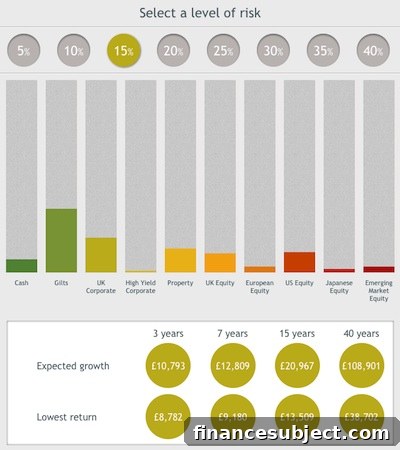
Experiment with online risk questionnaires and portfolio suggesters to see what they recommend based on your loss tolerance. Focus less on exact asset allocations and more on the trade-offs they highlight between volatility and potential reward.
Click this image to try the risk and portfolio tool
None of these methods will perfectly simulate the feeling of losing a large portion of your savings right before retirement, but they force you to weigh risk and reward more deliberately. Consider all risks—market volatility, inflation, and personal circumstances—when making choices. Inflation, in particular, is often a bigger long-term threat to purchasing power than temporary market dips.
Find the right balance for you
Investing is not a macho contest. Outside trading floors, success is about matching your investments to your life: your goals, your responsibilities, and how much turbulence you can tolerate without abandoning a plan. I may tolerate big swings in net worth, but that doesn’t mean everyone should. Keeping a portion of your assets in cash, paying down a mortgage, or accepting lower volatility are valid choices if they align with your priorities.
Ultimately, don’t let others decide your risk tolerance for you. Assess your goals, test your reactions, and choose a plan you can live with through both good markets and bad. That way you’re more likely to stay invested long enough to reap the rewards you want.
- I don’t think eating horse is bad for you – I think not knowing what you’re eating is.[↩]