
Highlights that caught my eye this week.
When I started writing about investing on Monevator back in 2007, I wondered whether I’d ever run out of things to write about.
The core rules of solid personal finance are simple enough to fit on a Post-it note. Index funds were already attracting retail money, and asset managers were beginning to offer products that made disciplined investing easier for everyday savers. At the same time, UK chancellor Gordon Brown was confidently claiming an end to boom-and-bust cycles.
Then the Great Financial Crisis arrived and proved that complacency misplaced. The private investing landscape continued to evolve, and so did the subjects worth covering. Soon after, The Accumulator joined the site, bringing a forensic eye for hidden costs, behavioral traps and practical steps for better long-term returns. That combination—straightforward investing principles plus close attention to market detail—has kept this project alive and relevant ever since.
Harder, better, faster, stronger
What I didn’t foresee in 2007 was the speed and breadth of change in investment products and platforms. Index funds, ETFs and lower-cost trading were already creating a revolution in access. Since then we’ve seen innovations such as target-date funds and all-in-one solutions that package good investing habits into ready-made products. Investment trusts remain for more adventurous investors seeking variety.
Newer developments — some useful, some questionable — have arrived in quick succession: zero-commission brokers became widespread, leveraged and short ETFs surfaced, and crypto assets entered the conversation. Lately, the headlines have included mirror notes for private companies, stablecoin regulation in the US, tokenised stocks on blockchain platforms, and exchanges offering crypto-linked products to retail investors. These are not niche anymore; they are increasingly mainstream topics.
Here are a few recent items I’ve been reading about:
- Mirror notes to give UK investors exposure to unlisted companies like SpaceX.
- New stablecoin legislation in the US, which supporters say could shift financial infrastructure onto blockchain rails.
- Robinhood’s tokenised stocks now available in Europe, combining tokenisation and synthetic market exposure.
- The UK regulator permitting exchange-traded notes that track Bitcoin, widening retail access to crypto-related instruments from 8 October.
Is this progress a net positive? It’s too early to be definitive. Some advances expand useful choice and lower costs; others create new risks and complexity. We should remain open-minded but cautious.
Get lucky
Paul Volcker once quipped that the ATM was the only truly useful financial innovation of the prior three decades. Yet that comment came as the broader shift toward cheaper, more democratic investing was already taking root. Humility about new technologies is wise—both promising breakthroughs and unintended consequences are possible.
There are valid concerns. Bill McBride, who gained recognition for correctly warning about the financial crisis, warns that letting lightly regulated crypto markets become embedded in mainstream finance raises systemic risk. He highlights the danger of allowing retirement plans to hold crypto or financial institutions to lend against crypto collateral. If such exposures propagate through the system, they could amplify stress in a future downturn.
The key to preventing a financial crisis is to keep the non-regulated (or poorly regulated) areas of finance out of the financial system. Letting crypto creep in—and allowing pensions and institutional lending against it—raises the risk that crypto could be the source of the next crisis.
Time will tell which path wins out. In the meantime, this site will continue to track developments and analyse their implications for personal investors.
Please share your thoughts in the comments below, and have a great weekend.
From Monevator
Sticking to a financial plan when the honeymoon is over [Members] – Monevator
The Wealth Ladder – Monevator
From the archive: Seven unusual ideas for a better-value wedding – Monevator
News
UK GDP growth slows as higher business costs bite – Sky
Firms hiring virtual staff and contractors to offset rising National Insurance costs – This Is Money
House prices falling in parts of Britain, with a mixed regional picture – This Is Money
Over 3.6m investors now pay dividend tax—double the number in 2021 – Yahoo Finance
Average mortgage rates drop below 5% for the first time since the Truss mini-budget – BBC
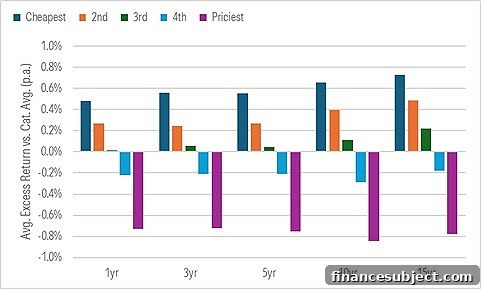
Fees predict performance – Basis Pointing
Inheritance tax speculation mini-special
The Treasury is reported to be reviewing inheritance tax again as part of deficit plans – Guardian
Gifting rules and the seven-year exemption window are under scrutiny – Morningstar
Explainer: how IHT works now and what the proposed changes might mean – Guardian
Onshore bonds and other planning strategies that can affect IHT outcomes – MoneyWeek
Products and services
35 birthday freebies and discounts to celebrate your day – Which
Prosper offers a short-term fixed-rate savings deal aiming to beat base rates – This Is Money
Guidance on navigating rising car insurance premiums – Which
Cashback offer when moving savings or investments to Charles Stanley Direct (terms apply) – Charles Stanley
Immediate needs annuities: pros and cons if you or a loved one require long-term care – This Is Money
From 2027, some savings may be taxed directly through payroll under proposed plans – Yahoo
Comment and opinion
Analyses and perspectives across markets, retirement and policy debates: earnings season takeaways, tax discussions, the importance of early retirement years, and why disruptive change keeps on coming — curated from a range of commentators and research outlets.
Investing and longevity mini-special
Explorations of lifespan risk, retirement sustainability and demographic change that investors should factor into long-term planning — resources and research on how likely savers are to outlive their assets and how to prepare.
Naughty corner: Active antics
Active investing stories and research, from retail-trader-driven volatility and the challenges of shorting, to debates about regulation and corporate cash management. These pieces dig into where active approaches succeed and where they stumble.
Kindle book bargains
Several investing and economics titles are on sale for Kindle at the time of writing, including practical personal finance guides and classic finance books available at reduced prices.
Environmental factors
Climate-related stories affecting travel, food supplies and city planning: Europe’s heatwaves, new guidance on data-centre water use, changing marine life, sea-level risks for coastal cities, and biodiversity concerns such as bumblebee declines.
Robot overlord roundup: ChatGPT-5 edition
Discussion continues about the capabilities and limits of the latest large language models. Some praise their rapid development; others underline the differences between powerful statistical models and human reasoning.
Not at the dinner table
Policy and culture items worth debating over dinner: satellite decisions tied to climate monitoring, tariff revenue questions, geopolitical technology competition, and human-interest stories that highlight broader societal shifts.
Off our beat
Features covering social trends, tech monetisation, education choices, and cultural change — from fake job services in China to the rise and fall of musical ringtones.
And finally…
“Have some humility – plenty of clever people get spanked regularly by the markets.”
– Tim Hale, Smarter Investing
Enjoy these links? Subscribe to receive this roundup every Saturday. Note the article contains affiliate links, including to Amazon and some services mentioned above.