
Curated investing reads from around the web.
I want to share two recent pieces of good news that felt worth celebrating.
First, Monevator has been nominated for a Plutus Award in the Best International Personal Finance category. The shortlist is competitive, and it’s flattering to be included. If you read this site regularly and feel like supporting it, please consider casting a vote for Monevator.
That nomination was submitted by one of the site’s readers, so if that was you — thank you. Recognition from readers is the best compliment any blog can receive.
The second update is that this blog is now available on Flipboard.
Flipboard is an elegant magazine-style app for tablet devices that turns RSS feeds, Twitter streams, and social media timelines into a beautiful, easy-to-browse reading experience. Once you try it, it quickly becomes a convenient way to keep up with favourite blogs and news sources.
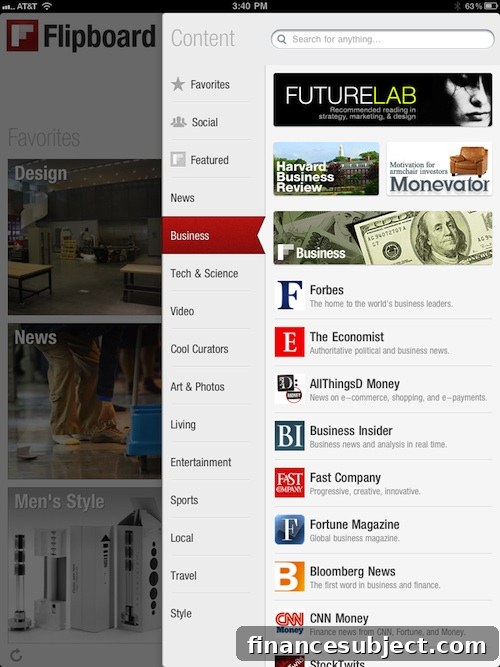
I was delighted when a Flipboard curator chose Monevator to be featured in the business section and even kindly prepared the graphic used for the listing. Seeing the site displayed prominently alongside well-known titles such as the Harvard Business Review was an enjoyable moment — not because it changes anything fundamental, but because it’s always nice to be noticed.
Monevator featured in the top right of the Flipboard business section
Thanks for indulging this brief moment of self-congratulation. If you have a tablet, give Flipboard a try for a fresh way to follow investing and personal finance content. And if you enjoy this site, a vote in the Plutus Awards would be genuinely appreciated.
P.S. On a related note, if anyone still believes that external regulators can fully police the risks of modern banking when a single trader at UBS reportedly generated a $2 billion loss, they might be placing too much faith in oversight alone.
From the money and investing blogs
- NS&I withdraws index-linked certificates after a short availability period — a reminder that financial products and promotions can change quickly (NS&I).
- Analysis of National Grid’s new index-linked retail bond and what it means for retail investors (Fixed Income Investor).
- Research and commentary on why international diversification remains an effective long-term strategy if investors are patient (Swedroe/Moneywatch).
- Thoughtful reflections on the role and style of investment commentators and how commentary can shape investor perceptions (Investing Caffeine).
- An argument that frugality alone is not a guaranteed route to wealth; saving and investing habits need to be combined with other financial behaviours (The Simple Dollar).
- Personal planning in the face of uncertainty — how to think about retirement strategy when the future is hard to predict (Oblivious Investor).
- Discussion of taxes and economic growth, and the trade-offs policymakers face when setting tax rates (Stumbling and Mumbling).
- A look at how the Borders book chain declined and what that decline illustrates about retail disruption (The Stranger, via a book trade blog).
- Opinion pieces challenging prevailing narratives about demographic change and how we think about ageing populations (Rick Ferri).
- A value-oriented take on mega-cap opportunities with companies like BHP Billiton for long-term investors (UK Value Investor).
- A reminder that a large portion of individual stocks can fall in value at any given time, reinforcing the importance of diversification (DIY Income Investor).
- Practical tips for getting the most from supermarket offers and short-term promotions without overspending (MoneyGrowers).
- An entertaining data experiment looking at correlations between investment returns and online search interest — light and thought-provoking (FT Alphaville).
Book of the week: The title reportedly read by the trader mentioned above has climbed Amazon’s business chart: The Wolf of Wall Street.
Mainstream media money
- Analysis of unemployment trends across Western economies and implications for growth and policy (The Economist).
- An exploration of the economic and political costs of breaking up the eurozone and what that could mean for markets (The Economist).
- Debates over whether gold represents a bubble and differing investor perspectives on precious metals (The Motley Fool).
- Coverage of how a rogue trader at UBS accumulated a multi-billion-dollar loss, and the questions that raises about risk controls and governance (BBC / Peston).
- Opinion that stricter separation of retail and investment banking activities (ring-fencing) is a necessary reform to limit systemic risk (Martin Wolf / Financial Times).
- Reporting on growing concerns about the behaviour and incentives of an elite class within the banking sector (Financial Times).
- Projections that wealthier individuals could face significant changes to pension entitlements, with analysis of potential impacts (Financial Times).
- Coverage assessing how certain exchange-traded products, including synthetic ETFs, may expose investors to hidden counterparty or operational risks (Financial Times).
- Stories showing investors increasingly seek higher dividend payouts as income and yield become more important in a low-growth environment (Financial Times).
- Investigations into how some fund managers may use mergers or product changes to conceal underperformance from investors (Financial Times).
- Commentary on the risks pension investors face if markets deliver weak returns for an extended period — the implications of another “lost decade” (Financial Times).
- Reports on the rise of buy-to-let investing in the UK amid a squeeze on first-time buyers and what that means for the housing market (The Telegraph).
- Comparisons showing how investment trusts have outperformed unit trusts in many sectors, and the reasons behind that performance (The Telegraph).
- Guidance for prospective home buyers weighing the pros and cons of purchasing a property in today’s market (The Independent).
- Practical consumer advice rounding up the best deals for phone, broadband, and television packages to help readers save on household bills (The Guardian).
- Coverage of a journalist who faced criticism for recording price checks in a supermarket — a snapshot of broader tensions between shoppers and retailers (The Guardian).
If you enjoy this curated list, consider subscribing to receive these weekly highlights and commentary.