
This post is one of a series reviewing returns in the decade after the financial crisis.
The past decade rewarded investors who maintained broad global equity exposure far more than those who favoured UK-focused stock funds. A globally diversified approach outperformed most domestic UK funds: the MSCI World delivered about 12% annualised in the period covered, and none of the UK-only funds in this review matched that level.
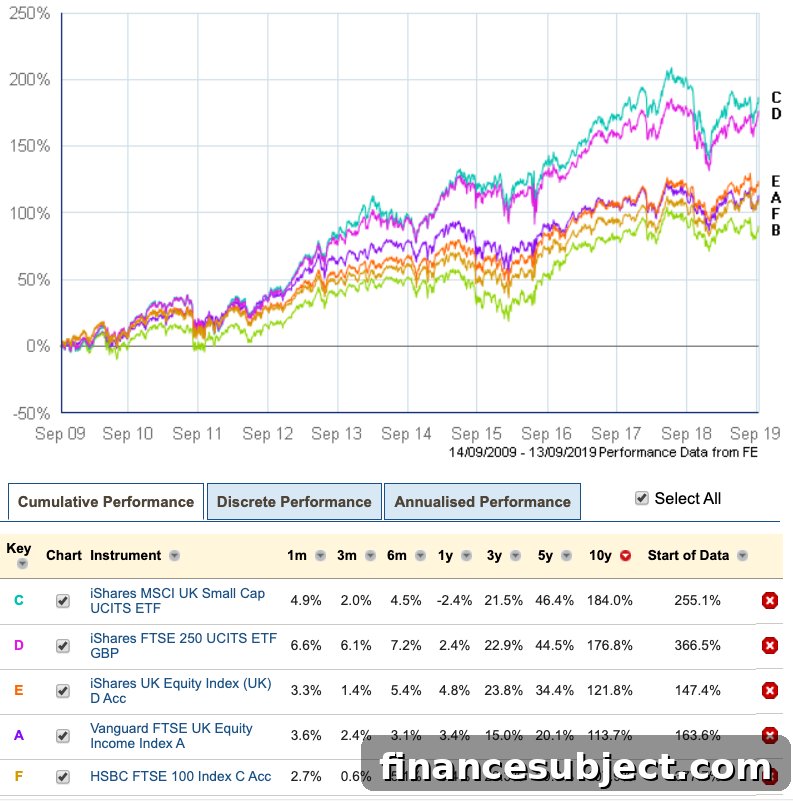
Trustnet provides the chart that illustrates this story:
Looking deeper within the UK market, smaller companies outperformed larger-cap peers. The iShares MSCI UK Small Cap ETF returned roughly 11% annualised, compared with the FTSE 250 mid-cap index at about 10.7%. The broader FTSE All-Share produced around 8.3% and the large-cap-focused FTSE 100 roughly 7.6% annualised. The difference between the top two is modest because UK small-cap funds and the FTSE 250 share many holdings, but the overall message is clear: smaller companies in the UK tended to deliver higher returns over this decade.
Over the period, smaller-cap funds earned at least 2.5% per year more than the broad UK market in our sample, a gap that exceeds what some investors might have expected from the academic small-cap premium. On the other hand, value-oriented and high-dividend UK strategies lagged. For example, the Vanguard UK Equity Income Index fund delivered about 7.9% and the Invesco FTSE RAFI UK 100 ETF came in lower, near 6.7% annualised.
Returns made in Britain
For newer investors, or those who first built portfolios a decade ago, these results might seem surprising. Ten years ago, thinking and available products were different: UK-tracking funds were commonly recommended as a simple way for new investors to get started. World-tracking funds and globally diversified passive products are far more mainstream now, which helps explain why investors increasingly gain their equity exposure through a single world tracker rather than a large home bias.
When assessing performance it helps to remember a few broad themes. Sector mix, the relative weighting of large multinational companies versus smaller domestic firms, and currency movements can all shape returns. In some periods these factors favour domestic markets; in others, global diversification smooths outcomes and captures growth where it happens. Risk factors like size and value can pay off—but they do not do so consistently every decade.
Market commentators often point to the appeal of UK shares on valuation grounds and to a softer pound, arguing that a resolution to political uncertainties like Brexit could prompt a re-rating. Passive investors are usually best served by avoiding attempts to time such narratives. Sticking to a disciplined plan, maintaining diversification, and rebalancing when appropriate typically produce better outcomes than chasing short-term predictions.
This review is part of a longer retrospective that looks at how several passive-friendly strategies performed over the decade. We’ll continue to revisit those results to highlight what worked, what didn’t, and why long-term diversification remains central to passive investing.
Take it steady,
The Accumulator
We’ll continue to gaze back ten years to see how other passive strategies have fared. Subscribe to receive all posts and updates from this retrospective series.