
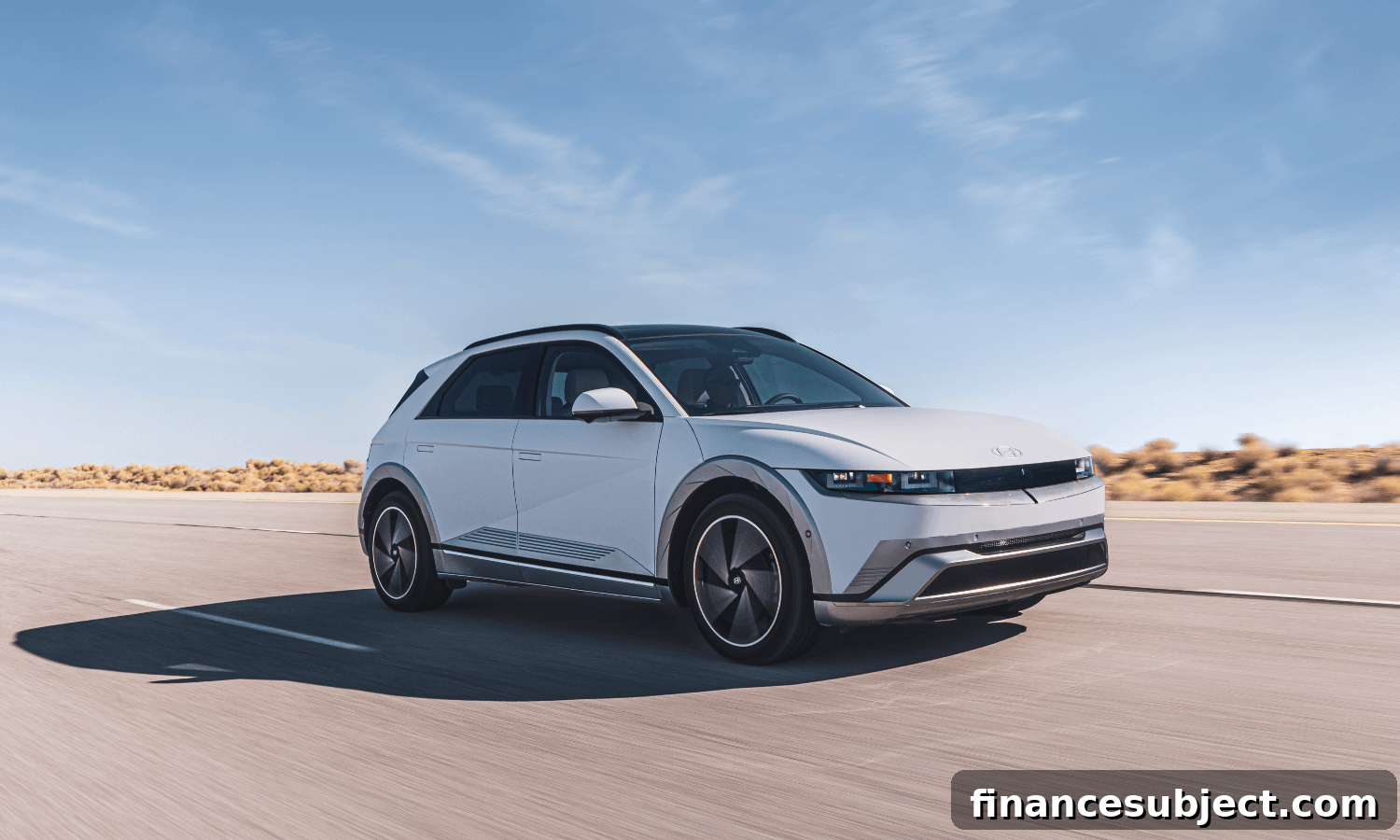
The Hyundai Ioniq 5 has quickly become a top choice for both first-time and returning electric-vehicle buyers in Canada. Built on a dedicated EV platform, the Ioniq 5 was engineered for structural stiffness and a well-tuned ride, without compromises to accommodate a gasoline counterpart. The result is a vehicle that combines value, striking design and refined driving dynamics, while offering more rear-seat headroom, legroom and shoulder room than many rivals such as the Ford Mustang Mach-E and Nissan Ariya.
Practicality is another strong suit for the Ioniq 5. It offers generous cargo capacity and can handle a roof-mounted cargo box for extended storage. All-wheel-drive models are rated for towing up to 2,000 lbs (907 kg), while the new-for-2025 Ioniq 5 XRT raises the bar significantly with a towing capacity of up to 5,834 lbs (2,645 kg). That combination of comfort, cargo flexibility and towing capability makes the Ioniq 5 attractive to buyers who want a versatile EV that can also support outdoor adventures and light towing tasks.
New for 2025: The Ioniq 5 XRT
The 2025 Ioniq 5 XRT introduces several notable firsts. It is the first Hyundai in Canada produced at Hyundai’s Metaplant in Georgia, and it is also the first Ioniq 5 in Canada to be factory-equipped with a Tesla North American Charging Standard (NACS) port. That NACS port gives owners direct access to more than 17,000 chargers on the Tesla Supercharger network without an adapter, effectively doubling the available DC fast-charging infrastructure for Ioniq 5 owners compared with CCS-only access.
For 2025 the XRT is unique among Ioniq 5 grades in Canada for shipping from the factory with the Tesla-style NACS port. Other 2025 Ioniq 5 grades continue to use the earlier Combined Charging System (CCS) inlet, which can still be used at Tesla chargers with an adapter where available.
Ioniq 5 improvements for 2025
Hyundai has targeted improved battery capacity for the 2025 model year, delivering range gains of up to about 36 kilometres per charge depending on trim and wheel size. All 2025 Ioniq 5 models benefit from increased range over the previous generation. Visually, the Ioniq 5 receives restyled front and rear bumpers for a fresher, more grounded appearance, plus new paint and wheel options and an added rear spoiler that update the car while preserving its recognizable design language.
Interior updates include redesigned climate controls, a revised centre console and a new steering wheel. Customer-driven enhancements such as a rear wiper have been added, and targeted structural reinforcements help improve occupant protection and reduce cabin noise. On the technology front, the 2025 Ioniq 5 includes Hyundai’s latest sixth-generation infotainment system, standard wireless Android Auto and Apple CarPlay across the range, and newly available driver-assistance features such as hands-on steering detection, remote smart parking and all-direction parking collision avoidance.
Is the Ioniq 5 a good car?
Industry recognition confirms the Ioniq 5’s strong credentials. The model earned numerous awards in 2022, including World Car of the Year, World Electric Vehicle of the Year and World Car Design of the Year, and won SUV of the Year honours from major publications. Canadian experts also recognized the Ioniq 5 in the 2023 Canadian Car of the Year Awards, where it took top honours in multiple categories.
Hyundai positioned the Ioniq 5 as a well-built, engaging EV in the SUV segment, delivering a blend of comfort, responsiveness and composed highway manners. Reviewers often highlight its stable, comfortable ride across a variety of road conditions — from smooth expressways to rougher backroads — making it a practical choice for daily commuting and longer trips alike.
How much is the Hyundai Ioniq 5 in Canada?
Canadian pricing for 2025 starts at about $52,999 for the Ioniq 5 Preferred Standard Range with a new 63-kWh battery and rear-wheel drive, offering an estimated driving range of 373 km. The Preferred Long Range models with the larger 84-kWh battery include a $58,229 Preferred Long Range (RWD) and a $60,229 Preferred Long Range AWD, with estimated ranges of around 504 km and 463 km respectively. Larger wheel options can reduce driving range, so buyers should check the impact of optional wheels and tires before finalizing a build.
The XRT model is offered only in the long-range AWD configuration and is rated at approximately 417 km of range while providing the model’s significantly higher towing capability. As with any EV, real-world range will vary with driving style, environmental conditions and load.
2025 Hyundai Ioniq 5 selected specs
- Starting price: Standard Range: $52,999; Long Range: $58,229; Long Range AWD: $60,229
- Vehicle type: Compact SUV
- Built in: Ulsan, South Korea / Georgia, U.S.A.
- Horsepower: Standard Range: 168 hp; Long Range: 225 hp; Long Range AWD: 320 hp
- Torque: Standard Range: 258 lb-ft; Long Range: 258 lb-ft; Long Range AWD: 446 lb-ft
- Battery: Standard Range: 63 kWh; Long Range: 84 kWh
- NRCan energy consumption rating: 16.9–21.5 kWh/100 km
- NRCan driving range: Standard Range: 373 km; Long Range: 504 km; Long Range AWD: 417–463 km
- NRCan annual energy cost: $600–$800
Prices and specifications are subject to change. Range and energy consumption figures are estimates and will vary with driving conditions.
How much is insurance for a Hyundai Ioniq 5?
Estimated monthly insurance costs for a 2025 Hyundai Ioniq 5 can vary widely depending on personal factors such as age, location and driving history. Example estimates for drivers living in Toronto with a clean record are:
- Female, age 35: $182 per month
- Male, age 35: $186 per month
- Gender X, age 35: $182 per month
These example quotes assume typical coverage levels and deductibles and were provided by a third-party comparison service. Actual premiums will vary; shoppers should compare personalized quotes to find the best rate and coverage for their situation.
Further reading on autos
- Compare car insurance quotes from Canada’s top providers
- How to buy a car in Canada and get the best loan rate
- Best used cars in Canada
- How car repair shops bill for their services