
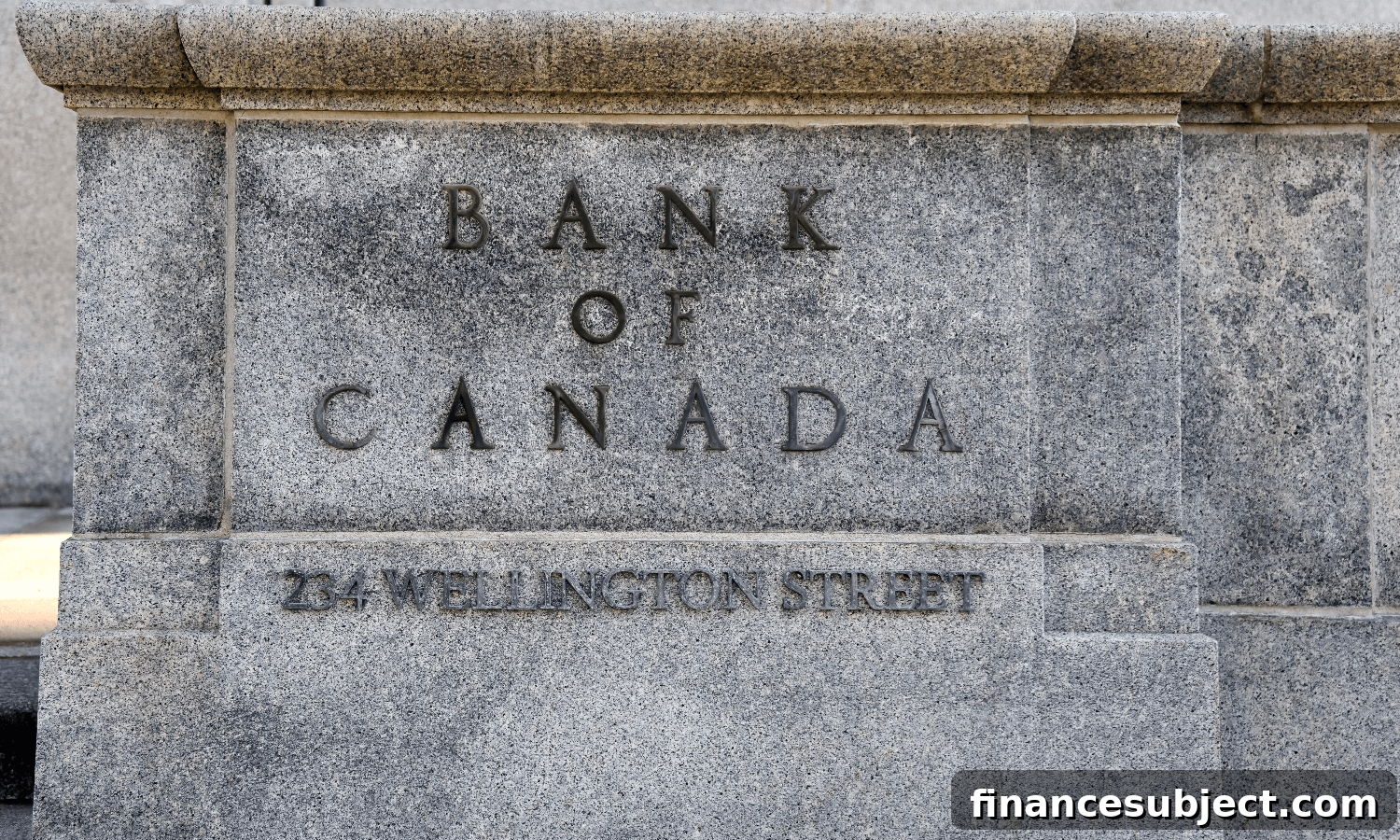
There’s little change on the horizon for interest rates as the Bank of Canada continues to sit in a holding pattern. In its July 30 announcement the central bank left the trend-setting overnight rate unchanged at 2.75%. Because lenders set their prime rates based on the Bank’s policy rate, the prime rate will also remain at 4.95%, which in turn keeps variable mortgage rates steady for now.
This is the third consecutive decision in which the Bank held rates, after similar pauses in June and April. Before this pause, the Bank had cut its benchmark rate seven times during a trimming cycle, reducing it by a total of 225 basis points between June 2024 and March of this year.
No surprises here—but risks remain
Economists largely expected the pause. June’s inflation reading showed consumer price growth rising to 1.9%, and the Bank’s preferred core measures—the median and trim CPI, which remove extreme price moves—remain elevated around 3%. Those core measures are a primary focus when the Bank sets policy.
Stronger-than-expected employment data and recent business and consumer surveys that point to greater economic resilience despite tariffs also helped shape the decision. In its statement the Bank noted the mix of forces at work: a weaker economy could push inflation down, while higher costs from tariffs and trade reconfigurations could lift it.
The accompanying statement said the Governing Council chose to hold the policy rate “with still high uncertainty, a Canadian economy showing some resilience, and ongoing pressures on underlying inflation.” The Bank added it will monitor both the downward pressures from a slowing economy and the upward pressures related to tariffs, and that a future rate reduction could be warranted if inflationary pressures ease and trade-related cost pressures are contained.
The Bank released a refreshed scenario outlook rather than a formal forecast. Under the current tariff outlook, the Bank expects GDP to contract in Q2 before recovering to roughly 1% growth in the second half of the year and then to about 2% growth by the end of 2027. That projection is slightly stronger than the Bank’s prior assessment, which pointed to 1.6% growth by the end of that horizon.
What the BoC’s rate hold means if you’re a mortgage borrower
Variable-rate mortgage borrowers are the group most directly affected by the Bank’s decision. Variable rates are set as a spread over a lender’s prime rate, so when the Bank’s overnight rate is unchanged, variable mortgage rates typically stay the same. For those borrowers, monthly payments, and the split between interest and principal, will remain steady for now.
Fixed-rate mortgage holders are not impacted today—their contract rate remains locked until renewal. However, those shopping for a fixed rate or approaching renewal may see higher fixed-rate pricing. Fixed mortgage rates are tied to bond yields, particularly the five-year Government of Canada yield. When bond yields rise, lenders pass the higher funding cost into fixed-rate mortgages. In July, five-year bond yields spent time above the 3% range as investors reacted to stubborn inflation and trade uncertainty. The Bank’s hold can reinforce those inflation concerns and keep yields elevated, which in turn can push fixed rates higher.
What if I’m coming up for renewal?
If your mortgage is maturing soon, it pays to be proactive. Getting a pre-approval with a rate hold—many lenders offer holds up to 120 days—can lock in today’s rates in case they rise, while still allowing you to benefit if rates fall. For homeowners worried about much higher renewal rates in 2025 and 2026—a possibility cited for roughly 60% of borrowers—securing the lowest available rate can significantly affect long-term costs.
Discuss flexible options with your lender: some borrowers temporarily extend their amortization to lower monthly payments, while others explore blending and extending or switching lenders at renewal to secure better terms.
What the BoC rate means if you’re an investor
Equity markets have been volatile since early March when tariff threats and trade tensions intensified. Stocks have recovered some losses amid new trade agreements and easing headlines, but markets remain sensitive to fresh tariff news and policy signals.
For investors seeking stability, passive investments and guaranteed instruments retain appeal. Guaranteed Investment Certificates (GICs) and high-quality short-term products benefit from the Bank’s policy stance. GIC rates are influenced by the prime rate and broader interest-rate expectations; today’s hold keeps many GICs competitively priced. For savers who favour low volatility, GICs and high-interest savings accounts remain reliable tools to preserve capital and earn predictable returns.
What the BoC rate means to Canadians’ savings
Savers should welcome the stability. High-interest savings accounts (HISAs) and short-term cash instruments often track the Bank’s rate environment. With the policy rate unchanged, returns on many HISAs are likely to remain stable in the near term, giving households predictable income on liquid cash.
Further reading
- Bank of Canada holds key rate at 2.75% in the face of trade uncertainty
- The wealth gap in Canada is wider than ever
- Canadians are turning to family—and credit—to stay afloat
- 4 underused tax and financial benefits Canadians are overlooking