
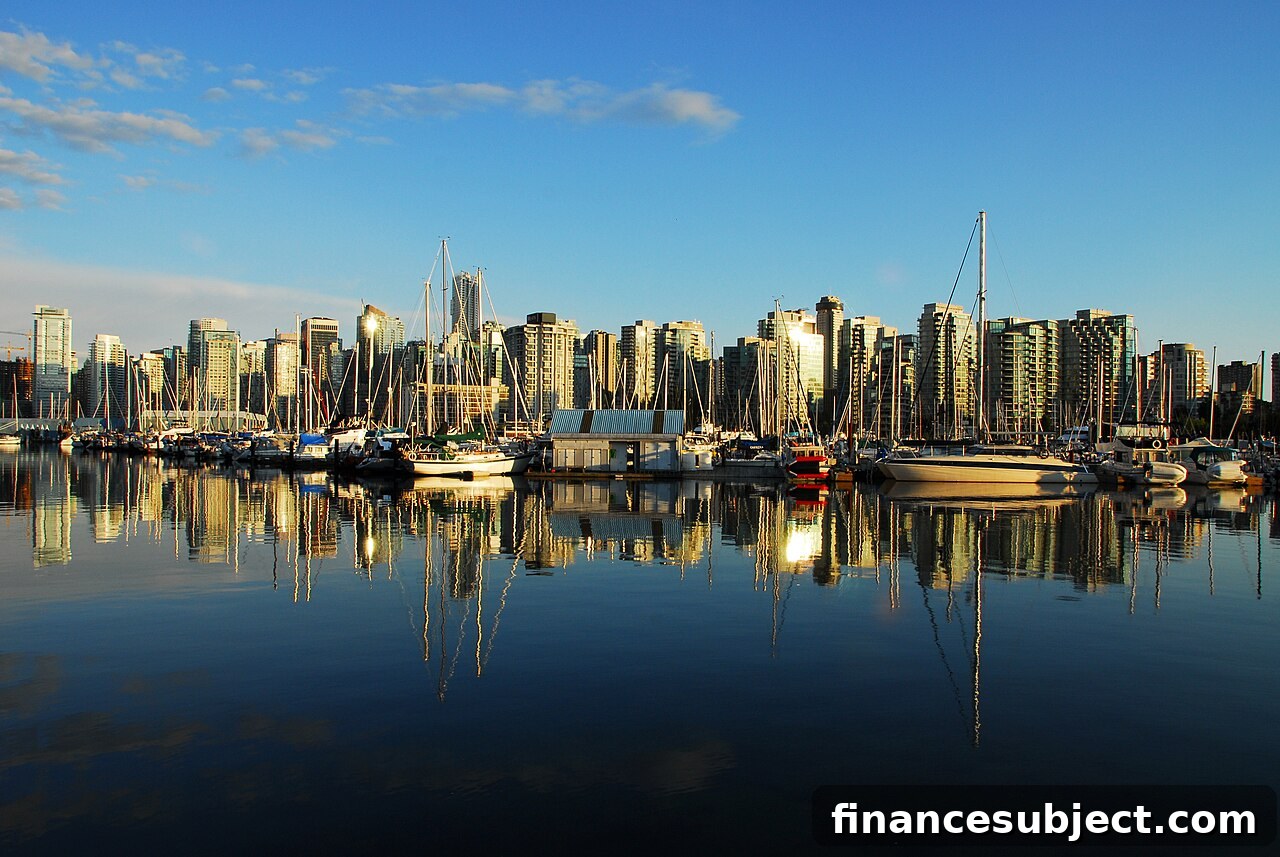
Framed by the North Shore Mountains and the Pacific, Vancouver is a city where you can ski in the morning and kayak in the afternoon. While living here commands a premium, that cost buys access to one of North America’s most culturally diverse dining scenes, a thriving film and tech sector, world-class parks such as Stanley Park and Pacific Spirit, and neighbourhoods that feel like small towns inside a global city.
Despite a cautious national outlook, Vancouver recorded strong real estate activity in recent years. With a median price around the mid six figures and many neighbourhoods averaging well above that, British Columbia’s largest city remains one of Canada’s most active and desirable housing markets.
Table of contents: Best places to buy in Vancouver
- The best neighbourhoods in Vancouver
- Closer look at the top three neighbourhoods
- Real estate trends in Vancouver
- What’s next for real estate in Vancouver?
- Resources and further reading
Best places to buy
Where to Buy Real Estate in 2026
The best places to buy real estate in Vancouver in 2026
Below are the top neighbourhoods to consider for real estate purchases in Vancouver this year. The table lists neighbourhood names, the part of Vancouver they belong to, average sold prices for 2025, short- and longer-term growth figures, and value and accessibility scores to help compare options.
| Rank | Neighbourhood | City area | Avg sold price 2025 | 1-year growth | 3-year growth | 5-year growth | Value score (out of 5) | Economics score (out of 5) | Accessibility score (out of 5) | Households with children (%) |
|---|---|---|---|---|---|---|---|---|---|---|
| 1 | Mount Pleasant | Vancouver West | $1,172,050 | -0.18% | 3.71% | 19.46% | 4.70 | 5.00 | 3.93 | 10% |
| 2 | Mount Pleasant | Vancouver East | $876,958 | -2.32% | -1.13% | 12.50% | 4.30 | 5.00 | 3.93 | 20% |
| 3 | Fairview | Vancouver West | $883,075 | -1.54% | -1.72% | 13.12% | 4.36 | 4.26 | 3.96 | 6% |
| 4 | Collingwood | Vancouver East | $893,675 | -0.78% | 1.25% | 29.29% | 5.00 | 3.61 | 3.46 | 29% |
| 5 | Kitsilano | Vancouver West | $1,355,150 | -0.13% | 1.96% | 19.26% | 4.35 | 4.18 | 3.70 | 22% |
| 6 | Downtown | Vancouver West | $662,750 | -5.31% | -8.31% | -0.81% | 3.41 | 4.72 | 3.48 | 9% |
| 7 | Hastings Sunrise | Vancouver East | $1,463,492 | -2.06% | 5.18% | 36.81% | 4.60 | 3.53 | 2.28 | 25% |
| 8 | Grandview Woodland | Vancouver East | $1,401,558 | -3.16% | -3.44% | 17.45% | 3.50 | 4.25 | 3.52 | 26% |
| 9 | Oakridge | Vancouver West | $1,558,392 | 7.42% | 0.08% | -2.44% | 4.40 | 3.13 | 2.13 | 18% |
| 10 | Killarney | Vancouver East | $1,620,742 | -2.91% | -1.90% | 26.72% | 3.58 | 3.80 | 1.41 | 30% |
Top three neighbourhoods in Vancouver
1. Mount Pleasant (Vancouver West)
Few neighbourhoods in Vancouver have repriced themselves as convincingly as Mount Pleasant West. It scores highly on economic measures and value, and saw nearly 20% appreciation over five years to an average sold price above $1.17 million. The False Creek Flats corridor—home to tech and digital media firms—has driven job growth, shifting a former industrial edge into a dynamic innovation hub.
Demographically it leans young and professional: only about 10% of households include children. Housing types range from low-rise apartments and “missing middle” units to planned high-rises near the future Broadway subway. With improved transit connectivity coming, Mount Pleasant West is evolving visibly and remains a top choice for buyers focused on career, amenities and transit access.
2. Mount Pleasant (Vancouver East)
Mount Pleasant East has increased in popularity while retaining strong local character. Main Street’s independent shops, breweries and community parks give the area a neighbourhood feel, and roughly 20% of households here are families, indicating long-term appeal for people putting down roots.
With an average price under $900,000 and solid five-year growth, Mount Pleasant East offers good comparative value on the East Side. The architectural mix—heritage homes, multi-family conversions and modern lofts—combined with ongoing infrastructure work, keeps the neighbourhood desirable without feeling overrun.
3. Fairview (Vancouver West)
Fairview sits at a crossroads of key bridges and transit routes, offering strong connectivity and a stable economic base. With an accessibility score near the top and consistent five-year appreciation, Fairview’s average price around the mid-$800,000s represents an attractive entry point into an established, highly walkable part of the city.
Major employers and institutions nearby—such as hospitals and civic offices—bring a professional population that values proximity to work, restaurants and cultural amenities. As city planning introduces more density along transit corridors, Fairview’s growth appears steady and well integrated into the urban core.
What’s happened in the Vancouver market?
Despite talk of a national slowdown, Vancouver’s real estate market remains active. The Lower Mainland recorded tens of thousands of MLS transactions recently, with average days on market and sold-to-ask ratios that still favour sellers in many segments.
The condo market is the workhorse: condo sales far outpaced townhomes and detached homes in volume, with many units selling quickly and close to asking prices. Townhomes occupy the middle ground in price and availability, while detached houses remain relatively scarce and expensive—often trading at well over $2 million—which keeps many buyers starting with condos.
Buyer behaviour has shifted from pandemic-era frenzy to a more conservative approach. Many first-time buyers now prioritize affordability and comfort over stretching finances to the limit. This measured behavior, along with ongoing demand and limited land supply, sustains the market’s underlying strength.
Return to menu.
Resource highlight
Compare mortgage rates quickly
Answer a few questions to get a personalized mortgage quote for buying, renewing, or refinancing.
Service information provided by a third-party partner.
What’s next for real estate in Vancouver?
Geography remains the city’s defining constraint. Bounded by mountains, ocean and an international border, the Lower Mainland cannot sprawl the way other metros can. That physical scarcity supports long-term land values and helps explain why demand remains deep.
Sellers should price realistically to move quickly: well-priced listings aligned with current market conditions continue to sell, while significantly over-priced homes tend to linger. For buyers, reframing high sticker prices as manageable weekly or monthly costs can reduce paralysis and make ownership feel attainable.
Renters may find that, in many cases, the monthly cost of homeownership near entry points compares more favorably to rising rents—particularly when factoring long-term equity accumulation. For buyers who get pre-approved, manage their budgets and resist overextending, Vancouver’s fundamentals remain attractive: limited land supply, persistent demand, and ongoing investment in transit and amenities.
Return to menu.
Newsletter
Get free MoneySense financial tips, news & advice in your inbox.
Further reading about buying a home
- Why mortgage costs are high in Canada
- The true costs of home ownership for young Canadians
- Mortgage payment calculator and affordability guides
- Buying a second home: how it works in Canada
About this article
This article was produced by a content partner with expertise in local real estate and edited for clarity. It is presented with contextual information from market data and local commentary.
Advertising disclosure
Parts of this content may be supported by third-party partners. Advertisers did not influence the editorial content.