
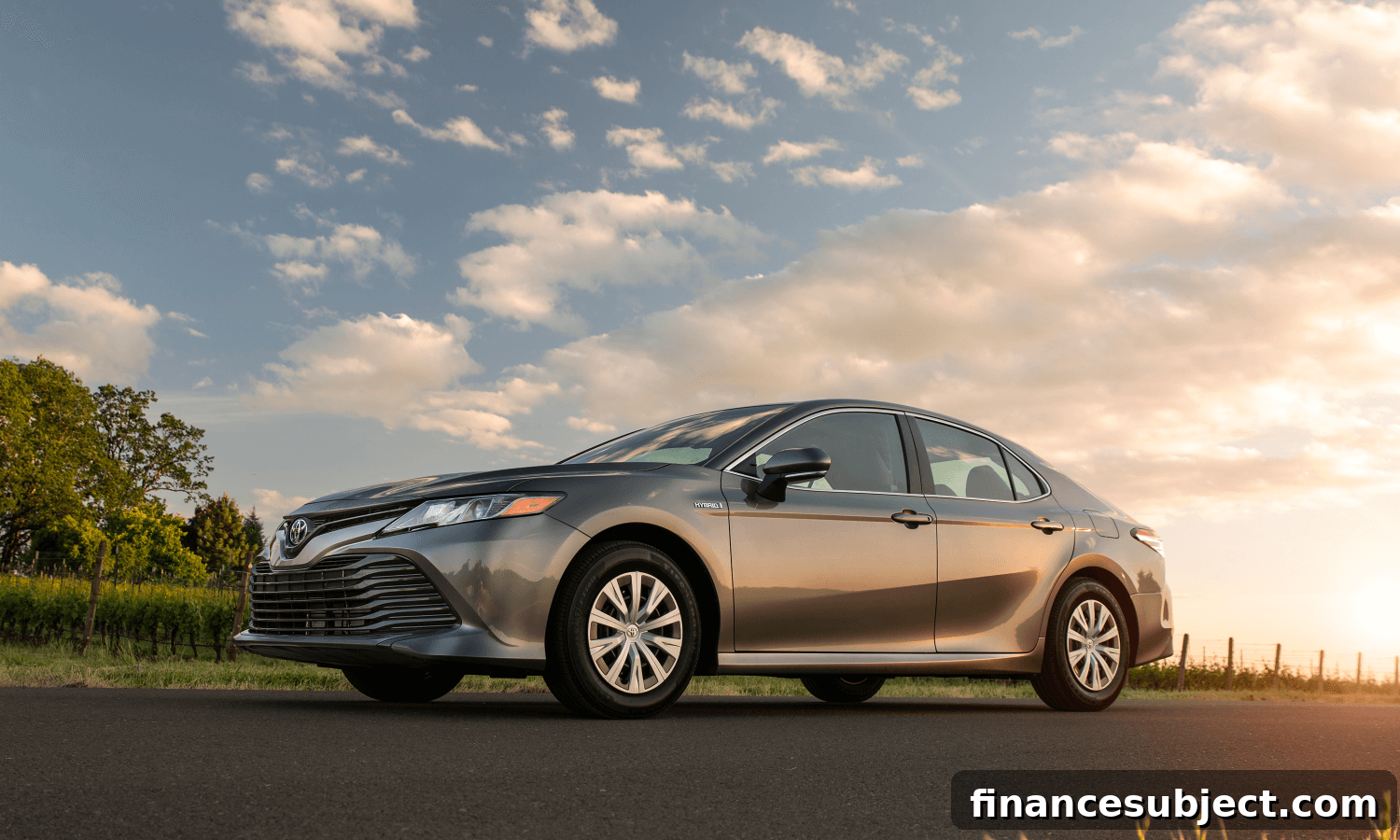
If you want a reliable used hybrid that pairs a modest purchase price with low running costs and strong long-term value, the 2016 and 2017 Toyota Camry Hybrid are appealing options. These late-model examples from the 2012–2017 Camry Hybrid generation offer quiet, comfortable driving, solid fuel economy and a well-documented reputation for dependability.
Toyota first introduced a Camry Hybrid in 2008 and refined the model in a second-generation Camry Hybrid launched in 2012. For the final two model years of that generation — 2016 and 2017 — Toyota made several incremental improvements that boosted comfort, refinement and standard equipment. The 2016 model added more features across trim levels and improved insulation to reduce wind and road noise. The 2017 model further refined ride quality and expanded the availability of driver-assist features, improving the overall value proposition for buyers seeking a used hybrid sedan.
Is the Toyota Camry Hybrid a good car?
The Camry has long been a strong choice in the mid-size segment, and the hybrid variant adds tangible fuel savings without sacrificing everyday usability. By 2017 Toyota had an extensive track record in hybrid technology, and the Camry Hybrid benefited from that experience: it offered a comfortable, quiet cabin large enough for four adults, a sizable trunk, and consistent, composed ride quality on a wide range of road surfaces.
Beyond comfort and efficiency, the 2016–2017 Camry Hybrid came with a comprehensive set of safety hardware and driver-assist systems for the era. Toyotas from this period commonly included multiple airbags, a backup camera and Toyota’s STAR Safety System, which bundles traction control, stability control and enhanced braking features. Those attributes helped the Camry Hybrid earn favorable ratings and recognition among family and safety-focused shoppers.
What’s under the hood of a Camry Hybrid?
The Camry Hybrid from this generation pairs a 2.5-litre four-cylinder gasoline engine with electric drive components and an automatic transmission. The hybrid system is self-charging: there’s no need to plug the vehicle in, as the battery is replenished through regenerative braking and engine operation. The hybrid powertrain produces noticeably more horsepower than the base non-hybrid four-cylinder while delivering significantly better fuel economy, making it an attractive choice for daily commuting.
Should you buy a used Toyota Camry Hybrid?
Used Camry Hybrids are especially well suited to drivers who spend time in stop-and-go traffic, where the electric motor contributes most to fuel savings. Compared with the non-hybrid four-cylinder Camry of the same generation, the hybrid model consumes substantially less fuel under mixed driving conditions. That translates to meaningful annual savings for drivers who cover higher mileage or do a lot of urban commuting.
When considering a used Camry Hybrid, factor in your typical driving pattern. If much of your mileage is city or commuter driving, the hybrid’s efficiency advantage and the potential annual fuel savings make it a strong buy. Even for drivers who split time between highway and city driving, the hybrid typically delivers better economy than the conventional four-cylinder Camry.
Maintenance and what to check on a used Camry Hybrid
Hybrid cars require the same baseline maintenance tasks as conventional cars — oil changes, brake inspections, suspension and alignment work — plus attention to hybrid-specific systems and software updates. A used Camry Hybrid will deliver the best ownership experience if it has been well maintained and has complete service records. Ask the seller for a detailed maintenance history and proof that recommended inspections and updates were completed.
When inspecting a potential purchase, pay special attention to paint condition and bodywork, as some owners of this generation have reported premature paint wear or chipping. Check for rust, dents and mismatched panels. Inside the cabin, test every seat adjustment and move the driver’s seat through its full range to detect unusual noises, loose mounts or worn mechanisms. Any clicking, popping or shifting in the seats can indicate needed repairs.
If the vehicle has an upgraded infotainment or navigation system, review the address book, recent destinations and saved locations; a history filled with hotels, airports or conference centers can suggest prior commercial or heavy-lift usage such as taxi or shuttle service. Also verify that the hybrid system warning lights behave normally during startup and a short test drive, and listen for unusual mechanical or electrical noises.
Example specifications (representative)
- Engine: 2.5-litre inline-4 hybrid
- Power: ~200–208 horsepower (combined system)
- Drive layout: Front-wheel drive
- Transmission: Continuously variable transmission (CVT)
- Fuel consumption (combined): Typically low single digits to mid single digits L/100 km depending on model year and testing method
- Body type: Four-door sedan
Insurance and ownership costs
Insurance premiums vary widely based on driver age, location, driving record and coverage choices. Generally, insuring a mid-size hybrid like a Camry Hybrid is comparable to insuring similarly sized non-hybrid sedans, though rates can differ by province or state and by insurer. When planning ownership costs, factor in fuel savings, routine maintenance, potential hybrid-specific component inspections and typical insurance and registration fees in your area.
Final thoughts
The 2016 and 2017 Toyota Camry Hybrid remain sensible choices for buyers seeking a used hybrid with proven reliability, comfortable daily driving and notable fuel economy. Prioritize vehicles with complete service records, inspect paint and interior condition carefully, and verify that hybrid-specific systems and software have been maintained. With the right example, a used Camry Hybrid can deliver years of economical, trouble-free ownership.