

If recent trips down the grocery aisles have left you surprised by the totals, you’re far from alone. The cost of feeding a family has risen noticeably since the COVID-19 pandemic began, with prices for groceries and dining out remaining higher than they were a few years ago. While overall inflation has moderated lately, food prices continue to sit well above pre-pandemic levels, according to Statistics Canada’s most recent Consumer Price Index update.
You can’t control supermarket pricing, but you can make your everyday spending work harder for you. A rewards credit card can help offset grocery and restaurant costs by returning value on purchases. The National Bank World Elite Mastercard stands out for families and frequent diners: it offers up to five points per dollar on groceries and restaurants for the first $2,500 in gross monthly purchases, then two points per dollar on eligible grocery and restaurant purchases after that. Read on to see how this card can turn routine food spending into meaningful rewards.
Earn rewards on food purchases
Rising food costs are largely outside your control, but the right credit card can make those bills more productive. The National Bank World Elite Mastercard gives cardholders up to five points per dollar on the first $2,500 of gross monthly purchases charged to the account, regardless of category. After that threshold, groceries and restaurant purchases earn two points per dollar.
Beyond food, the card boosts earn rates for several common spending categories: recurring bills, gas and electric vehicle charging, and travel booked through À la carte Travel. For these categories cardholders earn two points per dollar with no cap on points accumulation. All other eligible purchases earn a base rate of one point per dollar, making the card useful for everyday spending as well as big-ticket travel and recurring expenses.
Do rewards points make a difference?
Rewards points won’t stop food prices from rising, but they can help recover a portion of what you spend. For example, according to Canada’s Food Price Report for 2024 from the AgriFood Analytics Lab at Dalhousie University, a family of four is expected to spend about $16,297 on food in a year. Charging that amount to a National Bank World Elite Mastercard at the card’s maximum earn rate could generate roughly 81,485 rewards points—an amount that could be applied toward certain National Bank products and services, such as a portion of a mortgage payment.
Key travel and insurance benefits
The card is more than a rewards vehicle for groceries—it’s also designed for travellers. When you book travel with the card, you automatically receive a suite of travel insurance protections. Coverage typically includes emergency medical insurance outside your province of residence, trip cancellation and interruption insurance, departure delay protection, lost or stolen baggage coverage, and rental vehicle insurance for accidents, theft, fire, or vandalism. Insurance limits and exclusions apply; check the issuer’s policy details for full terms.
Cardholders also enjoy unlimited access to the National Bank Lounge at Montréal–Trudeau Airport for international departures, a perk that can make travel days more comfortable. Additionally, the card offers an annual travel reimbursement of up to $150, which can be used to reimburse eligible expenses such as airport parking, baggage fees, seat selection charges, airport lounge access, or airline ticket upgrades.
National Bank World Elite Mastercard
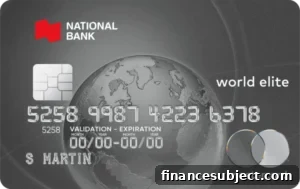
- Annual fee: $150
- Interest rates: 20.99% on purchases; 22.49% on balance transfers and cash advances
- Earn rate: Up to 5 points per $1 on grocery and restaurant purchases (first $2,500 in gross monthly purchases); 2 points per $1 on gas, EV charging, recurring bill payments and travel booked through À La Carte Rewards; 1 point per $1 on all other purchases.
- Welcome offer (Feb 3 to Jun 29, 2026):
- 10,000 points for enrolling in payment insurance for at least the first three months.
- 5,000 points for $5,000 in net purchases within the first three months after enrollment.
- 10,000 points for $20,000 in net purchases during the first 12 months.
- Bonus offer: 10,000 points when you open your first current account within seven days of signing the credit card application.
- Minimum income requirement: Personal income of $80,000 or household income of $150,000
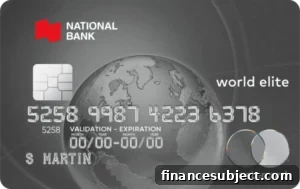
Also worth considering: National Bank Platinum Mastercard
If you don’t meet the World Elite card’s income requirement, the National Bank Platinum Mastercard is a lower-threshold alternative. It has no specific minimum income requirement and still rewards grocery and restaurant spending. The Platinum card offers two points per dollar on eligible groceries and restaurants for the first $1,000 in gross monthly purchases charged to the account; after that, eligible grocery and restaurant purchases earn 1.5 points per dollar.
High grocery bills and the general rise in living costs are largely out of your hands, but the credit card you choose can help stretch your budget. For households that spend heavily on food, recurring bills and travel, the National Bank World Elite Mastercard can return meaningful value on everyday purchases.
This article is sponsored.
This paid post is intended to inform readers and may feature a client’s product or service. Content was written, edited and produced by MoneySense with contributions from assigned freelancers and reviewed by the client.
Read more about spending:
- Earning, saving and spending money in Canada: A guide for new immigrants
- Applying for a credit card: What you need to know
- Your new travel companion: A credit card with perks at home and abroad
- MoneySense’s free Excel template for your monthly budget
- Budgeting tips for young adults to take control of finances
Newsletter
Get free MoneySense financial tips, news & advice in your inbox.
® Mastercard and World Elite are registered trademarks, and the circles design is a trademark of Mastercard International Incorporated. Authorized user: National Bank.
® National Bank and À la carte rewards are registered trademarks of National Bank of Canada.