

When money is tight, it’s reasonable to ask whether pet insurance is a necessary expense. For some pet owners, a policy provides valuable financial protection; for others, building an emergency fund in a high-interest savings account may be a better fit. This article explains how pet insurance works, current costs, and practical alternatives so you can decide what makes the most sense for your pet and your budget.
Below, we outline the typical coverages, pros and cons, average premiums, the reasons costs are rising, ways to reduce premiums, and alternatives to insurance.
What pet insurance covers (and what it doesn’t)
Pet insurance functions similarly to human health insurance: you pay a recurring premium to keep a policy active and, when a covered event happens, the insurer reimburses part of the veterinary bill after any deductible or co-pay.
- Accident-only policies typically cover injuries from accidents such as being hit by a vehicle, torn ligaments, poisoning, or ingesting foreign objects.
- Accident and illness policies cover those accident scenarios plus many medical issues, including broken bones, infections, surgeries, hospital stays, prescription medications and treatment for illnesses.
Pet insurance commonly excludes pre-existing conditions, and coverage for older animals or some breeds may be limited or denied. Routine preventative care—such as vaccinations, wellness exams and dental cleanings—is usually not covered unless you purchase a separate wellness or routine-care add-on.
Pros and cons of pet insurance
Evaluating the advantages and drawbacks helps determine whether a policy fits your situation.
| Pros | Cons |
|---|---|
| Provides financial peace of mind as veterinary costs rise | Older pets and those with pre-existing conditions are often hard to insure |
| Lower premiums when you enroll a younger pet | You typically pay the vet first and are reimbursed later |
| Can make expensive treatments more affordable | Policy benefits and exclusions vary—read terms carefully |
| Makes budgeting for pet health care more predictable | Total spent on premiums may exceed claim payouts depending on claims history |
| Premiums commonly rise over time (often annually) |
How much does pet insurance cost?
Monthly premiums vary based on your pet’s species, breed, age, location and medical history, plus choices you control such as the deductible, reimbursement percentage and annual coverage limit. In general, insuring a younger pet yields lower rates; costs tend to climb as pets age.
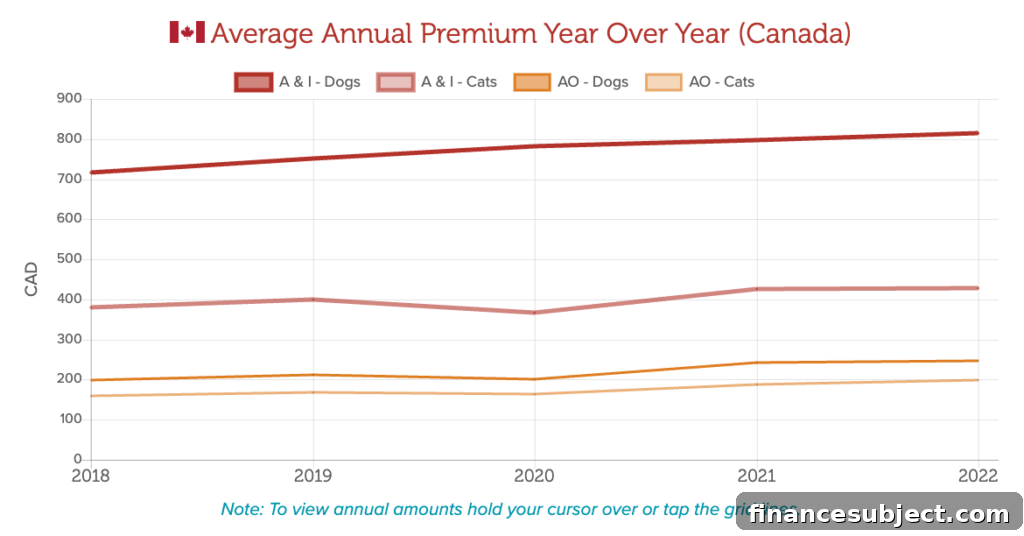
Data from the North American Pet Health Insurance Association (NAPHIA) shows 2024 average monthly premiums in Canada were approximately:
- $22.46 for dogs and $18.47 for cats for accident-only policies
- $89.18 for dogs and $45.86 for cats for accident-and-illness policies
More comprehensive coverage and higher benefit limits increase premiums. Compare plans carefully to make sure the coverage aligns with your needs and financial tolerance for out-of-pocket costs.
Newsletter
Get free MoneySense financial tips, news & advice in your inbox.
Why pet insurance is getting more expensive
Pet insurance premiums have risen over the past decade. Increases reflect several factors, including general inflation, higher wages for veterinary staff, and the growing cost of medical supplies and diagnostics. Advances in veterinary medicine mean more life-saving but costly treatments—such as cancer therapies and advanced surgeries—are available, which also drives up claim costs and, in turn, premiums.
Before buying a policy, weigh the risk of facing large, unexpected veterinary bills against the cost of ongoing premiums.
How to keep pet insurance costs down
Use these strategies to reduce premiums without sacrificing necessary protection:
- Shop and compare: Get multiple quotes and compare similar coverages to find the best value.
- Raise the deductible: Higher deductibles lower monthly premiums but require you to pay more at claim time—choose an amount you can manage in an emergency.
- Lower the annual limit: Selecting a smaller annual payout cap reduces premium costs, though you’ll be responsible for expenses above that limit.
- Ask about discounts: Many insurers offer multi-pet discounts when you insure more than one animal with the same company.
Is pet insurance worth it?
The decision depends on your financial situation and tolerance for risk. Consider these scenarios:
Pet insurance may be worth it if you:
- Would have difficulty covering a large, unexpected vet bill
- Own a breed with known health concerns
- Want peace of mind that expensive treatments are more affordable
- Enroll while your pet is young to lock in lower premiums
Pet insurance may not be worth it if you:
- Can comfortably cover veterinary costs from savings
- Your pet is older or has pre-existing conditions that limit eligibility
- You only want routine care coverage (wellness plans may be a better match)
- Available policies offer low limits or high costs that don’t justify the benefit
If you remain unsure, accident-only coverage can be a middle ground that protects against major emergencies at a lower price point.
Alternatives to pet insurance
If insurance is unaffordable or unsuitable, consider these alternatives:
- Open a dedicated savings account: A high-interest savings account lets you build an emergency fund while earning interest. Regular monthly contributions can create a reliable reserve for vet bills.
- Crowdfund emergency care: Dedicated pet crowdfunding platforms can help raise funds for costly treatments when time is tight.
- Try virtual vet consultations: Telemedicine for pets can be a lower-cost option for triage, follow-ups and minor concerns.
- Seek low-cost local services: Humane societies and charitable organizations sometimes offer subsidized veterinary care or financial assistance for qualifying pet owners.
Research all options so you know what support is available when an unexpected medical issue arises.
Rankings
Compare the best HISAs rates in Canada
FAQ
Pet insurance can be expensive, and many people opt out because of the premium cost. Typically you must pay the vet bill up front and wait for reimbursement. Routine preventive care usually isn’t covered without an extra wellness add-on.
Costco offers pet insurance through a partner provider, but coverage limits and exclusions vary. Basic checkups and dental care are generally not included. Customer experiences are mixed, so review the exact policy details and claims process before committing.
Yes. Insurers can deny coverage for pre-existing conditions, for pets that exceed an age limit, or for treatments explicitly excluded in the policy. Read policy terms carefully to understand limits and exclusions.
Not necessarily. Filing claims can sometimes lead to higher premiums. Consider saving claims for larger expenses—insurance tends to be most valuable for serious emergencies or costly treatments.