
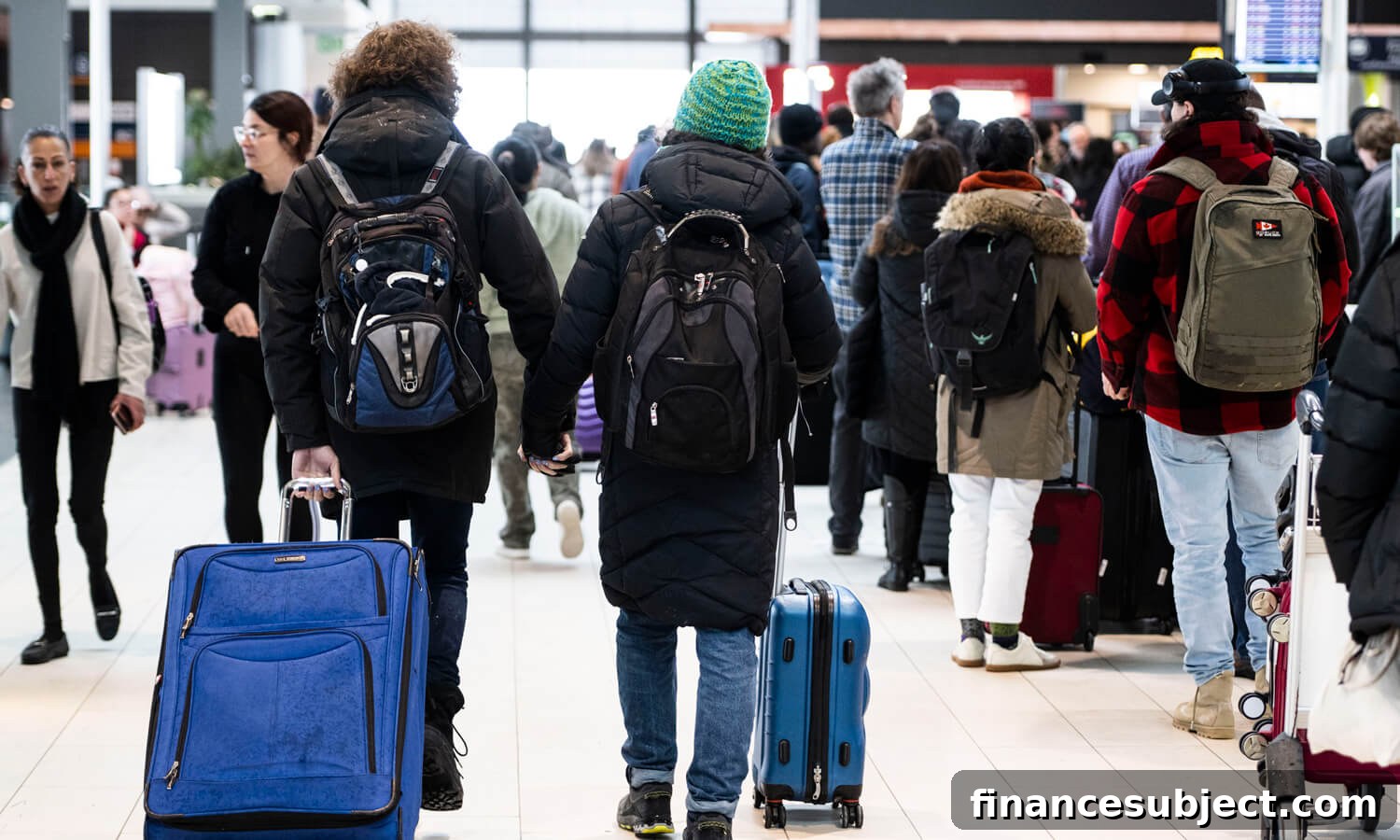
The federal government has proposed tighter rules clarifying airlines’ obligations to passengers when flights are delayed, cancelled or disrupted—even in situations deemed “exceptional circumstances” and outside the carrier’s direct control. The changes come as part of an update to the Air Passenger Protection Regulations being advanced by the Canadian Transportation Agency.
Do airlines pay for hotels for flight delays in Canada?
Under the proposed amendments, carriers would be required to provide meals after a delay of two hours and arrange overnight accommodation when delays make it necessary. The intention is to ensure travellers are not left without basic support during extended disruptions, even when the disruption is attributed to causes beyond the airline’s control.
How long does it take for an airline refund when a flight is delayed or cancelled?
The Canadian Transportation Agency is also proposing a faster refund timeline. If a passenger wants a refund rather than a rebooking when a flight is cancelled, delayed by three hours or more, or when they are involuntarily denied boarding, airlines would have to issue refunds within 15 days. That shortens the current 30-day deadline and aligns Canadian practice more closely with standards in other jurisdictions, according to the regulator.
Featured credit cards
Featured cards mentioned in the original report include national and major issuer products commonly used for travel spending. If you are evaluating credit cards for travel benefits or purchase protections that may help during delays or cancellations, check card terms directly with the issuer.
What happens with weather delays?
The draft amendments list examples of “exceptional circumstances” that can reasonably be outside an airline’s control: security threats, unscheduled airport closures, bird strikes, severe weather and aircraft damage that could affect safety. While these events may relieve carriers from some compensation obligations under the new framework, the proposals also clarify situations where airlines must still assist passengers.
Changes to the Canada Transportation Act: making rules clearer and simpler
The Canadian Transportation Agency has been revising passenger protection rules since the government passed legislation in 2023 to strengthen traveller rights. The revised regulations are intended to simplify and clarify obligations for both passengers and carriers, replacing an earlier three-category system that the regulator says created “grey zones” and inconsistent interpretations.
Previously, Canada’s 2019 passenger rights framework divided disruptions into three categories: disruptions within the carrier’s control; disruptions within the carrier’s control but required for safety; and disruptions outside the carrier’s control. Compensation was limited to the first category, but that approach often led to disputes when the cause of a disruption was unclear or contested.
The agency reported receiving more than 150,000 air travel complaints since 2019, many of which went unresolved or required lengthy adjudication. The proposed amendments are intended to reduce disputes and speed up resolutions by removing ambiguity about when passengers are owed assistance or compensation.
“The proposed amendments eliminate grey zones and ambiguity about when passengers are owed compensation, which will ensure quicker resolutions for passengers.” — Transport Minister Anita Anand
The new rules for passenger rights
The proposed changes are open for a 75-day public comment period. Under the draft rules, airlines would generally not be required to compensate passengers for inconveniences arising solely from prescribed exceptional circumstances. However, the amendments explicitly list circumstances in which carriers must still provide assistance regardless of the exception.
Notably, when a flight is cancelled or a passenger is involuntarily denied boarding, carriers would be required to rebook the passenger on the airline’s next available flight or on an alternative carrier’s flight when feasible—even in cases attributed to exceptional circumstances. Carriers would also be required to rebook passengers who miss, or are likely to miss, a connecting flight because of an earlier disruption on the same itinerary.
The draft regulations include a maximum penalty of $250,000 for violations by airlines, a substantial increase from current levels and an amount originally proposed in the 2023 legislation. The Canadian Transportation Agency estimates the new rules would cost carriers roughly $0.99 per passenger flight annually, or about $512 million in total over a 10-year period after implementation.
Read more about travel costs:
- Canada’s best travel credit cards
- Canadians turn domestic for holiday travel
- Travel hacks to help you save money on your next trip
- Credit cards that can help with travel to Orlando