Kyle Prevost, creator of 4 Steps to a Worry-Free Retirement, Canada’s DIY retirement planning course, shares the week’s financial headlines and explains what they mean for Canadian investors.
The CEO of ChatGPT is out… and back in!?
OpenAI’s CEO Sam Altman experienced a dramatic week that captured global attention. What began as an abrupt leadership change quickly transformed into one of the most consequential corporate sagas of the year: a company valued at roughly USD 86 billion briefly appeared destined for upheaval—and then returned to familiar ground.
For a detailed, multi-angle exploration of the events, search for Derek Thompson’s podcast for a thorough breakdown. Several aspects of the story remain contested depending on which version you follow.
ChatGPT and OpenAI’s timeline
Key points to understand the sequence and implications:
| 2015 | • OpenAI launched in late 2015 by Sam Altman, Elon Musk and other AI researchers. • The organization began as a non-profit committed to advancing AI research under ethical and safety-focused principles, with the goal of ensuring safe general artificial intelligence benefits humanity. |
| 2018 | • Elon Musk left the organization. • OpenAI continued its research activities but was increasingly competing with well-funded corporate rivals. |
| 2019 | • OpenAI released GPT-2 and began gaining broader attention. • The company reorganized by creating a capped-profit subsidiary owned by the non-profit board—an unusual corporate structure that combined mission-driven goals with a profit arm. • Microsoft invested heavily in OpenAI, reinforcing its importance in the tech landscape. • Tension emerged between board members focused on safety and academics, and company engineers and leaders focused on rapid technical advancement. |
| 2023 | • An internal conflict culminated in the board firing CEO Sam Altman. • A large portion of OpenAI’s staff threatened to resign unless Altman was reinstated and governance changes were made, demonstrating the influence of the company’s technical talent. • Microsoft moved quickly to recruit Altman, leading to speculation about a rapid acquisition of talent and assets. • Days later Altman was reinstated as CEO and significant board changes were announced, allowing most employees and partners to continue their work uninterrupted. |
In short: powerful personalities and divergent priorities clashed inside one of the world’s most important AI companies. The episode raises broader questions about corporate governance, the balance between safety and rapid innovation, and the role of large tech partners.
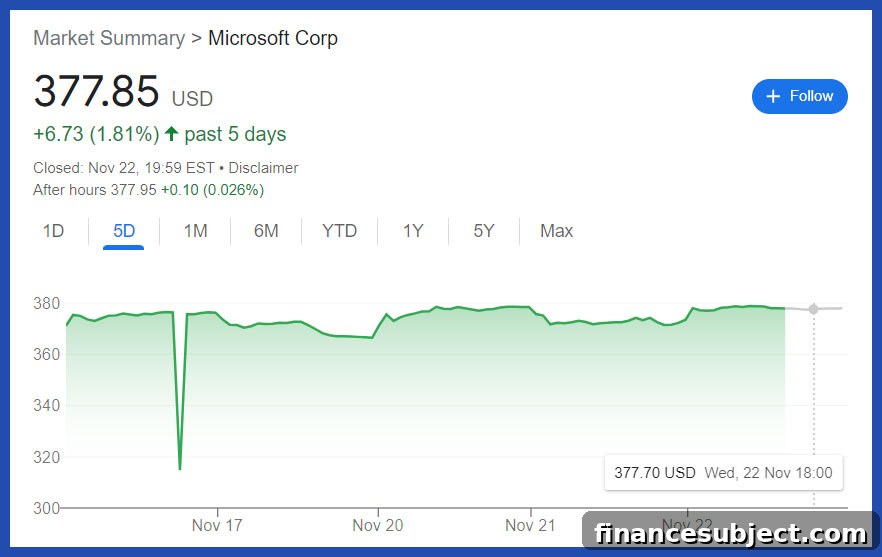
What does this mean for Canadian investors? Likely little in the long run. Microsoft’s shares reacted briefly to the uncertainty, but the market quickly absorbed the events and moved on. The bigger takeaway is that governments may need to establish clearer oversight if society wants consistent safeguards around AI—corporate actors appear inclined to prioritize growth, often leaving regulatory gaps.
READ NOW
Nvidia lives up to lofty expectations
AI-chip leader Nvidia reported strong quarterly results after markets closed on November 21. Earnings per share were USD 4.02 versus an expected USD 3.37, and revenue reached USD 18.12 billion versus an expected USD 16.18 billion. Despite the sizable beat, the stock dipped roughly 2% the next day—an illustration of how elevated expectations can make even great results feel disappointing to investors.
Nvidia’s stock has soared this year, reflecting investor enthusiasm for its position in AI hardware. One of the most notable highlights from the report was data centre revenue, which jumped approximately 279% to USD 14.51 billion—driven by cloud providers and enterprises investing in AI infrastructure.
Only a few years ago Nvidia was widely known for graphics chips used in gaming. Today, its lead in AI accelerators gives the company significant pricing power and rapid revenue growth. That said, management cautioned that export restrictions and geopolitical factors could weigh on future quarters, a risk investors should monitor.
READ NOW
When will the stock market reach new highs?
Ben Carlson’s analysis on A Wealth of Common Sense examines how frequently the U.S. stock market reclaims its all-time highs. With recent gains, U.S. markets are approaching prior peaks, and the interval since the last high looks likely to be one of the longer gaps on record—meaning the recent bear market hurt investors but did not produce an exceptionally long setback by historical standards.
In Canada, the TSX Composite peaked at 22,213 in April 2022 and currently sits near 20,114—about 10% below that high. Given how markets typically recover, it’s reasonable to expect Canadian equities could retest previous highs in the months ahead. Keep in mind, however, that Canadian index returns include higher dividend yields on average than U.S. indices, a factor not captured by price-only comparisons.
Also remember the distinction between nominal and inflation-adjusted levels. Even if markets return to 2022 price levels, inflation over the past years means those nominal gains may not buy the same real-world purchasing power. For investors drawing on portfolios for spending, inflation raises the amount of assets required to maintain living standards.
USE TOOL
Make inflation work for you
Inflation is most noticeable at the grocery checkout and when renewing mortgage terms, but it also has positive side effects in tax and benefit indexes. The government uses the year-over-year change in the Consumer Price Index from September to September to adjust benefits and contribution limits for the next year.
For 2024, projected adjustments include:
| 2024 projected | 2023 | 2022 | 2021 | 2020 | |
| Indexation | 4.7% | 6.3% | 2.4% | 1% | 1.9% |
| TFSA annual limit | $7,000 | $6,500 | $6,000 | $6,000 | $6,000 |
| OAS repayment threshold | $90,997 | $86,912 | $81,761 | $79,845 | $79,054 |
Highlights for Canadians:
- The government applied a 4.7% indexation figure to many 2024 thresholds and limits.
- The TFSA annual contribution limit is projected to rise to $7,000.
- The Old Age Security clawback threshold will increase to $90,997.
- Federal income tax brackets will be adjusted upward by 4.7%.
- The RRSP contribution limit for 2024 is projected at $31,560.
- The Canada Child Benefit will be adjusted higher in line with indexation.
Canadian adults who have been eligible since 2009 could hold up to $95,000 in unused TFSA contribution room, and when combined with expanded RRSP space, the new FHSA, and possibly an RESP, Canadians have significant capacity to shelter investments from tax. These changes can be an opportunity: increasing contribution room and indexed thresholds help maintain retirement and tax planning power over time.
If you’d like practical guidance on managing withdrawals and tax-efficient account use in retirement, look for reputable resources on RRSP and TFSA strategies and consider consulting a certified financial planner for personalized advice.