

Kyle Prevost, editor of Million Dollar Journey and founder of the Canadian Financial Summit, summarizes recent financial headlines and provides context for Canadian investors.
Nvidia profiting from the AI boom
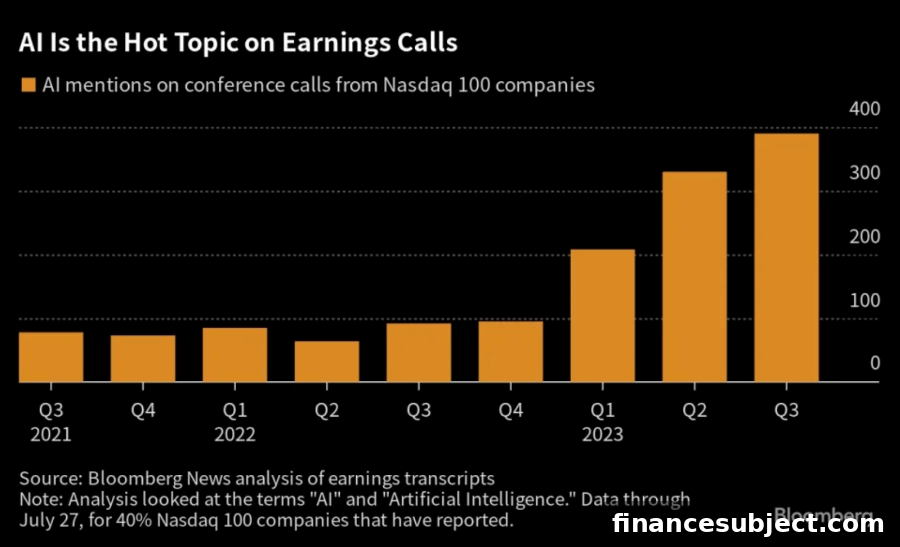
The old saying about the gold rush still applies: those who sold the picks and shovels often prospered more reliably than those who chased the ore. Today, the modern equivalent are companies supplying the infrastructure and hardware for artificial intelligence. While many firms claim they will use AI to improve operations, the firms producing the core components—particularly chips and data-center hardware—are reaping the most tangible benefits.

Nvidia (NVDA/NASDAQ) reported exceptionally strong results, sending its shares sharply higher after the company beat already-elevated expectations. For the latest quarter, Nvidia delivered earnings per share of $2.70 versus analysts’ $2.09 estimate, and revenue of $13.51 billion versus a $11.22 billion consensus. Those results underline how dominant Nvidia has become in the machine-learning chip market.
- Nvidia’s revenue is up about 88% year over year.
- The company’s stock has surged roughly 240% year to date.
- Nvidia’s gross profit margin exceeds 70%, exceptionally high for a maker of physical products. For comparison, some leading technology companies report gross margins in the mid-40s.
- Demand for Nvidia’s chips continues to outstrip supply.
- The company announced a $25 billion share buyback program, a substantial return of capital.
- Nvidia now ranks among the handful of U.S. tech companies with market values measured in the trillions.
- Industry reports suggest Nvidia controls an overwhelming share of the machine-learning accelerator market.
- Analysts described the quarter as “stunning,” noting the company’s rapid momentum in AI-related demand.
It’s impossible to predict exactly which companies will best monetize AI over the long run. What is clear: demand for the core hardware and software enabling AI growth is creating a lucrative market for those selling the “picks and shovels.”
For readers interested in the implications for financial planning, questions remain about when and how investors should incorporate AI exposure into diversified portfolios, and whether to rely on automated advice or human guidance when dealing with such fast-evolving markets.
RBC remains a Canadian banking leader
Canadian banking earnings highlights
- RBC (RY/TSX): Reported adjusted earnings per share of $2.84 versus $2.71 expected and revenue of $14.49 billion, beating consensus. Shares reacted modestly in trading as investors weighed the results against outlook and cost plans.
- TD (TD/TSX): Reported adjusted earnings per share of $1.99 versus $2.04 expected and revenue of $12.78 billion, slightly ahead of revenue estimates but below EPS expectations.
Despite turbulence among some regional U.S. banks earlier this week, Canada’s largest banks showed resilience across their balance sheets. RBC noted pre-tax earnings grew about 7% year over year, with net interest income and loan volumes rising in Canada. Importantly, RBC’s common equity Tier 1 (CET1) capital ratio stands at 14.1%, comfortably above regulatory minimums and providing a solid buffer against future loan stress.
RBC also reiterated a focus on cost reductions and plans modest workforce reductions in the near term as part of efficiency initiatives. At the same time, TD is taking different steps after calling off a U.S. acquisition; TD plans to return capital to shareholders via a sizable share repurchase while maintaining a healthy CET1 ratio around 15.2%. TD indicated plans to add staff in certain areas even as it manages expense growth, signaling divergent near-term strategies among top Canadian banks.
For investors, these results underline the relative strength and regulatory resilience of major Canadian banks, which remain central to many long-term Canadian equity allocations.
U.S. retail: necessities outperform discretionary goods
Recent U.S. retail earnings reveal a diverging pattern: retailers focused on essential merchandise are holding up better than companies that sell discretionary goods. Consumers under price pressure are trimming non-essential spending, which is showing up in earnings and guidance from several chains.
U.S. retail earnings highlights
- Lowe’s (LOW/NYSE): Posted EPS of $4.56, roughly in line with expectations, with revenue nearly matching consensus; shares rose as investors welcomed stability in home-improvement demand.
- Macy’s (M/NYSE): Reported EPS of $0.26 and a slight revenue beat, but shares slipped after management cut full-year sales guidance amid softer demand for discretionary apparel.
- Dollar Tree (DLTR/NASDAQ): Beat EPS and revenue expectations, yet shares fell as investors digested mixed forward commentary and margin pressure.
- Dick’s Sporting Goods (DKS/NYSE): Missed expectations on EPS and revenue, citing margin compression from theft and markdowns driven by excess inventory; shares declined sharply after the report.
The message from these reports: inflationary pressures are encouraging consumers to prioritize necessities and value-oriented retailers. That pattern has implications for retail stock selection and for how investors interpret consumer resilience amid ongoing macro uncertainty.
Reminder: time in the market matters most
It’s tempting to react to headlines, but long-term returns are driven by consistent exposure to the market and the power of compounding. Analyses that track extended periods show that missing the market’s best days can dramatically reduce long-term results. Investors who try to time the market often miss those sharp rebounds that follow extreme volatility.
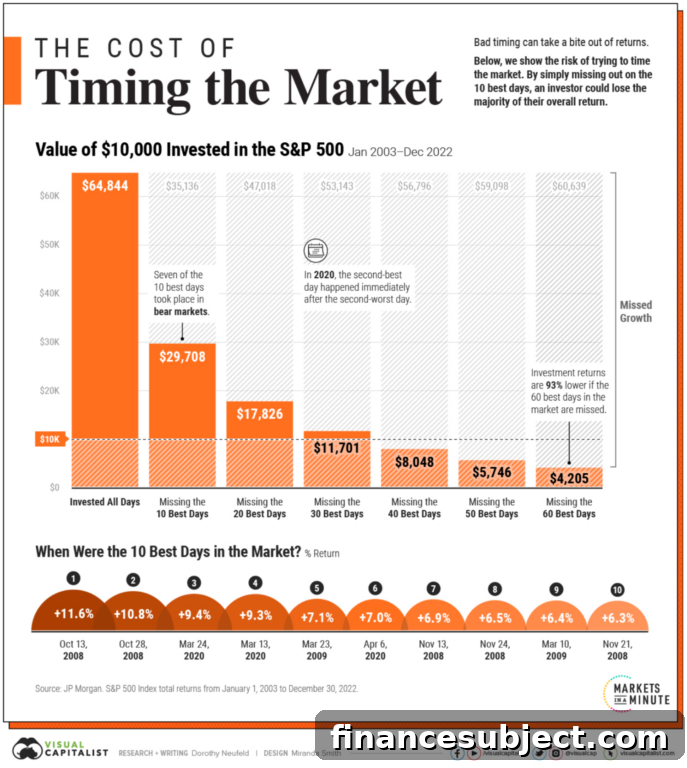
Maintain a long-term perspective, avoid letting recent news dictate durable strategy shifts, and remember that broadly diversified portfolios tend to capture the market’s long-term growth while smoothing short-term volatility.