

- Microsoft
- Honda
- CAE
- Walmart
featuredRegistered GIC rateEarn a guaranteed 2.75% in your RRSP when you lock in for 1 year.go to site
Best RRSP ratesSee our ranking of the best RRSP accounts and rates available in Canada.read now
MoneySense is an award-winning magazine that has helped Canadians navigate personal finance since 1999. Our editorial team of trained journalists works with leading finance experts across Canada to evaluate products and present consumer-friendly analysis. To help readers find the best financial products, we compare offerings from more than a dozen major institutions, including banks, credit unions and card issuers.
Microsoft lays off about 3% of its workforce in what one executive calls a “day with a lot of tears”
Microsoft (MSFT: NASDAQ)
- Revenue: USD$70.1 billion
- Net income: USD$25.8 billion, up 18%
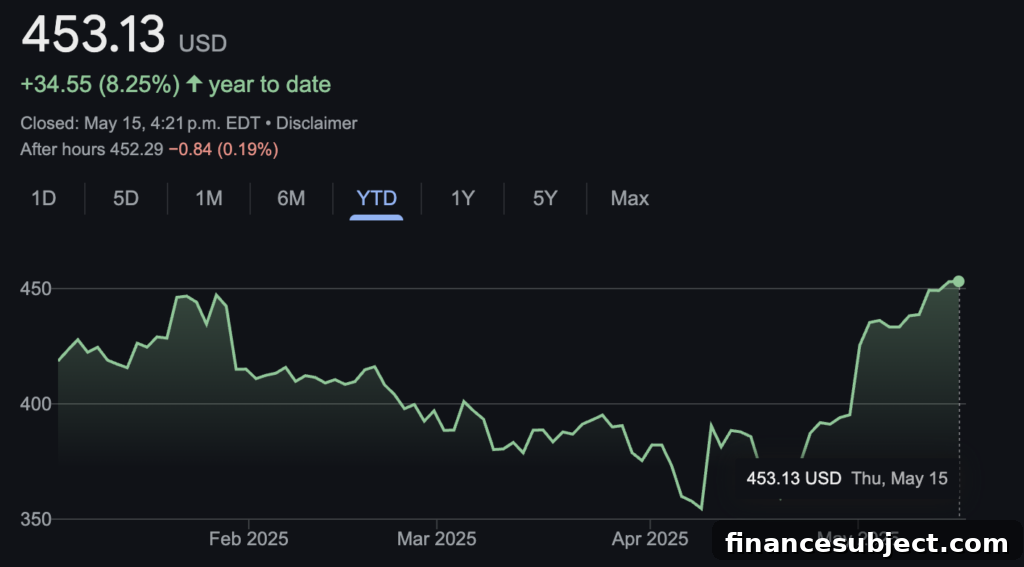
Microsoft announced it began layoffs affecting roughly 6,000 employees — nearly 3% of its global workforce — in moves tied to a company-wide reorganization and continued heavy investment in artificial intelligence. Washington state was particularly affected: the company notified officials it would cut 1,985 roles tied to its Redmond headquarters, many in software engineering and product management.
The reductions will span multiple levels, teams and regions, with a particular focus on reducing managerial layers. Employee notices started going out on Tuesday.
The cuts come after a quarter in which Microsoft reported sales and profits that exceeded Wall Street expectations for the January–March period, reassuring investors during a volatile stretch for the tech industry and the broader U.S. economy.
“Layoffs aren’t only for struggling companies — large tech firms have been trimming staff as they shift strategy and dial back the aggressive hiring that followed the pandemic,” said Daniel Zhao, lead economist at Glassdoor. Microsoft’s workforce numbered 228,000 full-time employees as of last June, and roughly 55% of them are based in the U.S. The company also carried out a smaller round of performance-based layoffs in January.
Microsoft’s CFO Amy Hood told investors on an April earnings call that the company aims to “build high-performing teams and increase agility by reducing layers with fewer managers.” She noted headcount in March was 2% higher than a year earlier but slightly lower than at year-end.
The layoffs touch a range of business units, including Xbox and LinkedIn. Some affected employees and leaders shared personal reflections on LinkedIn. Scott Hanselman, a Microsoft VP in developer community, described the day as “a day with a lot of tears,” acknowledging the difficulty of letting colleagues go to meet broader business objectives.
Microsoft described the moves as “organizational changes necessary to best position the company for success in a dynamic marketplace.” The company has disclosed it is spending roughly $80 billion in the fiscal year ending in June on data centers and infrastructure to support its AI efforts, though some projects have been scaled back.
Executives argue that AI tools are changing how work is done at Microsoft — CEO Satya Nadella recently suggested at an AI event that a significant share of coding for certain projects may be generated by software. Still, analysts caution that trimming management layers often results from broader strategic reassessments rather than a single technological driver.
Of the affected Washington employees, about 1,500 work on-site and 475 work remotely; their official separation date is slated for July. After the pandemic-driven hiring surge, many tech firms are consolidating and rebalancing roles as demand and strategic priorities evolve.
Economists note that broader economic pressures — including potential trade and tariff developments — could also influence corporate decisions. Companies are recalibrating for long-term conditions as customers’ spending patterns and geopolitical risks shift.
Return to menu.
Honda delays $15-billion EV project citing demand, shifts some CR-V output to U.S.
Honda (HMC: NYSE)
- Sales revenue: ¥21,688,767 million
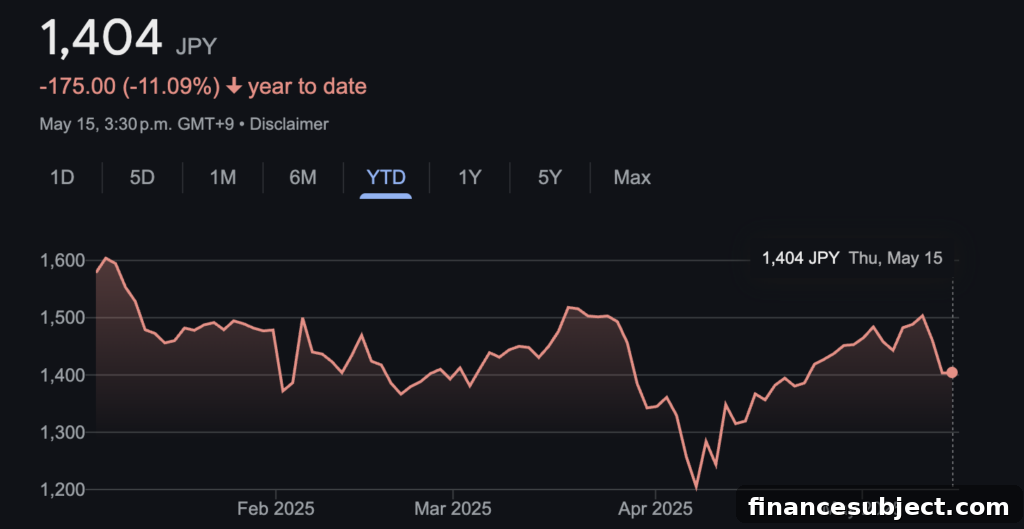
Honda has postponed a planned $15-billion electric vehicle project in Ontario, citing softer-than-expected market demand, and will move some production of CR-V models destined for the U.S. to its Ohio plant in response to tariffs. This represents the largest EV project delay announced in Canada so far and highlights the shifting dynamics in global EV investment.
At a quarterly earnings briefing in Japan, CEO Toshihiro Mibe said Honda will reassess the project’s timing in two years based on how the EV market develops. He emphasized that while weaker EV demand influenced the decision to delay, the immediate shift of CR-V production stems from tariff pressures.
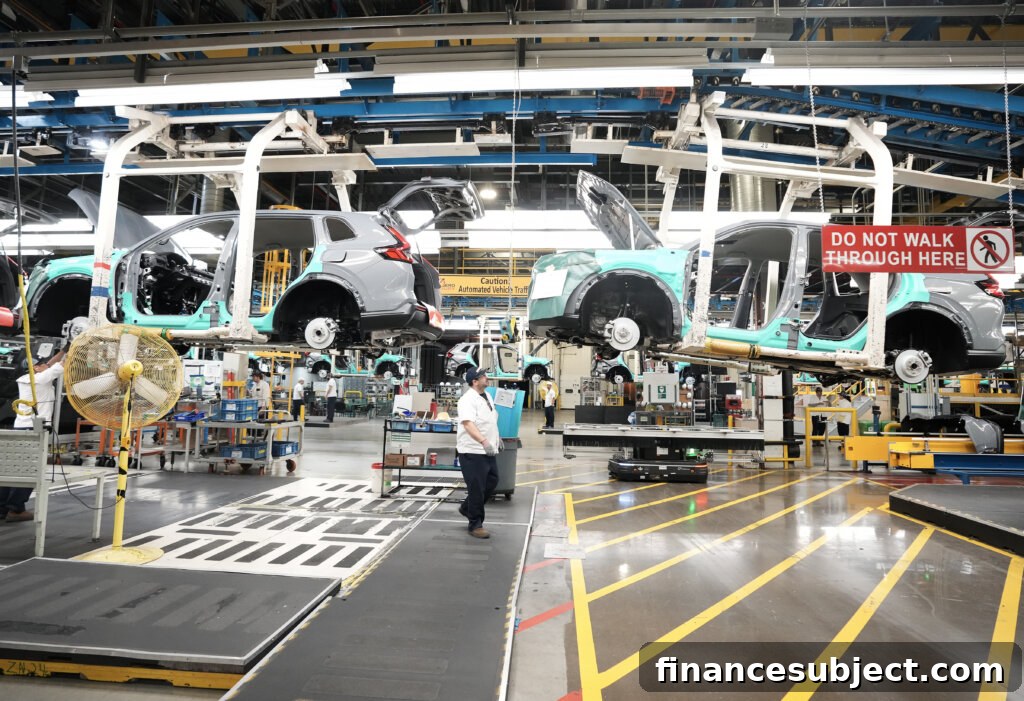
Honda Canada said the company does not plan to reduce overall production or workforce levels in Canada; rather, it will reallocate which models are exported where to mitigate tariff impacts. The delayed project — which included a battery plant, a retooled assembly line and two additional facilities — was expected to create around 1,000 jobs, but the company says that current employment at the Alliston, Ontario plant (about 4,200 workers) is unaffected by the postponement.
EV adoption continues to grow: in Canada, zero-emission vehicles (including hybrids) accounted for 15.4% of sales last year, up from 10.7% the previous year, while fully electric vehicles made up 11.4% of sales. In the U.S., EV penetration was 8.1% in 2024, up 7.3% from the prior year. Still, demand has not matched earlier projections that prompted more than $46 billion in Canadian commitments since 2020.
Tariff uncertainty and added costs — along with policies reducing EV incentives in some markets — have already led several automakers and suppliers to pause or scale back projects. Examples include Ford’s delayed electric SUV at its Oakville plant, a halted $2.8-billion battery materials plant by Umicore, and the uncertain future of Northvolt’s battery investment in Quebec after the parent company’s bankruptcy in Sweden. GM also temporarily laid off workers at its Ingersoll facility due to weaker-than-expected demand for an electric delivery vehicle.
Ontario Premier Doug Ford said Honda reaffirmed its commitment to the EV project, while industry representatives urged a stable policy environment to restore investor confidence for large-scale manufacturing projects. The original project, announced in April 2024, had included roughly $5 billion in support from federal and provincial governments.
Not all EV projects in Canada have stalled: a Stellantis-LG joint venture is nearing completion of a battery plant in Windsor, and Volkswagen’s PowerCo continues construction of a Gigafactory in St. Thomas, scheduled to begin initial production in 2027 with a demand-driven ramp-up.
Return to menu.
CAE stands to grow with global upswing in military spending, CEO says
CAE Inc. (CAE: TSE)
- Revenue: $1.28 billion
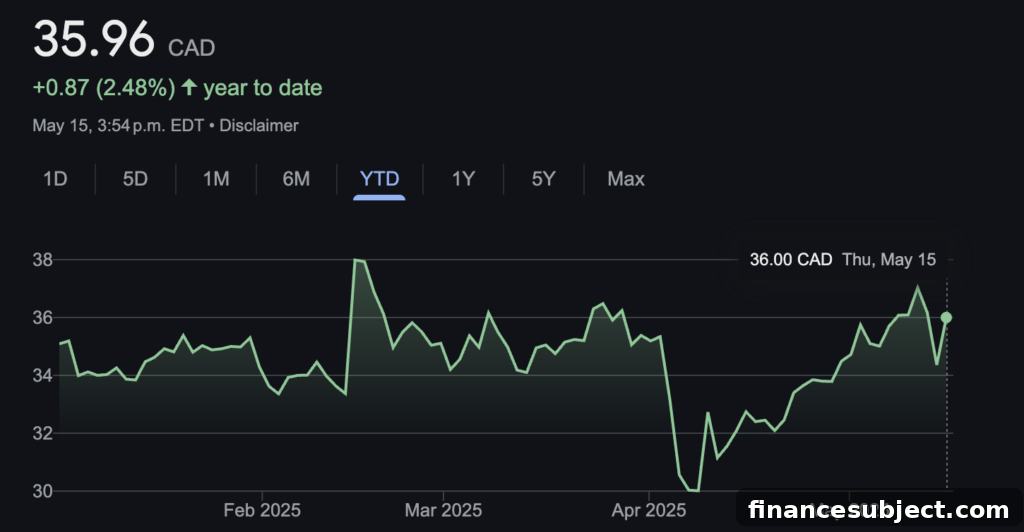
Flight-simulator and training technology maker CAE Inc. sees growth opportunities as defence budgets rise across NATO and allied nations, CEO Marc Parent said while presenting quarterly results. He highlighted growing defence commitments from Canada and other partners as a tailwind for CAE’s training and simulation offerings.
Parent noted that new aircraft, helicopters, ships and submarines require realistic training systems, which aligns with CAE’s capabilities. The company was recently named a strategic partner to help design and co-develop Canada’s Future Fighter Lead-in Training program and, through its SkyAlyne joint venture with KF Aerospace, secured an $11.2-billion, 25-year contract for Canada’s Future Aircrew Training Program.
For the quarter ended March 31, CAE reported a profit attributable to equity holders of $135.9 million, or $0.42 per share, compared with a loss in the same quarter last year. On an adjusted basis, the company earned $0.47 per share versus $0.12 a year earlier. Revenue rose to $1.28 billion from $1.13 billion, with civil aviation revenue at $728.4 million and defence and security revenue at $547 million.
Shares moved lower in mid-morning trading on the Toronto Stock Exchange after the results. Analysts pointed to near-term challenges in civil aviation training — such as aircraft delivery delays slowing pilot training demand — but said defence momentum offsets some of these headwinds. CAE expects civil adjusted segment operating income to grow in the mid- to high-single-digit percentage range in fiscal 2026, and defence to grow in the low double digits.
Analysts remain generally positive on the company’s multi-year growth prospects, viewing some of the current civil training headwinds as temporary while defence spending provides a durable market opportunity.
Return to menu.
A rare warning from Walmart during a US trade war: Higher prices are inevitable
Walmart Inc. (WMT: NYSE)
- Revenue: USD$165.61 billion
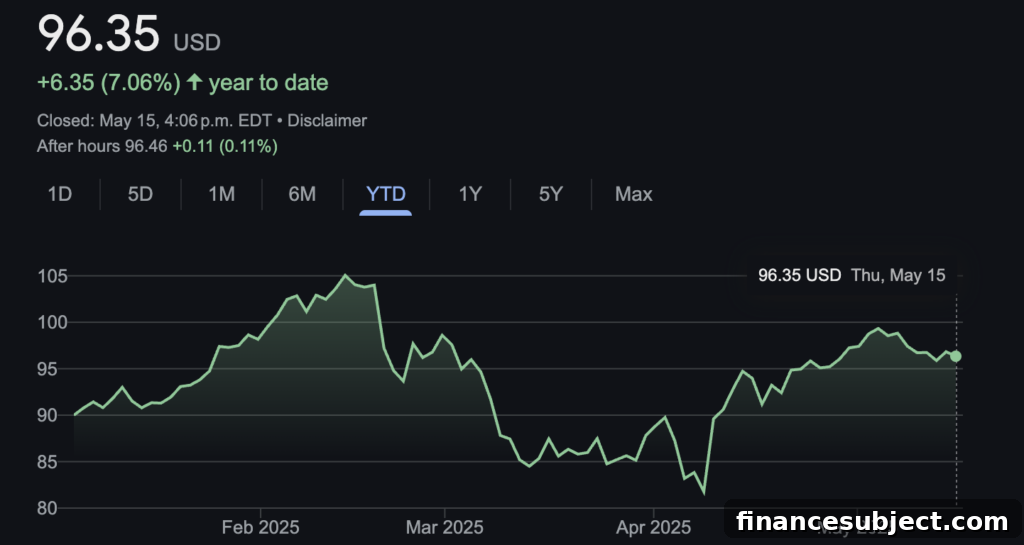
Walmart, long known for prioritizing low prices, warned customers that higher costs for everyday goods are becoming unavoidable amid new and expanded import tariffs. Company executives said they are absorbing as much of the added cost as possible, but the scale of some duties means price increases will reach shoppers.

After a recent agreement reduced a threatened 145% tariff on Chinese goods to 30% with a temporary pause on some higher duties, retailers still experienced higher costs in late April and into May. Walmart expects a more pronounced impact in June and July, ahead of the back-to-school season.
“We’re wired to keep prices low, but there’s a limit to what we can bear, or any retailer for that matter,” CFO John David Rainey said after reporting solid first-quarter sales. He warned that price increases will affect not only discretionary items like patio furniture and apparel but also staples such as bananas and baby car seats. For example, he cited a small rise in banana prices and projected that some baby car seats sourced from China could rise by around $100.
Retail data shows consumers are becoming more cautious. Tariffs affecting suppliers in countries such as Costa Rica, Peru and Colombia are also pushing up grocery costs for items like avocados and coffee. Some importers briefly paused shipments to avoid new duties, but many resumed imports to keep store shelves stocked during the pause. Higher shipping rates are adding further pressure as companies rush to move goods before potential tariff changes take effect.
Walmart imports merchandise from many countries, with China still a significant source for categories like electronics and toys. While the company sources a large share of goods domestically and has hedged against some tariff exposure, not all products can be easily shifted to U.S. manufacturing. Two-thirds of Walmart’s merchandise is sourced in the U.S., and groceries now make up roughly 60% of the company’s U.S. business.
For the quarter ended April 30, Walmart reported earnings of $4.45 billion, or $0.56 per share, down from $5.10 billion, or $0.63 per share, a year earlier. Adjusted EPS of $0.61 beat analysts’ $0.58 estimate, while revenue rose 2.5% to $165.61 billion, slightly under expectations. U.S. comparable sales increased 4.5% in the quarter, driven by health and wellness and grocery categories, while ecommerce grew 22% year over year.
Walmart expects revenue growth of 3.5% to 4.5% in the second quarter but did not provide a profit outlook amid persistent tariff uncertainty. The company maintained its full-year guidance issued in February.
Return to menu.
Tools
MoneySense’s ETF Screener Tool
Read more about investing:
- Best ETFs in Canada
- Canadian companies facing supply-chain challenges in wake of U.S. tariffs
- Buying your first stocks in Canada