
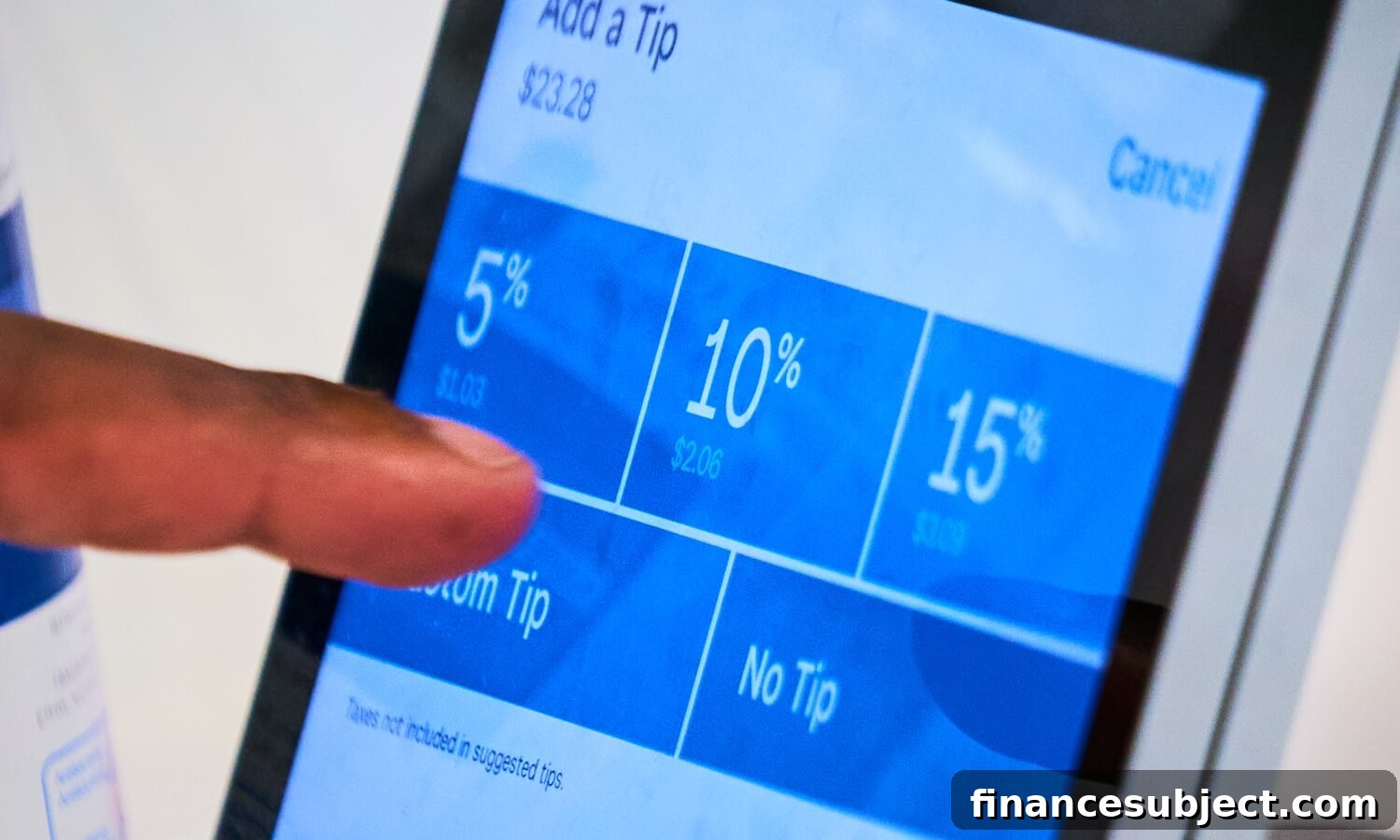
As many Canadians face tighter household budgets, attitudes toward tipping are changing. In recent years, suggested tip amounts shown on payment terminals have increased, and the shift from cash to debit and credit card payments means customers encounter tipping prompts more often. For people already watching their spending, being asked to tip at every transaction can feel frustrating. Financial experts say, however, there are practical steps consumers can take to manage tipping costs without feeling guilty.
Tipping pressure is rising—but you still have a choice
“People need to check in with themselves,” says Stacy Yanchuk Oleksy, CEO of Money Mentors. “A prompt suggesting 30% on a payment terminal doesn’t automatically mean that level of gratuity is warranted or required. Tipping culture has become guilt-driven for some, where people feel judged if they don’t tip. But sometimes you simply can’t afford it, and that’s okay.”
Yanchuk Oleksy recommends being deliberate about financial priorities. Review your budget and decide what you can realistically afford to tip. For example, picking up takeout yourself rather than using delivery services can avoid delivery fees and automatic tipping prompts. When you do tip, you can also choose amounts different from the defaults offered by the terminal—tailor your gratuity to the service you received and your budget.
A recent H&R Block survey found that 93% of respondents were annoyed when card terminals requested tips for purchases or services that traditionally didn’t involve gratuities. The same share said tipping has become excessive, applied to goods and services they believe do not warrant it. The survey was conducted from Feb. 19 to Feb. 23 among 1,545 Canadians who are members of the Angus Reid Forum, an online market research panel.
Why tipping fatigue is setting in
Kelley Keehn, CEO of the Money Wise Institute, notes that tipping expectations have expanded beyond traditional service roles, which can create fatigue. “We’ve shifted from tipping for service to sometimes tipping for mere transactions,” she says. For full-service sit-down meals, Keehn advises continuing to tip to support service workers. For counter service or low-interaction transactions, tipping is more optional. She also recommends factoring tips into your monthly budget, particularly when planning larger outings such as family dinners.
Wayne Smith, professor and director at the Institute for Hospitality and Tourism Research at Toronto Metropolitan University, points out that tipping norms have shifted upward. Before the pandemic, many diners considered 15% typical; today, restaurant tipping frequently falls around 20%. That percentage increase has happened alongside higher menu prices driven by inflation, making tipping more costly overall.
“Tips are becoming a significant additional expense,” Smith says. He adds that researchers across Canada are noting declines in tipping behavior in some cases. The widening income gap may also change how consumers engage with service businesses: those who can afford full-service experiences will likely continue to pay for them, while others may rely more on self-service options like phone ordering and pickup.
Ultimately, Smith emphasizes tipping remains a personal decision: people should give what feels appropriate based on the quality of service and what they can afford.
What’s a reasonable tip in 2026?
Neesha Miljanovic, senior operations manager at Waterworks Food Hall in Toronto, says higher preset tip options on card machines can sometimes discourage tipping entirely. Presenting lower preset choices may encourage more customers to leave something, even if it’s a smaller amount.
Miljanovic follows a few practical rules when she’s deciding how much to tip. For delivery or takeout with minimal interaction, she rounds up or orders directly from the restaurant instead of through third-party apps. For counter service, she typically leaves 10–15% or simply rounds up to the next dollar. At bars, she usually rounds up change to the nearest dollar or two.
In a sit-down restaurant setting, Miljanovic uses the service to guide her tip: “Fifteen percent for me indicates poor service, 18% means the experience was acceptable, 20% is standard, and anything above that reflects truly exceptional service where I want to recognize the whole team.”
She stresses that, except for larger groups where venues often add an automatic gratuity, tipping is voluntary. “You don’t have to tip,” she says. “If you had a good experience and want to give extra, that’s the point of tipping. On any payment terminal you can select zero, bypass the tip, or enter a custom amount—guests have control over their gratuity.”
Newsletter
Get free MoneySense financial tips, news & advice in your inbox.
Read more news:
- What the data isn’t showing about credit stress
- The best time to buy event tickets
- Stock news: Cogeco, Roots, and BlackBerry deliver earnings gains but outlooks remain mixed
- Defence stocks attract attention as spending climbs