Doing your own taxes works for simple situations, but complex tax situations call for professional help. But with CPAs, Enrolled Agents, tax attorneys, and various preparers available, how do you choose? This guide explains the differences, when you need professional help, and how to find the right tax professional for your situation.
Tax Professional Comparison (2026)
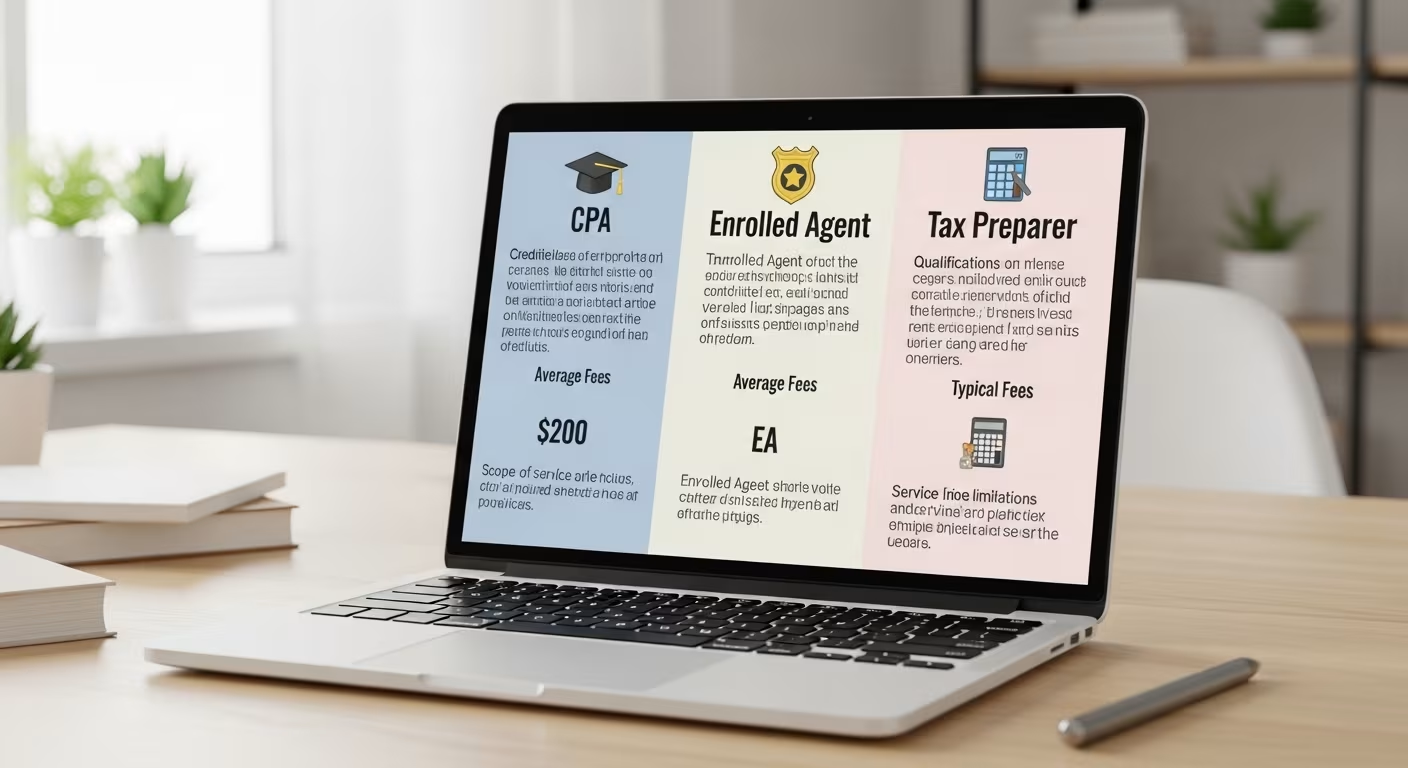
| Feature | CPA | Enrolled Agent (EA) | Tax Preparer | Online Software |
|---|---|---|---|---|
| Licensing | State CPA exam | IRS enrollment exam | Varies by state | N/A |
| Can represent you in IRS audit | Yes | Yes | Limited (some states) | No |
| Tax planning advice | Yes | Yes | Basic | Limited |
| Specializations | Business, estates, international | Tax resolution, audits | Basic returns | Standard returns |
| Typical cost (individual) | $300-700 | $200-400 | $100-250 | $0-150 |
| Typical cost (self-employed) | $500-1,500 | $300-800 | $200-500 | $50-200 |
| Best for | Complex situations, business owners | Audit representation, IRS issues | Simple W-2 returns | Simple to moderate returns |
When You Need a Professional vs. DIY
DIY with software (TurboTax, FreeTaxUSA, H&R Block): Single W-2 income, standard deduction, no investments beyond retirement accounts, no self-employment income.
Hire a professional: Self-employment income, rental properties, stock options or RSUs, income over $200,000, recent major life changes (marriage, divorce, inheritance), IRS notices or audits, own a business.
Cost-benefit test: If a professional costs $500 but finds $2,000 in deductions you would have missed, the ROI is 300%. Most people with any financial complexity benefit from at least one professional filing to establish the right approach.
Red Flags in Tax Professionals
- Promises specific refund amounts before seeing your documents
- Charges a percentage of your refund (ethical preparers charge flat fees or hourly rates)
- Does not have a PTIN (Preparer Tax Identification Number—required by IRS)
- Asks you to sign a blank return or refuses to explain items
- Is not available year-round (good tax professionals do planning, not just filing)
Types of Tax Professionals
Certified Public Accountant (CPA)
What it is: Licensed accounting professional who has passed the CPA exam and met state education and experience requirements.
Credentials:
- Bachelor's degree (150 credit hours in most states)
- Passed all four parts of CPA exam
- Work experience under CPA supervision
- Continuing education requirements
- State licensing and regulation
What they can do:
- Prepare and sign tax returns
- Represent you before IRS (all levels)
- Provide audit defense
- Financial planning and advisory
- Bookkeeping and accounting
- Business consulting
Best for: Complex situations, business owners, high-net-worth individuals, those who need year-round financial advice
Enrolled Agent (EA)
What it is: Federally-licensed tax professional who has passed an IRS exam on all aspects of tax law.
Credentials:
- Passed three-part IRS Special Enrollment Exam
- OR former IRS employee with relevant experience
- Continuing education requirements
- IRS regulation and oversight
Cannot typically do: General accounting, financial audits, business consulting beyond taxes
Best for: Tax-specific issues, IRS representation, audit situations, individuals and small businesses
Tax Attorney
What it is: Lawyer specializing in tax law.
Credentials:
- Law degree (JD)
- Passed state bar exam
- Often additional tax law training (LLM in Taxation)
What they can do:
- Everything CPAs and EAs can do
- Represent in Tax Court
- Handle complex legal tax matters
- Provide attorney-client privilege
Best for: Tax controversies, legal disputes with IRS, complex estate planning, business structuring, criminal tax matters
PTIN Holders (Tax Preparers)
What it is: Anyone with a Preparer Tax Identification Number who can prepare returns for compensation.
Credentials:
- Obtained PTIN from IRS (basic registration)
- May or may not have additional training
- No exam requirement
- Limited or no IRS representation rights
Variations:
- Annual Filing Season Program participants (some IRS representation rights)
- Uncredentialed preparers (very limited rights)
Best for: Simple returns (W-2 income, standard deduction)
Comparison Chart
| Feature | CPA | EA | Tax Attorney | PTIN Holder |
|---|---|---|---|---|
| Tax preparation | Yes | Yes | Yes | Yes |
| IRS representation | Full | Full | Full | Limited/None |
| Audit defense | Yes | Yes | Yes | Usually No |
| Tax Court | No | No | Yes | No |
| Business consulting | Yes | Limited | Limited | No |
| Financial planning | Many | Some | Some | No |
| Typical cost | $$$$ | $$$ | $$$$$ | $ |
When You Need Professional Help
Simple Returns: DIY May Work
You might not need a professional if:
- W-2 income only
- Standard deduction
- No significant life changes
- Comfortable with tax software
When to Hire a Professional
Self-employment or business income:
- Complex deductions
- Estimated taxes
- Business structure questions
- Potential audit triggers
Major life changes:
- Marriage or divorce
- Birth/adoption of child
- Death of spouse
- Inheritance received
- Home purchase or sale
Complex investments:
- Stock options (ISOs, NSOs)
- Rental properties
- K-1 partnership income
- Cryptocurrency transactions
- Foreign investments
IRS issues:
- Audit notification
- Unpaid back taxes
- IRS correspondence
- Penalty or interest disputes
High income or wealth:
- Multiple income sources
- Alternative minimum tax concerns
- Estate planning considerations
- Tax optimization strategies
How to Choose
Assess Your Needs
Simple taxes with occasional questions: Basic tax preparer or tax software
Annual filing with moderate complexity: EA or CPA
Ongoing tax planning and business advice: CPA with relevant experience
IRS disputes or audit representation: EA or CPA (attorney for serious issues)
Legal tax matters: Tax attorney
Questions to Ask
About credentials:
- What are your credentials (CPA, EA, etc.)?
- How long have you been preparing taxes?
- What continuing education do you complete?
- Are you licensed in my state?
About experience:
- Do you have experience with situations like mine?
- What types of clients do you primarily serve?
- Have you dealt with [my specific issue] before?
About service:
- Will you prepare my return or will staff?
- How do you communicate with clients?
- Are you available year-round or just tax season?
- What happens if I'm audited?
About fees:
- How do you charge (flat fee, hourly, per form)?
- What's the estimated cost for my situation?
- Are there additional charges I should expect?
Red Flags to Avoid
Bases fee on refund size: Ethical preparers charge for work, not results
Promises unusually large refund: Aggressive tactics may trigger audits
Won't sign the return: Preparers must sign returns they prepare
No PTIN: Required for all paid preparers
Asks you to sign blank return: Never sign before reviewing
Refuses to provide credentials: Legitimate professionals share credentials
Directs refund to their account: Your refund should go to your account
Where to Find Tax Professionals
CPAs
AICPA directory: aicpa.org (search by specialty) State CPA societies: Local referrals Personal referrals: Ask friends, colleagues, attorneys
Enrolled Agents
IRS EA directory: irs.treasury.gov/rpo/rpo.jsf National Association of Enrolled Agents: naea.org Personal referrals
Tax Attorneys
State bar associations: Lawyer referral services American Bar Association: Tax section directory Personal referrals: Ask your CPA or EA
General Preparers
National chains: H&R Block, Jackson Hewitt, Liberty Tax Local preparers: Research reviews, ask for referrals
Cost Expectations
Average Costs (2026)
Simple return (Form 1040, standard deduction):
- DIY software: $0-$100
- Basic preparer: $100-$200
- CPA: $200-$400
Itemized return:
- DIY software: $50-$150
- Basic preparer: $150-$300
- CPA: $300-$600
Self-employed (Schedule C):
- Basic preparer: $200-$400
- EA: $300-$500
- CPA: $400-$800
Business return (S-Corp, Partnership):
- EA: $500-$1,000
- CPA: $800-$2,500+
Hourly rates:
- Basic preparer: $50-$100/hour
- EA: $100-$200/hour
- CPA: $150-$400/hour
- Tax attorney: $250-$600/hour
Factors Affecting Cost
- Complexity of return
- Number of forms and schedules
- Geographic location
- Preparer experience and credentials
- Additional services (planning, representation)
Building a Relationship
Year-Round vs. Tax Season Only
Tax season only: Fine for straightforward filing
Year-round relationship: Better for:
- Tax planning throughout year
- Estimated tax guidance
- Business owners
- Complex situations
- Ongoing questions
Getting the Most Value
Organize before meeting: Save preparer time (and your money)
Ask questions: Understand your return, not just the numbers
Share changes: Tell preparer about life/financial changes immediately
Plan, don't just file: Use preparer for forward-looking advice
Review your return: Even with professional preparation, review before signing
DIY vs. Professional: The Decision
Cost-Benefit Analysis
Professional cost: $300
Your time value: 10 hours × $50/hour = $500
Tax savings from professional: Potentially hundreds to thousands
If savings > cost: Professional is worth it
The Hybrid Approach
Some people: DIY with software, consult professional for specific questions
One-time professional review: Have CPA review your DIY return every few years
Software with professional backup: TurboTax Live, H&R Block online assistance
Taking Action
If You Need a Tax Professional
- Assess your complexity level
- Determine credential level needed
- Get referrals from trusted sources
- Interview 2-3 candidates
- Ask about experience with your situation
- Compare fees and services
- Check credentials and reviews
- Make decision before tax season rush
Ongoing Relationship
- Provide documents early
- Communicate changes promptly
- Ask for tax planning advice
- Review return thoroughly before signing
- Keep copies of everything
- Evaluate relationship annually
The right tax professional can save you money, reduce stress, and keep you out of trouble with the IRS. For simple situations, DIY software works well. But when your taxes get complex—business income, major life changes, IRS issues—the right professional is worth every penny. Take time to find someone who understands your situation and can help you minimize taxes legally while keeping you compliant.
Questions to Ask Before Hiring a Tax Professional
- "What is your PTIN?" (Required by IRS—if they do not have one, walk away)
- "Will you sign the return as the preparer?" (They should. Refusal is a red flag.)
- "What is your fee structure?" (Flat fee or hourly—never a percentage of refund)
- "Are you available year-round?" (You may need help with IRS notices in August)
- "What is your experience with [your specific situation]?" (Self-employment, rental income, etc.)
- "Will you represent me in an audit?" (CPAs and EAs can; most preparers cannot)
- "How do you stay current on tax law changes?" (Look for continuing education commitment)
How to find a good CPA: Ask your bank, financial advisor, or business-owner friends for referrals. Check the AICPA directory (aicpa.org) or IRS directory of tax preparers. Avoid storefront tax shops unless your return is very simple—the preparers often have minimal training.
Comments (0)
No comments yet. Be the first to share your thoughts!
Leave a Comment