

If your home lacks a backup power source, now is a good time to consider adding one. Across North America—and especially in Canada—power outages are becoming more frequent, largely driven by extreme weather linked to climate change. During heat waves and deep cold snaps, increased demand for air conditioning or heating can strain the grid, while storms, flooding, wildfires, hurricanes and tornadoes can damage infrastructure and cause extended outages.
Severe weather events can topple poles and snap lines, and they often lead to outages that last hours or days. A stark example is the April 2023 ice storm in Quebec, which left over a million people without power at its peak and more than 400,000 still in the dark two days later. Households with backup power were able to keep lights and furnaces running, avoiding discomfort, spoiled food and other costly disruptions.
Historically, extreme storms were described as “100-year events,” but climate scientists now warn these rare events are becoming far more common. Environment and climate authorities note that what was once exceptional is increasingly ordinary, meaning homeowners should expect more frequent and unpredictable outages.
This article outlines the main home backup power options available in Canada: portable gas or propane generators, gas-powered standby systems for whole-house coverage, portable battery power stations and modular whole-home battery systems. I’ll also cover costs, pros and cons, and factors to consider when choosing a solution.
Cost of a home backup power supply in Canada
| Gas, propane or natural gas–powered portable generator | Battery-powered portable power station | Gas-powered standby generator for whole home | Battery-powered whole-home system | |
| Capacity | 6.6 kWh to 108 kWh | 1 kWh to 25 kWh | 26 kWh | 1 kWh to 90 kWh |
| Cost including installation (if applicable) | $400 to $3,000 | $350 to $4,200 | $15,000 to $18,000 | $1,000 to $68,000+ |
Limitations of outdoor backup generators
Many households rely on simple measures—flashlights, extra clothing, wood stoves or portable heaters—during outages. Portable gas generators are an affordable entry point, with small models available for roughly $400. However, these units require stored fuel, can typically support only about 1,500 watts (enough for a furnace blower or a window air conditioner for a short period), and must be used outdoors for safety. That means apartment and condo residents often cannot use them.
For whole-house coverage, permanently installed gas or propane standby generators are an option. A professionally installed 26 kWh standby system can cost in the mid-five-figure range when installation and connection to the home panel are included. Some homeowners choose to rent standby units when needed, depending on local providers.
Outdoor fossil-fuel generators have additional drawbacks. They produce carbon emissions and can be vulnerable to extreme winter conditions: wind-driven moisture can freeze air intakes and prevent reliable operation. As a result, even significant investments in outdoor generators may not always deliver dependable service when the weather is harshest.
Battery backup power for home outages
Battery-backed systems are an increasingly popular alternative to fossil-fuel generators. While still less common than traditional generators in North America, battery solutions are quieter, emit no on-site pollutants and can be installed indoors in garages or utility rooms.
Adoption has been slower in some markets, but other regions—especially where fossil fuels are scarce—have embraced battery storage paired with rooftop solar. These systems range from small portable power stations to modular whole-home battery banks that automatically switch on during an outage.
Portable power stations in Canada
Portable power stations come in sizes ranging from small battery banks for phones to larger units with several kilowatt-hours of capacity. Campers and outdoor enthusiasts often use brands that build solar-compatible portable units. These devices recharge either from the grid when power is available or from solar panels for off-grid or prolonged outages.
Whole-home battery backup systems
Whole-home battery systems use the same battery and inverter technology but are sized and configured to work with your electrical panel. Entry-level whole-home setups typically start around 1–4 kWh, which will power essential devices for a limited time. More robust, modular systems scale to 10–40 kWh or higher, automatically switching on and running critical circuits for several hours or days depending on capacity.
What is a kilowatt hour?
A kilowatt hour (kWh) measures energy: one kilowatt (1,000 watts) used for one hour. Appliances list energy use in watts or kWh. For example, an energy-efficient refrigerator might use about 49 kWh per month, while a small ceiling fan running several hours a day might add roughly 11 kWh per month. Use appliance energy calculators or utility tools to estimate your household needs.
One widely recognized whole-home battery product is the Tesla Powerwall, which offers a fixed 13.5 kWh capacity. Many manufacturers now offer modular alternatives that let homeowners add battery modules to scale capacity. Entry-level batteries are often priced near $1,000 per kWh of usable energy, though costs vary by brand and features.
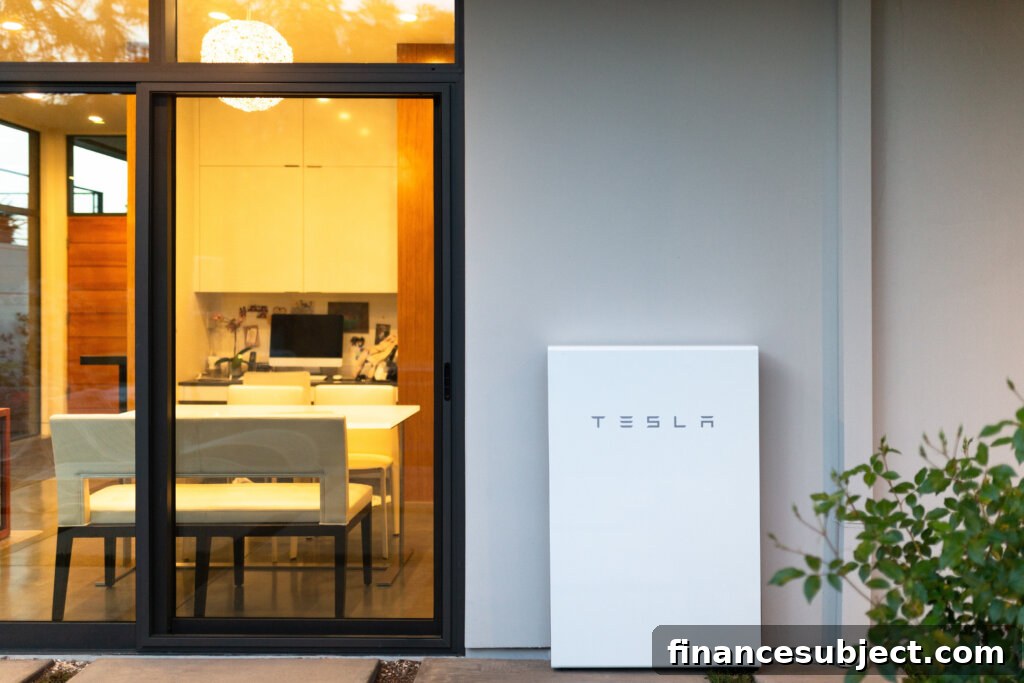
Cost of a Tesla Powerwall in Canada
As of April 2024, a single 13.5 kWh Powerwall plus the required connection hardware can cost several thousand dollars, and with delivery, installation and taxes the total installed price often reaches the mid-five-figure range—roughly comparable to the cost of an installed gas standby generator. Modular products from other manufacturers can offer different entry points and allow you to add capacity over time.
For example, some suppliers offer a base unit that includes a battery and inverter and then allow daisy-chaining of additional battery modules to achieve higher total storage up to tens of kilowatt-hours. Many whole-home kits include a transfer switch or smart panel that nominates which circuits are backed up automatically during an outage.
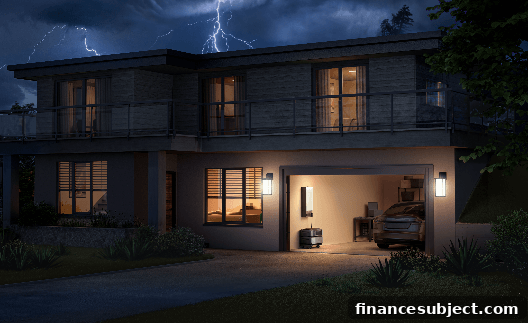
Adding solar panels is an optional but complementary choice. Solar can recharge batteries during and after storms, reducing ongoing electricity costs and extending outage resilience. While solar requires an up-front investment, it can offer long-term savings and greater energy independence.
More differences between batteries and generators
Key factors to weigh when choosing between battery storage and fossil-fuel generators include:
- Noise: Battery systems are very quiet, generally under 50 decibels, while gas generators often range from 60 to 100 decibels—noticeably louder.
- Location and safety: Batteries can be installed indoors, are not exposed to weather, and produce no carbon monoxide. Gas generators must be outdoors and require safe distances and ventilation.
- Installation cost: Installing a gas standby generator typically requires both gas and electrical work, which can increase installation costs. Battery installations may be simpler, though they still require a qualified electrician for panel connections.
- Warranties: Battery systems commonly come with multi-year warranties; generator warranties vary by manufacturer but are often in a similar multi-year range.
How much backup power do you need?
Choose a backup solution based on what you want to power and for how long, and balance that against installation and operating costs.
Measure your energy consumption
Start by assessing how you heat, cool and light your home and identify practical ways to reduce demand. Energy-saving steps—like switching to LED lighting—cut both daily consumption and the amount of backup storage required.
Heating systems vary widely: furnace blower motors can use several hundred watts, while electric baseboard heaters can draw much more per foot of element. Knowing the wattage and run-time of your major appliances helps estimate the kWh you’ll need during an outage.
Make a list of items you want powered during an outage
Decide which circuits and appliances are essential—sump pumps in flood-prone homes, refrigeration to prevent food spoilage, essential lighting, medical devices and communications equipment. Small measures, like minimizing refrigerator door openings, can extend the effective runtime of your backup supply.
You can also practice load shedding—choosing not to power non-essential devices—to conserve stored energy for the systems you prioritize.
Once you determine prioritized loads and their run-times, use an appliance energy calculator or utility tool to total your expected daily kWh demand. That figure will help you choose an appropriately sized battery bank or generator.
Does backup power affect home insurance?
Adding a hard-wired generator or permanently installed battery system may affect insurance in some cases, though discounts are not guaranteed. Portable units that are not hard-wired typically do not qualify for insurance reductions. If you plan to install a permanent backup system, check with your insurance provider about any requirements for discounts or policy changes; most homeowners install backup power for resilience rather than to save on insurance costs.
Bi-directional EV chargers as backup power
Another emerging option is vehicle-to-home (V2H) or vehicle-to-grid (V2G) charging. Some electric vehicles support bi-directional charging, which can power a home or supplement battery storage during outages. This option can be particularly powerful given EV batteries’ large capacities, though not all EVs currently offer this feature and it requires compatible charging hardware.

EV-based backup can be expensive, since EVs are a major purchase, but for households that already own a compatible vehicle, bi-directional charging can add an extra layer of resilience.
Preparing for the future
Given the increasing frequency and intensity of extreme weather, investing in backup power is worth considering. Battery systems, in particular, are quiet, safe and modular, and they pair well with solar to offer longer-term resilience and potential savings. Bi-directional EV charging is an advancing technology that may become more common in the years ahead.
Ultimately, the right solution depends on your budget, household needs and local climate risks. Taking inventory of what matters most to power during an outage, improving energy efficiency, and consulting qualified professionals will help you choose an effective and reliable backup system.
More about home and climate:
- Does home insurance cover wildfire damage?
- How would a national flood insurance program work in Canada?
- Does your home insurance cover water damage?
- Heat pump vs. furnace — which is the better option in Canada?