
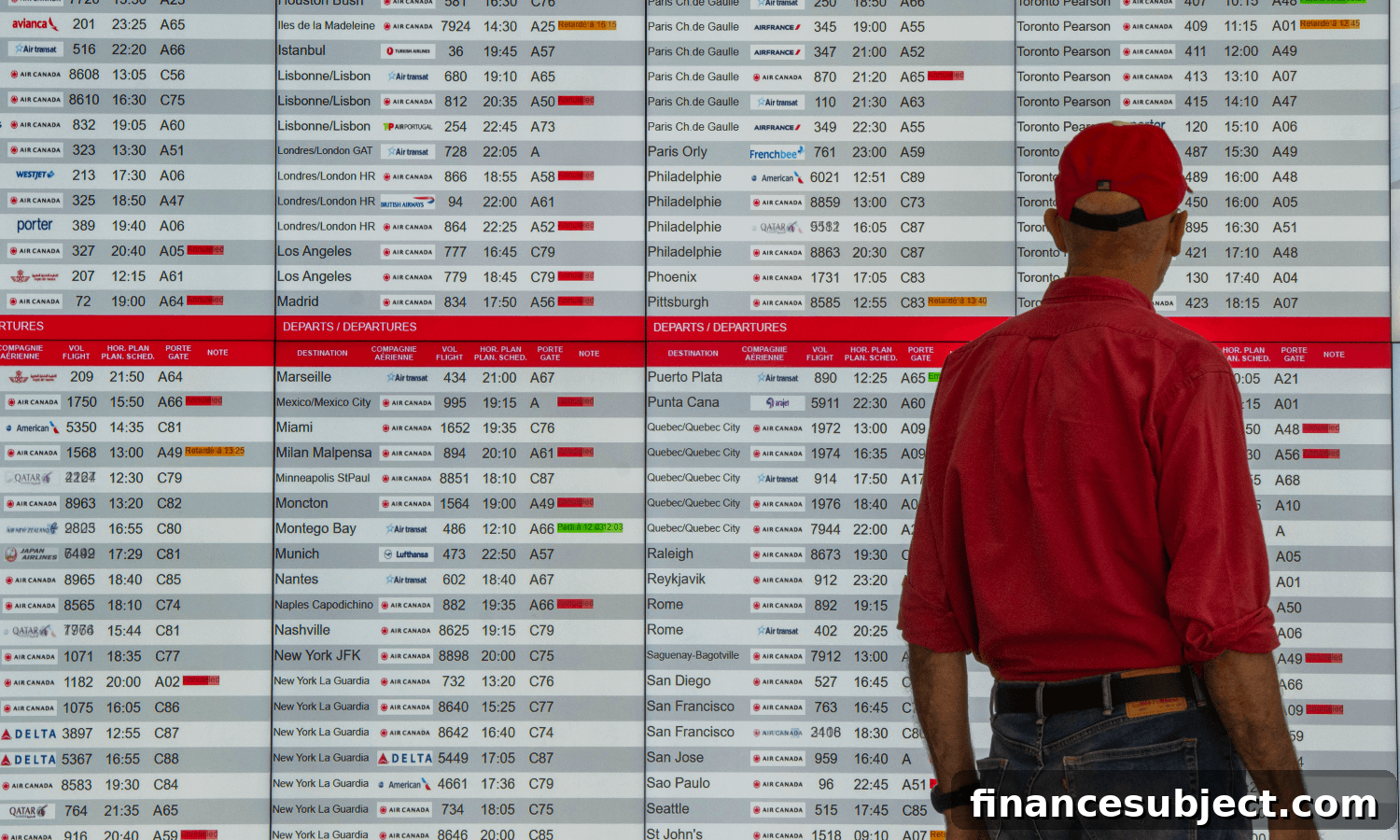
Air Canada customers who wish to file a complaint with the regulator over their experience during the recent flight attendants’ strike should be prepared for a lengthy wait.
As of Aug. 14 — two days before the strike began — the Canadian Transportation Agency (CTA) reported a backlog of roughly 85,000 air travel complaints. The figure reflects a steady build-up of unresolved files since new passenger-rights rules came into force in 2019 that set compensation levels for delays, cancellations and related service failures.
By that Aug. 14 snapshot the agency had already received nearly 13,500 complaints for the year. That total did not yet include complaints arising from the Air Canada work stoppage.
Complaints have nearly quadrupled in recent years
The CTA introduced a new complaint-handling system in 2023 to expand its capacity, but complaint volumes have surged even faster. During the 2024–25 fiscal year the agency logged nearly 47,000 complaints, up from about 43,500 in 2023–24 and roughly 42,000 the year before. The 2022–23 year saw a dramatic leap from prior levels after the federal passenger-rights regulations took effect; that earlier year had roughly 12,000 complaints.
“This unpredictability in complaint volumes poses challenges in planning for case processing times and delivering accurate information to the public,” CTA spokesperson Jadrino Huot said. The agency says it continually reviews and streamlines its processes and adopts new technologies to improve efficiency.
Huot noted that in 2024–25 the CTA closed more than 33,600 complaints — a marked increase in throughput — but that was still insufficient to shrink the overall backlog.
With the current queue of unresolved files, customers who submit complaints to the CTA should expect long waits. Air Passenger Rights advocacy group president Gabor Lukacs estimates that complainants face waits of 18 to 24 months for a resolution, and perhaps longer as caseloads grow. For that reason, Lukacs advises passengers to consider small claims court, where cases are sometimes resolved more quickly.
Lukacs also contends that Canada’s passenger-rights framework is more complicated than necessary, which slows decision-making. He contrasts it with the European approach, saying the added complexity in Canada increases the time the CTA needs to determine whether compensation is owed. He further notes that the CTA has not implemented a cost-recovery fee to have airlines contribute to the cost of resolving complaints. “The current strike and its aftermath and how passengers were treated bears evidence that the Canadian Transportation Agency is just not fulfilling its function when it comes to the (regulations),” Lukacs said.
Scotiabank Gold American Express Card
GO TO SITE
American Express Cobalt Card
GO TO SITE
MBNA Rewards World Elite Mastercard
GO TO SITE
First, file a claim with the airline
Before the CTA can consider a complaint, the Canada Transportation Act requires passengers to first submit a written claim to the airline. If the airline does not respond within 30 days, or if the passenger is unsatisfied with the response, the complaint may then be filed with the CTA.
In response to cancellations tied to the work stoppage, Air Canada gave affected customers the option of a full refund or a travel credit if the carrier could not rebook them on another airline. The airline also introduced a reimbursement policy for alternative transportation and out-of-pocket expenses.
Passengers with Air Canada flights cancelled from Aug. 15 through Aug. 23 were invited to request reimbursement for the cost of alternative arrangements by submitting a claim via a form on Air Canada’s website. The policy covers “reasonable expenses” such as hotel stays, meals and other related costs. Air Canada cautioned that reimbursements could take four to six weeks to process because of the anticipated volume of claims.
“If Air Canada is willing to do the right thing, I would go along with the form,” said Lukacs. “But the form is not the end of the road. The form is just the beginning of the road. It’s the easiest way possible for Air Canada to do what is required by law.”
Newsletter
Get free MoneySense financial tips, news & advice in your inbox.
Read more about travel:
- Upcoming changes to Aeroplan points, Elite Status, and credit cards
- The best no foreign transaction fee credit cards in Canada
- The best credit card travel perks in Canada
- If you’re going on vacation, don’t forget travel health insurance
- How to find cheap flights to anywhere