

The past two months have been a volatile period for bitcoin (BTC) investors. In late February 2026, BTC sank to roughly $63,000 (U.S. dollars), a drop of nearly 50% from its October 2025 peak near $123,000.
This kind of pullback is not unprecedented. Historically, BTC’s cycle highs often occur shortly after a halving year, and pronounced corrections frequently follow. That said, many investors were encouraged when bitcoin showed relative resilience during the early phase of the U.S.-Israel-Iran conflict, outperforming equities and gold.
Between February and March 2026, BTC climbed from about $63,000 to $81,000. The rally proved short-lived: by early June 2026 the price had retraced to roughly $60,000. The question for the rest of 2026 is whether BTC will continue to trade sideways and oscillate within a range, or begin a clearer recovery.
What can we expect from BTC this year?
Markets are inherently unpredictable, and cryptocurrencies are no exception. Still, historical patterns can offer a useful framework for expectations. One important pattern to note is that BTC has often established cycle lows about a year after its cycle highs. I discussed this timing in a previous column and the same dynamic appears relevant now: if history repeats, a bottom could appear toward the end of 2026.
In past cycles, prices tended to struggle from mid-year into the final months—trading flat or lower from the second quarter through December. That pattern was visible in 2018 and again in 2022. While history does not guarantee future performance, this seasonal tendency helps explain why the February–March gains did not hold.
Also read
Top crypto platforms and apps
An updated ranking of crypto exchanges available in Canada.
Of course, the broader macro and geopolitical backdrop will ultimately determine the market’s path. The ongoing U.S.-Iran war—and any de-escalation—remains a primary driver, particularly through its effect on energy markets and global inflation expectations.
What the U.S.-Iran ceasefire means for BTC
The conflict affects markets mainly by disrupting global oil supplies. When oil availability tightens, prices rise, pushing inflation higher because energy is a key input across virtually every sector of the economy. Elevated inflation raises the odds of tighter monetary policy and higher interest rates, both of which tend to weigh on speculative assets like bitcoin.
On June 18, 2026, reports indicated a 60-day ceasefire extension between the U.S. and Iran, with provisions that could reopen the Strait of Hormuz and allow Iran access to about half of roughly $24 billion in frozen assets. The agreement is intended to create a 60-day window to negotiate the deeper issues that sparked the conflict. While this development is welcome, the arrangement may be fragile and could be undermined by parties on any side.
Still, markets reacted positively: NYMEX crude fell by roughly $8 (about 10%) in the days following the announcement and is down roughly $30 (about 30%) since May 19, 2026, according to short-term price data. That drop in oil alleviates some near-term inflation concerns, which could, in turn, ease pressure on risk assets including BTC.
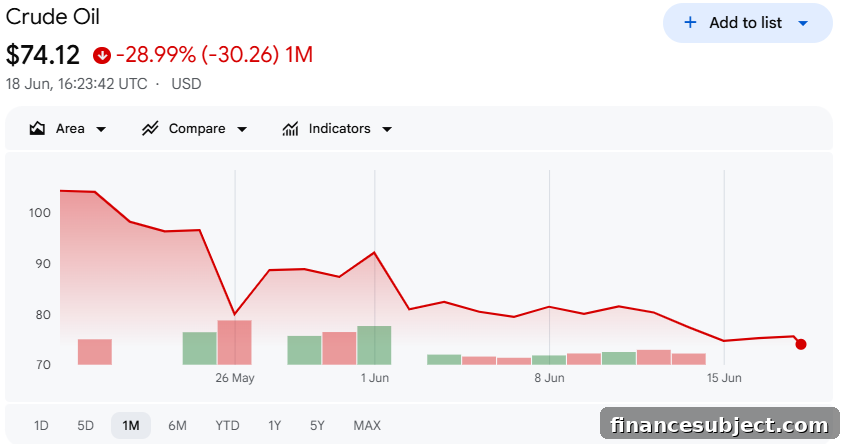
Source: Google Finance as of Jun. 18, 2026.
Can bitcoin climb on this geopolitical relief? It can, provided the oil price decline meaningfully reduces inflation fears and the Federal Reserve’s policy path becomes less aggressive. A key variable will be how Kevin Warsh, the new Chair of the U.S. Federal Reserve, approaches interest rates over the coming months.
Crypto price swings are common
Cryptocurrencies—including BTC, ETH, XRP, SOL, and BNB—are speculative and highly volatile. Price swings of 10% or more over short periods are normal, and even assets described as stablecoins can carry risks if they are not appropriately backed by tangible reserves.
Investors should recognize the market, technological, and regulatory risks associated with crypto. These risks include platform hacks, liquidity shocks, and policy changes. Only invest in crypto if it matches your overall financial plan, time horizon, and risk tolerance. Maintain strong security practices and remain alert to scams and fraudulent schemes.
Newsletter
Get MoneySense financial tips, news & advice in your inbox.
Read more about crypto:
- Will bitcoin crash in 2025?
- Bitcoin tops USD$100,000 for the first time
- Price of bitcoin hits new high after Trump victory, and more crypto news
- How to protect your crypto from hacks