

Welcome to the Canadian Crypto Observer. Financial journalist and author Aditya Nain provides concise analysis of market-moving headlines to help Canadian investors navigate the cryptocurrency landscape.
At the moment, geopolitics dominates investor attention. Whether you hold stocks, real estate, bonds or cryptocurrencies, the global news feed is likely your first stop each morning. The escalation of the US-Israel war with Iran is sharpening market anxieties and overshadowing most other considerations.
Since my last column, the conflict has intensified. The United States and Israel have struck targets inside Iran, and Iran has responded by targeting several countries in the Gulf region that host US military bases, including Saudi Arabia, Qatar, Kuwait and the United Arab Emirates. Aside from sporadic, sometimes conflicting, social-media statements from political leaders, there are few signs the situation will ease quickly.
Also read
The best crypto platforms and apps
We’ve ranked the best crypto exchanges in Canada.
What does the Iran war have to do with Bitcoin (BTC)?
Though the conflict is thousands of kilometres away, it has direct implications for investors and the crypto market. The main channel is energy: the war has driven crude oil prices significantly higher, increasing the risk of renewed inflationary pressure and prompting central banks to consider tighter policy.
Higher oil prices can translate into broader inflation and, in turn, higher interest rates. The Bank of Canada noted this risk in its March 18 interest rate announcement, keeping rates unchanged but signaling caution given the potential inflationary impact of the Middle East conflict. For growth assets such as stocks and cryptocurrencies, this combination—rising inflation expectations and the prospect of higher rates—can be damaging.
Since the current conflict began on Feb. 28, 2026, crude oil has climbed from about $67 to over $100 per barrel (all amounts U.S. dollars unless noted). That roughly 50% rise occurred in about a month, and if the situation worsens it’s conceivable oil could move even higher, which is understandably unsettling for markets.
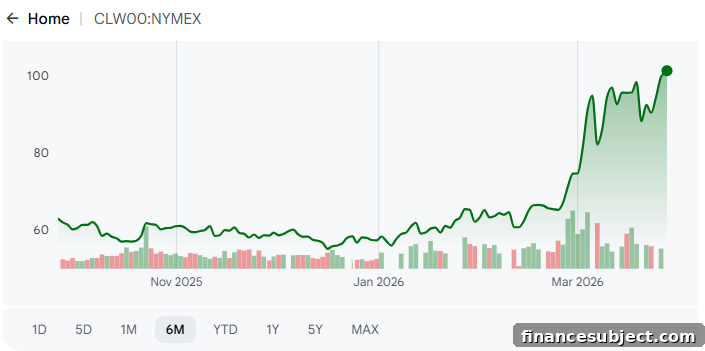
Source: Google Finance on Mar. 29, 2026
How has BTC fared compared to other assets since the war began?
One encouraging datapoint for Bitcoin holders is that BTC has held up relatively well since the conflict began. As of the morning of Mar. 31, 2026, Bitcoin was essentially flat—up about 2.56%—while major traditional assets showed deeper declines: the S&P 500 fell roughly 7.82%, the S&P/TSX 60 dropped about 6.25%, and gold was down around 15.39% over the same period.
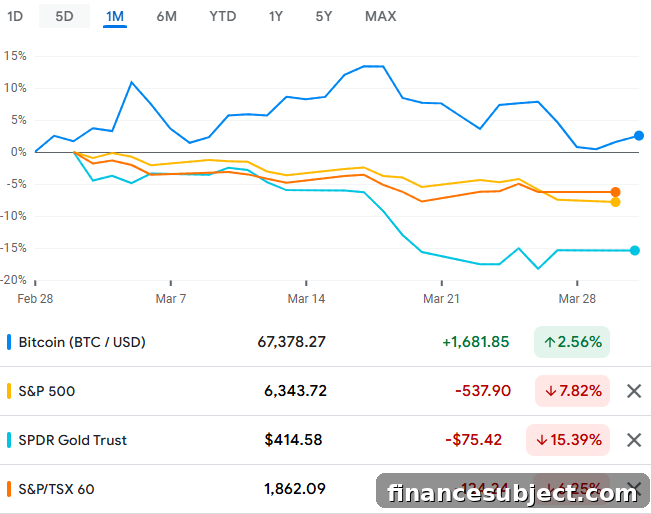
Source: Google Finance on Mar. 31, 2026
That relative resilience doesn’t guarantee future outperformance. Markets move in cycles, and Bitcoin’s recent stability may reflect that it was oversold following earlier weakness in late 2025. It’s important to view short-term moves in the context of broader trends.
A positive sign for BTC investors: ETF inflows turn positive
Despite the geopolitical uncertainty, institutional flows into U.S. Bitcoin exchange-traded funds (ETFs) have shown renewed interest. After a period of net outflows beginning in October 2025, February and March 2026 produced noticeable inflows, suggesting institutional buyers are re-entering the market.
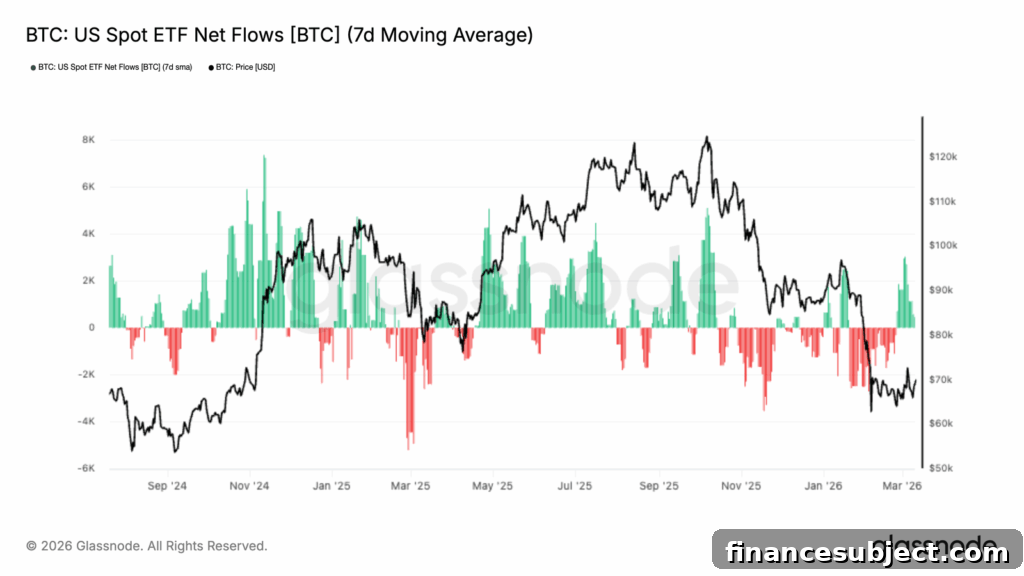
Source: Glassnode on Mar. 29, 2026.
Looking specifically at the iShares Bitcoin Trust ETF (IBIT), the largest spot BTC ETF, weekly net-flow data show mostly outflows through much of late 2025. However, the most recent weeks on that chart display four consecutive weeks of net inflows in February and March 2026, a sign that institutions may find Bitcoin attractive in the $60,000–$70,000 range.
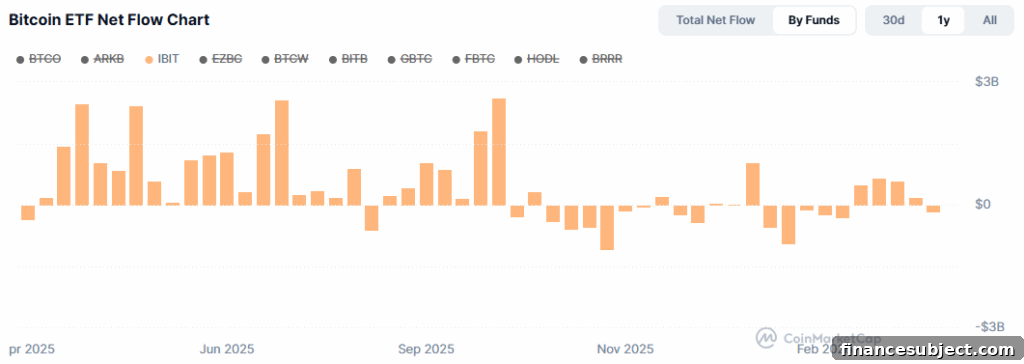
Source: CoinMarketCap as on Mar. 31, 2026.
Crypto price swings are common
Cryptocurrencies—including Bitcoin (BTC), Ethereum (ETH), Ripple (XRP), Solana (SOL), Binance Coin (BNB) and others—are speculative and highly volatile. Large price swings are normal, and even instruments that appear stable, such as so-called stablecoins, can carry risk if they lack adequate backing.
Investing in crypto carries market, technological and regulatory risks. It’s critical to ensure any crypto exposure fits your overall investment objectives, time horizon and risk tolerance. Maintain vigilance against scams and practice strong security hygiene to protect holdings.
Newsletter
Get free MoneySense financial tips, news & advice in your inbox.
Read more about crypto:
- Will bitcoin crash in 2025?
- Bitcoin tops USD$100,000 for the first time
- Price of bitcoin hits new high after Trump victory, and more crypto news
- How to protect your crypto from hacks