
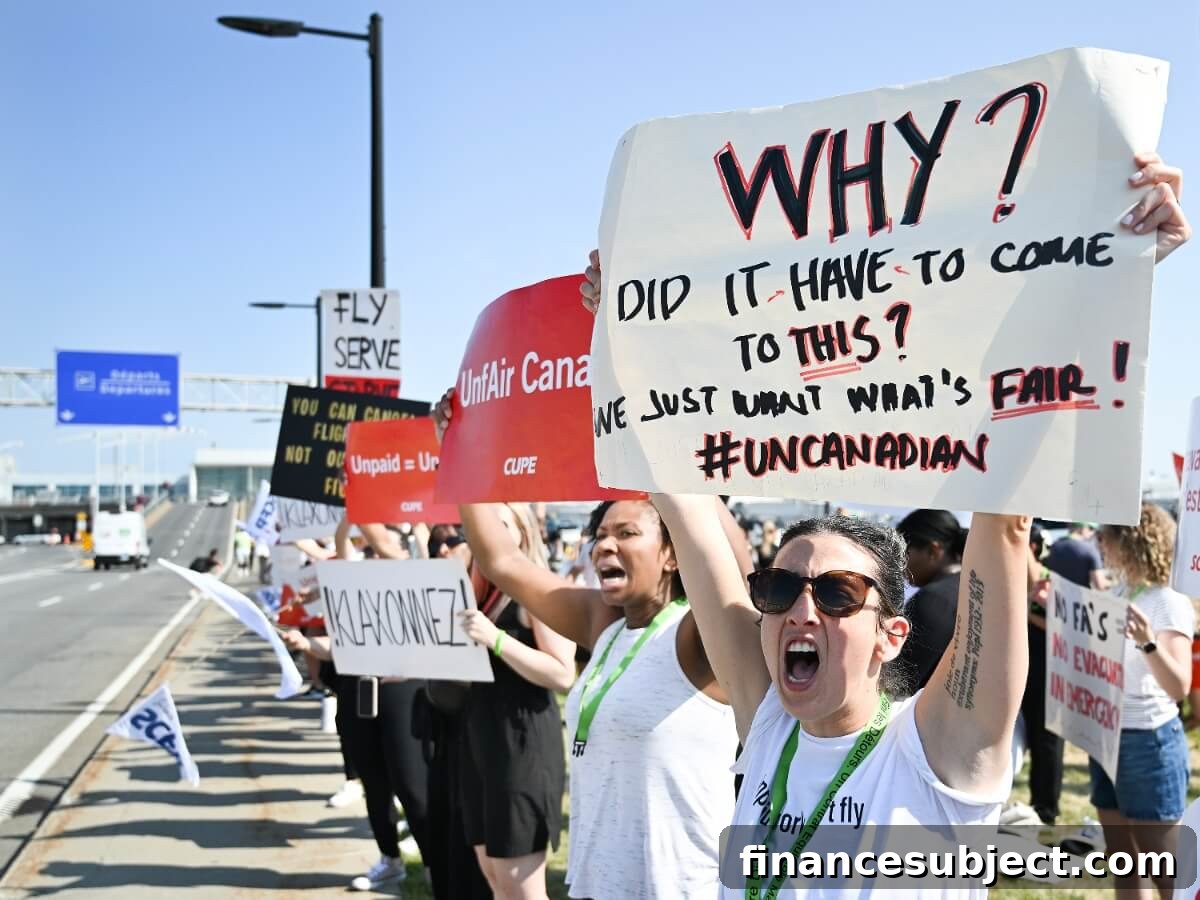
Air Canada employees struck. So did staff at Canada Post and workers with Canadian National Railway Co. In recent years, many Canadians have walked off the job in pursuit of higher wages and better working conditions. Striking can strengthen bargaining power, but it also means a loss of income that can last days, weeks, or even months in extreme cases.
Strike-proof your finances with early planning
Preparing for a possible work stoppage requires planning well before contract negotiations reach a breaking point. Financial experts and union leaders agree: start setting money aside as soon as bargaining begins — ideally, a year out.
“When we’re a year out from bargaining, it’s time to put a little bit of savings away just in case,” says Marty Warren, national director of the United Steelworkers union. You can’t predict whether a strike will occur or how long it will last, but building a reserve gives you much more flexibility if the worst happens.
Warren recommends practical steps to build that cushion. If overtime is available, take it. Consider postponing large discretionary purchases — a new car, cottage, boat, or major renovations — so your decision about striking is not driven by a recent big expense.
“If you just bought a brand-new truck and you’ve got a car payment, your vote and choices can be constrained,” he notes. Delaying big-ticket items helps preserve your ability to act in the union’s best interest without being financially forced into a certain position.
Adjust savings to protect essential payments
If you’re already saving for vacations, renovations, or other non-essential goals, consider reallocating that money toward a strike fund while negotiations are underway. Mark Kalinowski, a partnership and education specialist with the Credit Counseling Society, stresses flexibility: “Right now is not your vacation. Right now is the time to make sure the mortgage and essentials get paid.”
Set aside a portion of each paycheque into a dedicated account; a Tax-Free Savings Account is commonly recommended because it grows tax-free and remains accessible. If saving seems difficult, trim discretionary spending temporarily — small daily savings add up. For example, making coffee at home instead of buying it can save a few dollars a day that quickly builds a rainy-day fund.
Also read
Best savings accounts in Canada
Find the best and most up-to-date savings rates in Canada using our comparison tool
Cut costs and assess true expenses
One useful exercise is to calculate a bare-bones budget that covers only essentials: housing, utilities, groceries, and child care. During the COVID-19 pandemic, Kalinowski and his wife did this and were surprised how little they actually needed to get by. This exercise can reveal expenses you can reduce or eliminate if a strike occurs.
Some bills are fixed — mortgages, loan repayments, and student debt can’t simply be paused. Contact your lenders as soon as a strike appears possible to discuss options: payment deferrals, modified schedules, or temporary relief. In many cases, banks prefer to avoid repossession and will work out a solution, such as deferring payments or accepting partial payments for a short period.
“When you approach lenders early, they’ll often find a way to work with you,” Warren says. “Some lenders may even let you skip a payment or push it to the end of your term.” Communicating early reduces stress and the risk of missed payments damaging your credit.
Strike pay won’t fully replace wages
Unions commonly provide strike pay, but it rarely equals regular wages and often comes with conditions — for example, you may need to actively participate in picketing or other job actions to receive it, and it sometimes starts only after a waiting period. While strike pay helps cover basic needs, it is mainly intended to keep members afloat until negotiations conclude.
In cases of severe hardship, many unions operate hardship funds or committees that provide additional support to members in extraordinary need. These funds are typically reserved for situations like uncovered medical costs or other urgent expenses and usually require an application and proof of need.
Frugal living helps post-strike recovery
During a strike, unions often encourage members to seek temporary or gig work to supplement income — painting, handywork, or other short-term jobs can help bridge the gap. Even after a strike ends, recovery takes time: workers generally do not receive back pay for days spent on the picket line, so rebuilding savings and catching up on bills can require weeks or months.
Once back at work, some members choose to continue living more frugally, delay major purchases, or pick up extra shifts to recover financially. Others may focus on smaller, sustained changes to their spending habits that allow them to rebuild their emergency fund gradually.
“It’s a slow climb back,” Warren says. “A few extra shifts, cutting discretionary spending, and staying focused on essentials are common strategies to regain stability after a strike.”
Newsletter
Get free MoneySense financial tips, news & advice in your inbox.
Read more news:
- More trick, less treat: expect smaller candies at Halloween as prices rise
- Inflation jumps to 2.4% in September thanks to gas and grocery costs
- Covered-call ETFs offer high yields but come with trade-offs
- Young Canadians sue CPP Investments over climate-related risks