

In this series
- An intro to couch potato portfolios
- How to build a couch potato portfolio
- Building a core couch potato portfolio
The phrase “advanced couch potato” may sound like an oxymoron, but it describes a sensible next step for investors who have mastered a simple, low-cost index approach and want to expand their toolbox without abandoning passive principles. Many experienced investors use index funds and ETFs as the foundation of their portfolios and then layer on additional exposures—individual stocks, bonds, real assets, or alternative strategies—to pursue diversification or incremental return opportunities.
Core, passive exposures should remain the heart of any long-term portfolio. But once you feel comfortable with the basics, it’s reasonable to introduce targeted allocations available through ETFs that typically don’t appear in a core couch-potato mix. These can help you diversify risk, access different return drivers, or tilt toward particular market segments.
Below are common add-on asset categories you can access with ETFs and other liquid investments:
- Small-cap equities
- Emerging-market equities
- Foreign bonds
- High-yield bonds
- Money-market funds and high-interest savings accounts (HISAs)
- Preferred shares
- Gold and other commodities
- Cryptocurrency
- Alternative strategies (leveraged, inverse, and hedge-like ETFs)
- Private-market exposures
You can also increase exposure to segments already present in a core portfolio, for example by adding sector-specific or country-specific ETFs, dividend-focused equity funds, or targeted corporate bond and duration tilts. Every addition should have a clear purpose in your plan—diversification, income, inflation protection, or risk management.
Rankings
Compare the best TFSA rates in Canada
One well-known diversified approach is Ray Dalio’s “all-weather” portfolio, which splits assets across stocks, long-term and intermediate bonds, commodities, and gold. You can recreate similar exposure using ETFs if you wish. MoneySense columnists have also illustrated ways to broaden a core portfolio—adding cash or gold for downturn protection or combining stocks, bonds, and alternatives in a 40/30/30-style allocation.
If you’re ready to move beyond a basic mix of Canadian bonds and broad-market equity ETFs, consider one of the following sample advanced allocations. They are suggested starting points designed to remain balanced and pragmatic. You should adjust any allocation to fit your time horizon, risk tolerance, tax situation, and financial goals.
An important note: As you add more asset types, managing each allocation with pure index mutual funds or single-ETF asset-allocation products becomes harder. That is why index ETFs remain the most practical vehicles for building an advanced portfolio. With roughly 1,500 ETFs trading in Canada, you’ll find comparable products with different fee structures and features—shop carefully and consider the total cost, trading liquidity, and tax characteristics.
Consider these fund suggestions as examples only. For up-to-date ETF recommendations and product comparisons, consult reputable, current ETF guides and product pages.
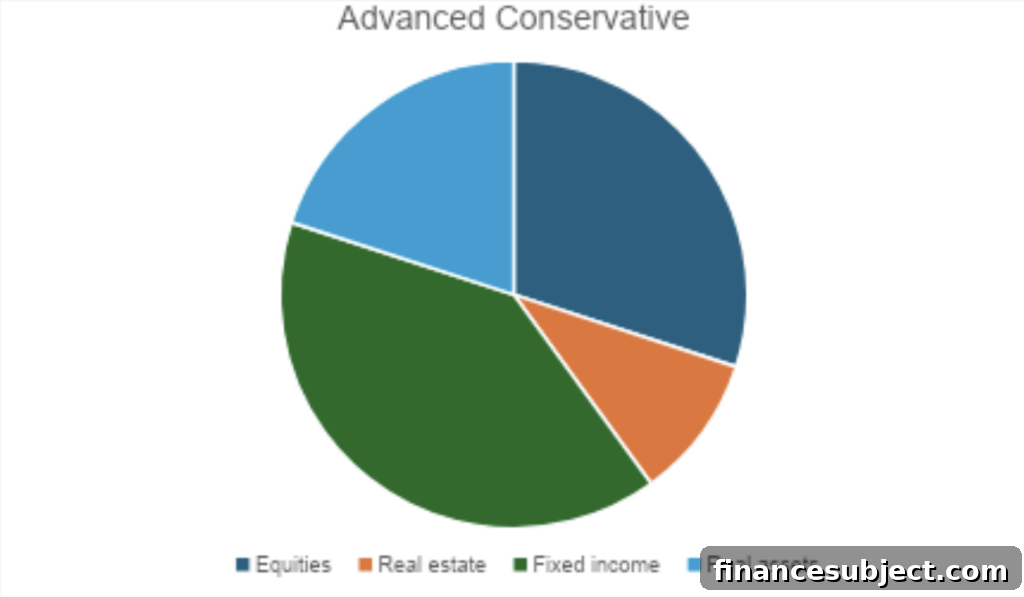
Advanced conservative portfolio
This conservative variant is intended for investors who prioritize capital preservation and income while maintaining modest growth potential.
Equities: 30%
- Canada – iShares Core S&P/TSX Capped Composite Index ETF (XIC): 10%
- U.S. – iShares Core S&P 500 Index ETF (XUS): 10%
- Developed International – iShares Core MSCI EAFE IMI Index ETF (XEF): 5%
- Emerging Markets – Vanguard FTSE Emerging Markets All Cap Index ETF (VEE): 5%
Real estate: 10%
- Global REITs – iShares Global Real Estate Index ETF (CGR): 10%
Fixed income: 40%
- Canadian long-term bonds – BMO Long Federal Bond Index ETF (ZFL): 15%
- Canadian short-term bonds – iShares Core Canadian Short Term Bond Index ETF (XSB): 10%
- U.S. Treasuries – BMO Long-Term US Treasury Bond Index ETF (ZTL): 15%
Real assets: 20%
- Purpose Diversified Real Asset ETF (PRA): 20%
Advanced balanced portfolio
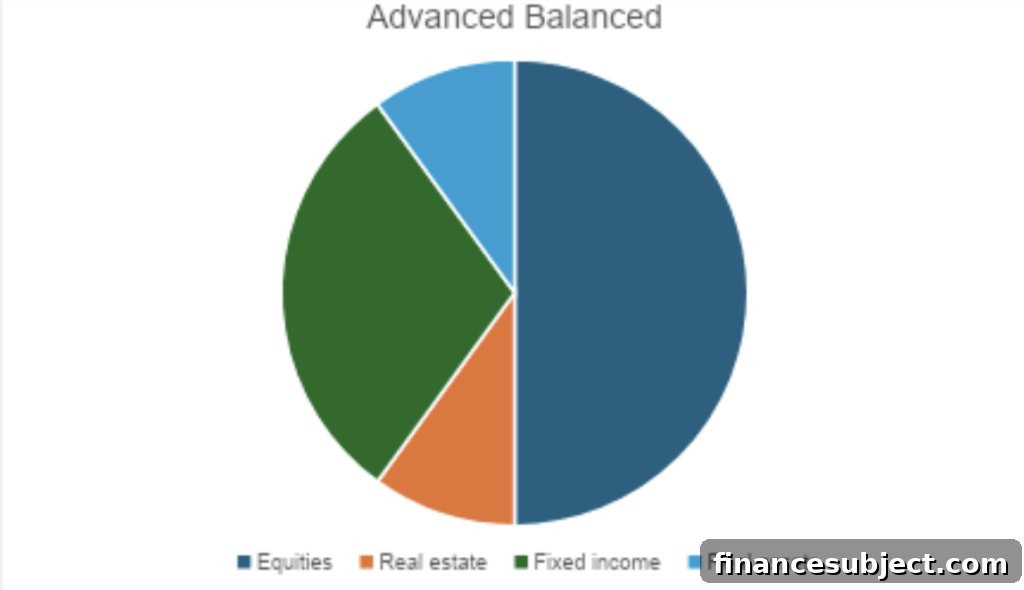
The balanced allocation aims for a middle ground between growth and stability, blending equity exposure with meaningful fixed income and real-asset components.
Equities: 50%
- Canada – iShares Core S&P/TSX Capped Composite Index ETF (XIC): 16.7%
- U.S. – iShares Core S&P 500 Index ETF (XUS): 16.7%
- Developed International – iShares Core MSCI EAFE IMI Index ETF (XEF): 8.33%
- Emerging Markets – Vanguard FTSE Emerging Markets All Cap Index ETF (VEE): 8.33%
Real estate: 10%
- Global REITs – iShares Global Real Estate Index ETF (CGR): 10%
Fixed income: 30%
- Canadian long-term bonds – BMO Long Federal Bond Index ETF (ZFL): 10%
- Canadian short-term bonds – iShares Core Canadian Short Term Bond Index ETF (XSB): 10%
- U.S. Treasuries – BMO Long-Term US Treasury Bond Index ETF (ZTL): 10%
Real assets: 10%
- Purpose Diversified Real Asset ETF (PRA): 10%
Advanced growth portfolio
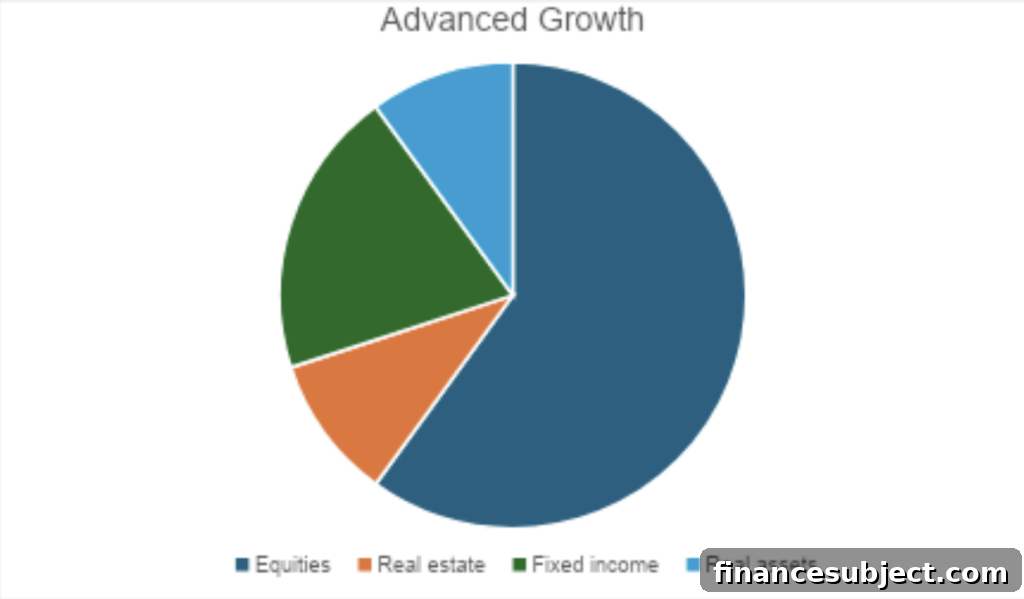
The growth-oriented allocation increases equity exposure and reduces fixed income, suitable for investors with a longer horizon and a higher risk tolerance.
Equities: 60%
- Canada – iShares Core S&P/TSX Capped Composite Index ETF (XIC): 20%
- U.S. – iShares Core S&P 500 Index ETF (XUS): 20%
- Developed International – iShares Core MSCI EAFE IMI Index ETF (XEF): 10%
- Emerging Markets – Vanguard FTSE Emerging Markets All Cap Index ETF (VEE): 10%
Real estate: 10%
- Global REITs – iShares Global Real Estate Index ETF (CGR): 10%
Fixed income: 20%
- Canadian long-term bonds – BMO Long Federal Bond Index ETF (ZFL): 6.6%
- Canadian short-term bonds – iShares Core Canadian Short Term Bond Index ETF (XSB): 6.6%
- U.S. Treasuries – BMO Long-Term US Treasury Bond Index ETF (ZTL): 6.8%
Real assets: 10%
- Purpose Diversified Real Asset ETF (PRA): 10%
Newsletter
Get free MoneySense financial tips, news & advice in your inbox.
These sample allocations are intended as practical templates, not prescriptive rules. Rebalance periodically, review holdings for overlap, and consider tax-efficient placement of different asset types across registered and non-registered accounts. As always, tailor any advanced portfolio to your circumstances, and seek professional advice if you are uncertain about the suitability of specific funds or strategies.