

Kyle Prevost, creator of 4 Steps to a Worry-Free Retirement, Canada’s DIY retirement planning course, shares the headlines and context Canadian investors should care about.
Every year around this time, pundits and market commentators emerge with bold predictions. They write headlines and record videos designed to attract clicks, then move on—rarely held accountable for misses. Some voices keep repeating dire forecasts even as markets ignore them. A familiar example is Robert Kiyosaki, author of Rich Dad Poor Dad, who has repeatedly warned of imminent market crashes for more than a decade. Despite those warnings, major equity indices have continued to climb, demonstrating the danger of treating sensational predictions as investment guidance.
Review of 2024 market calls for Canadian investors
TSX 60 and S&P 500 performance
We predicted the TSX 60 would gain 15% and outperform the S&P 500’s 8% in 2024. The actual results diverged from that precise forecast: by year‑to‑date measures the TSX 60 had gained roughly 22% and the S&P 500 about 27% at the time of writing. While our numeric estimate was off, the broader point—that Canadian equities would perform well relative to U.S. equities—proved directionally correct over parts of the year. Since July 1, 2024, the TSX indexes outpaced the S&P 500, and Canadian investors benefited from higher dividend yields as well.
Technology vs. broader Canadian market
We expected tech stocks to lag Canada’s broader market. If we compare Nasdaq‑heavy tech to the TSX Composite, tech underperformed over the second half of the year: the Nasdaq rose modestly while the TSX Composite recorded larger gains during the same stretch. That said, returns vary greatly by subsector and individual names, so broad labels like “tech” can hide meaningful differences.
GDP per capita and productivity concerns
One prediction that proved accurate was the continued decline in Canada’s GDP per capita. Through 2024, GDP per capita fell for several consecutive quarters, reflecting weak productivity growth. Adjusted for immigration, Canada’s per‑person economic output has been effectively flat for much of the past decade. That long‑running trend signals structural challenges: without productivity improvements, higher population alone won’t raise living standards per person.
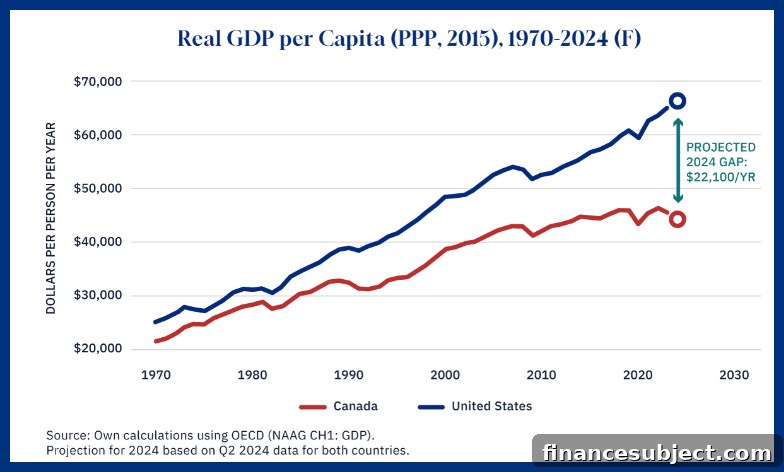
Projected forward, continued weak productivity growth could widen the economic gap with major trading partners unless policy and investment priorities shift to support innovation, training and capital formation.
Recession debate and economic slack
Flat GDP readings kept the “is it a recession?” conversation alive. Commentary from former central bankers emphasized that technical definitions (two consecutive quarters of negative growth) miss broader signs of economic slack. Higher immigration has supported consumption, muddling headline GDP figures while underlying per‑capita performance remained weak.
Oil price outlook
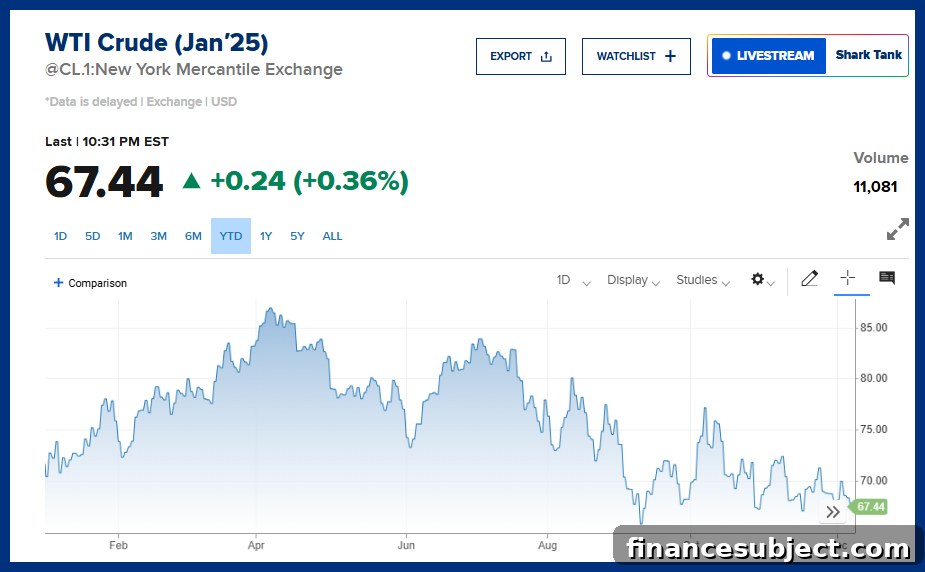
We foresaw oil prices staying below US$85 per barrel through 2024, and that projection held. Many forecasters had been far more bullish at the start of the year; instead, crude prices moved modestly and volatility dominated headlines more than sustained price spikes. Lower oil prices helped moderate inflation pressures in energy‑sensitive sectors for much of the year.
Cryptocurrency volatility and returns
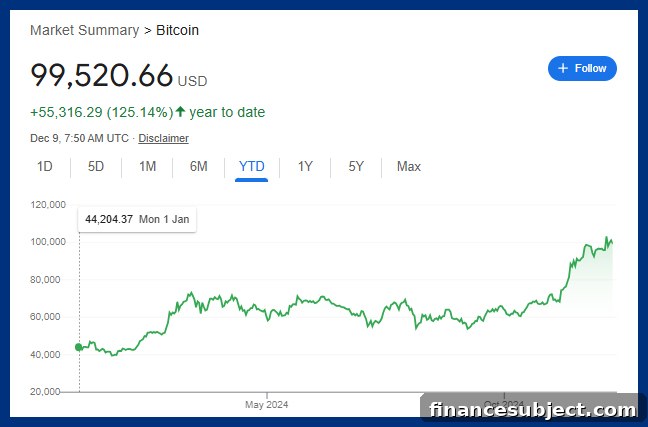
Crypto markets delivered dramatic moves in 2024. Bitcoin experienced a mid‑year pullback before a powerful rally later in the year, resulting in very strong year‑to‑date returns. Political developments and large institutional flows amplified volatility: headline events drove sharp price swings, reminding investors that crypto remains highly speculative. For long‑term portfolios, we continue to emphasize investments with clear cash flow and earnings; most cryptocurrencies lack those characteristics.
Inflation trends and gasoline prices
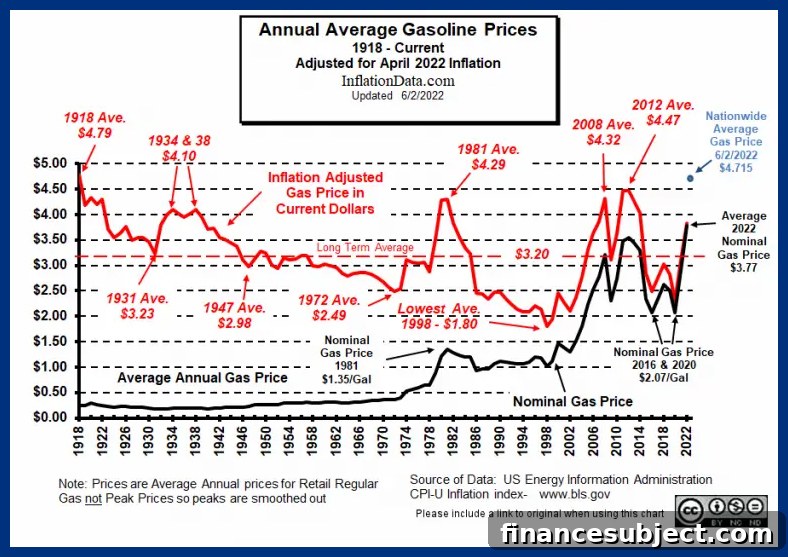
Inflation continued to trend down in 2024, with gasoline prices playing a significant role in easing headline rates. Core inflation remained stickier than fuel‑only measures, and shelter costs persisted as the most persistent source of inflation pressure. Adjusted for inflation, average gasoline prices were lower than recent peaks, which helped reduce overall consumer price growth.
Elections, Tesla and market surprises
Several of our final 2024 calls—about election chaos, a significant Tesla decline, and a split U.S. government producing market deadlock—did not unfold the way we predicted. The U.S. election season was tumultuous in the run‑up, yet markets ultimately reacted calmly to the final outcome. Equities rallied on expectations of policy continuity and potential tax changes.
Tesla’s share price trajectory surprised many. After a large dip earlier in the year, the stock rallied strongly following political developments and renewed investor optimism. That rally wiped out earlier losses and underscored how sentiment and headline events can overpower fundamentals in the short term. Given rising competition in electric vehicles and margin pressures across the industry, investors should weigh durable earnings potential against hype when evaluating EV stocks.
Final takeaways for Canadian investors
What should Canadian investors learn from 2024? First, avoid treating sensational short‑term forecasts as a substitute for a disciplined plan. Diversification, focus on long‑term returns and attention to valuations and cash flows remain essential. Second, structural economic trends—like weak productivity growth and persistent shelter costs—matter more for long‑term financial planning than transient market noise. Finally, remain skeptical of markets driven primarily by headlines: they create both opportunity and risk.
We weren’t right on every call, but the exercise reinforced a practical point: building a resilient portfolio and keeping a long horizon beats chasing the next shouted prediction. Tune in for our outlook on 2025 to see how we’re positioning ideas and priorities for Canadian investors in the year ahead.
Related investing topics
- Canadian and U.S. market comparisons
- Dividend investing and income strategies
- ETF selection and diversification
- Managing portfolio risk during political and market volatility
- Key macro themes: productivity, inflation and resource prices