
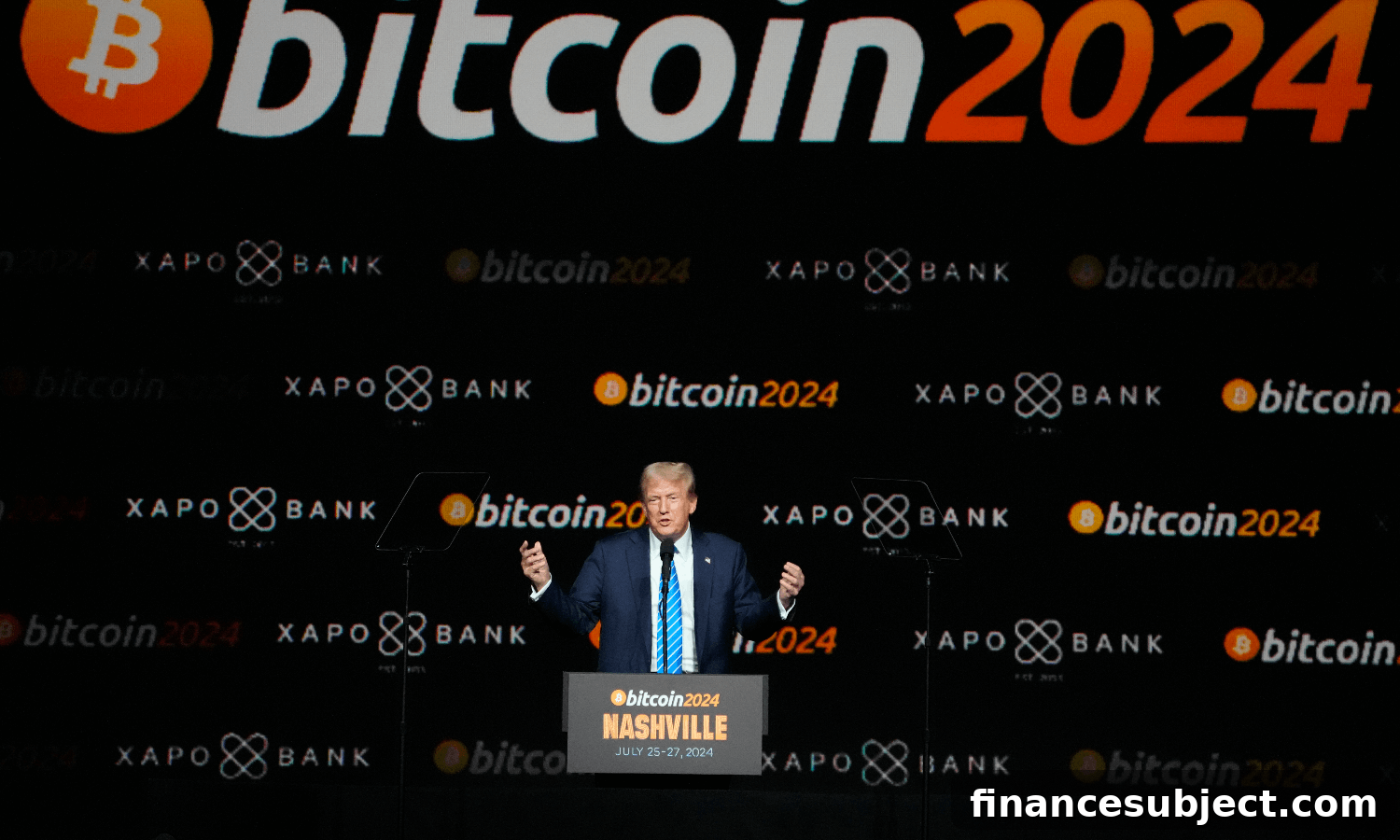
Bitcoin surpassed $100,000 for the first time this week, driven by a powerful rally in the world’s most widely held cryptocurrency that picked up momentum following the election of Donald Trump. (All figures are in U.S. dollars.)
The digital asset officially breached the six-figure mark late Wednesday, just hours after the president-elect announced his intention to nominate cryptocurrency advocate Paul Atkins as the next chair of the Securities and Exchange Commission.
Bitcoin’s price has climbed sharply since Trump’s Nov. 5 victory. It rose from $69,374 on Election Day to a peak of $103,713 on Wednesday, according to CoinDesk. This fresh all-time high comes roughly two years after bitcoin tumbled below $17,000 in the wake of the FTX exchange collapse.
By Thursday afternoon the price slipped back under $100,000, trading a little above $99,000 by 3 p.m. ET. Even amid a rally that has more than doubled bitcoin’s value this year, many experts continue to warn about the risks of investing in such a historically volatile asset.
Here’s what to know about the surge and what it could mean for investors.
Back up. What is cryptocurrency again?
Cryptocurrency is digital money that operates across online networks without a central authority. Transactions are recorded on a distributed ledger called a blockchain, and most cryptocurrencies are not issued or backed by governments or traditional banks.
Bitcoin is the oldest and largest cryptocurrency by market value, though other tokens such as ether (from the Ethereum network), XRP, tether and dogecoin are also well known. Some investors treat crypto as a digital alternative to traditional currencies, but everyday transactions are still dominated by fiat money like the U.S. dollar. Importantly, bitcoin’s price can swing dramatically in response to market events and sentiment.
Also read
The best crypto platforms and apps
We’ve ranked the top crypto exchanges and apps in Canada to help you compare features and fees.
Why is bitcoin soaring?
Much of the recent momentum can be traced to the outcome of the U.S. presidential election and expectations about regulatory policy. After years of skepticism, Trump has adopted a pro-crypto stance, pledging to make the U.S. “the crypto capital of the planet” and proposing a government “strategic reserve” of bitcoin. His campaign accepted crypto donations, he engaged with the crypto community at events, and he has launched ventures tied to digital assets.
On Thursday morning, hours after bitcoin topped $100,000, Trump posted a congratulatory message to “BITCOINERS” on his social platform and appeared to take credit for the rally.
Industry stakeholders welcomed his victory in hopes of lighter regulation and clearer rules that would encourage broader adoption. The sector has also spent heavily on political influence: Public Citizen reported that crypto companies spent more than $119 million in 2024 to support pro-crypto candidates and causes.
Trump’s announcement that he plans to nominate Paul Atkins to chair the SEC added fuel to the rally. Atkins previously served as an SEC commissioner and has argued against excessive regulation; he has been active in crypto advocacy for several years. Current SEC chair Gary Gensler, who is set to leave when the new administration takes office, pursued a stricter enforcement approach and took action against several crypto firms for alleged securities law violations.
One notable regulatory milestone under Gensler was the January approval of spot bitcoin exchange-traded funds (ETFs), which let investors gain exposure to bitcoin without holding the asset directly. Those spot ETFs drove substantial inflows and were a major factor in bitcoin’s rise before and after the election.
What does bitcoin hitting the $100K mark mean? Could it keep climbing?
Crossing $100,000 has energized the crypto community and prompted debate about bitcoin’s future role in finance. Some industry leaders see this as part of a broader shift toward mainstream acceptance and increasing institutional participation.
“This isn’t just a rally — it’s a fundamental transformation of bitcoin’s place in the financial system,” Nathan McCauley, CEO of Anchorage Digital, said, noting stronger institutional demand.
But not everyone interprets the milestone as definitive proof of mainstream adoption. Dan Coatsworth, an investment analyst at AJ Bell, emphasized that round-number thresholds are psychologically meaningful but ultimately arbitrary.
If the incoming administration follows through on pro-crypto policies—especially proposals like a bitcoin reserve—supply and demand dynamics could push prices higher. Matt Hougan, CIO at Bitwise, observed that demand currently outstrips available supply, which historically supports rising prices.
Still, significant risks remain. Global regulatory uncertainty, environmental concerns over energy-intensive bitcoin mining, and bitcoin’s inherent volatility are all potential restraints on sustained growth. Long-term adoption and stability remain open questions.
Is it too late to invest? What are the risks?
The surge may tempt new investors, but experts urge caution. Some, including Hougan, argue it is not necessarily too late—pointing out that many institutional investors still have minimal exposure to crypto. Others warn about chasing gains out of fear of missing out.
“A lot of people have made money from the recent rise, but this high-risk asset isn’t suitable for everyone,” Coatsworth said. Bitcoin’s price is volatile and speculative, and it may not be a fit for conservative or short-term investors.
Historical data shows steep swings: bitcoin traded at just over $5,000 at the start of the COVID-19 pandemic, surged to nearly $69,000 by November 2021, then plunged amid aggressive interest rate hikes and the collapse of FTX in late 2022. Research cited by Coatsworth from the Bank for International Settlements suggests a large share of retail buyers likely lost money on bitcoin between 2015 and 2022.
If you’re considering an allocation, weigh your risk tolerance, diversify appropriately, and avoid investing more than you can afford to lose. Crypto markets operate 24/7 and can change rapidly, so careful planning and a long-term perspective are essential.
Newsletter
Get free MoneySense financial tips, news & advice in your inbox.
Read more financial news:
- Food inflation: Canadians to spend $801 more on food in 2025
- The crypto markets’ response to the U.S. election results
- Canadian bank earnings reports
- Why Canadian consumer debt continues to grow