

Pension envy is real. Defined-benefit pensions simplify retirement planning by automatically taking contributions from your paycheque and placing them into a pooled plan that will pay you a steady income in retirement. It’s a built-in “pay yourself first” approach—funding happens before you can spend the money. But what if, like many Canadians, you don’t have a pension? What if you’re 40 and have little or no retirement savings?
It’s not hopeless. The goal is to recreate that automatic savings habit for yourself. Set up regular, payroll-aligned contributions to a registered retirement savings plan (RRSP) and aim to save about 10% of your gross income. That’s roughly the same contribution rate many employees put into defined-benefit pensions. Matching that discipline will put you on more even footing with pensioned peers.
How much to save when you’re 40 and have no pension
Consider Johnny, a fictional late starter who bought a home at 35 and had no retirement savings at 40. He decides to contribute 10% of his $90,000 gross salary each year into his RRSP and invests prudently.
If Johnny contributes 10% every year for 25 years and earns an average annual return of 6%, his RRSP balance grows to close to $500,000 by age 65.
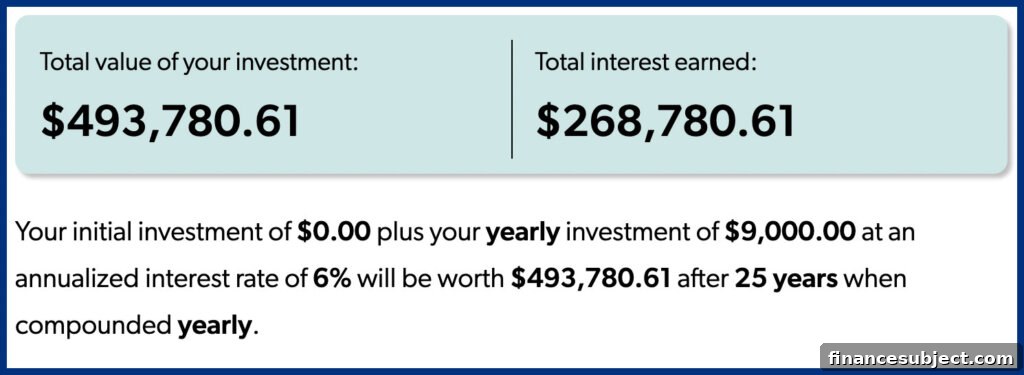
That projection excludes salary growth. If Johnny’s income rises by 3% annually and he keeps contributing 10% of his gross pay, his contributions in dollar terms increase each year. That added growth raises his RRSP to just over $700,000 by age 65.
How government programs can help those without a pension
A $700,000 RRSP, combined with expected Canada Pension Plan (CPP) and Old Age Security (OAS) income, can be sufficient to preserve Johnny’s pre-retirement standard of living. With a paid-off mortgage and lower taxes in retirement, his annual spending needs become easier to meet.
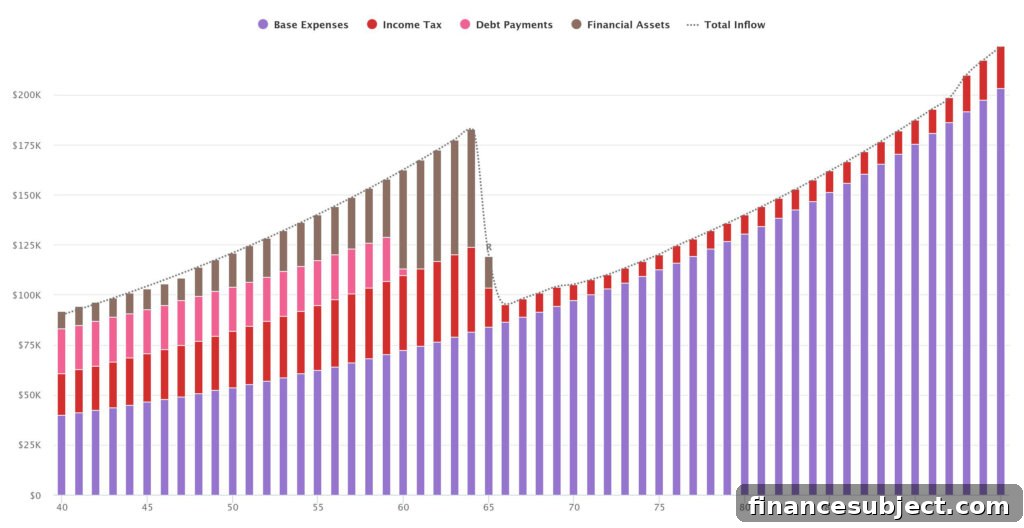
Assuming Johnny claims CPP and OAS at 65, those programs add roughly $25,000 per year (in today’s dollars) in guaranteed, inflation-indexed income. When combined with RRSP/RRIF withdrawals, this income mix can support a comfortable retirement without tapping home equity.
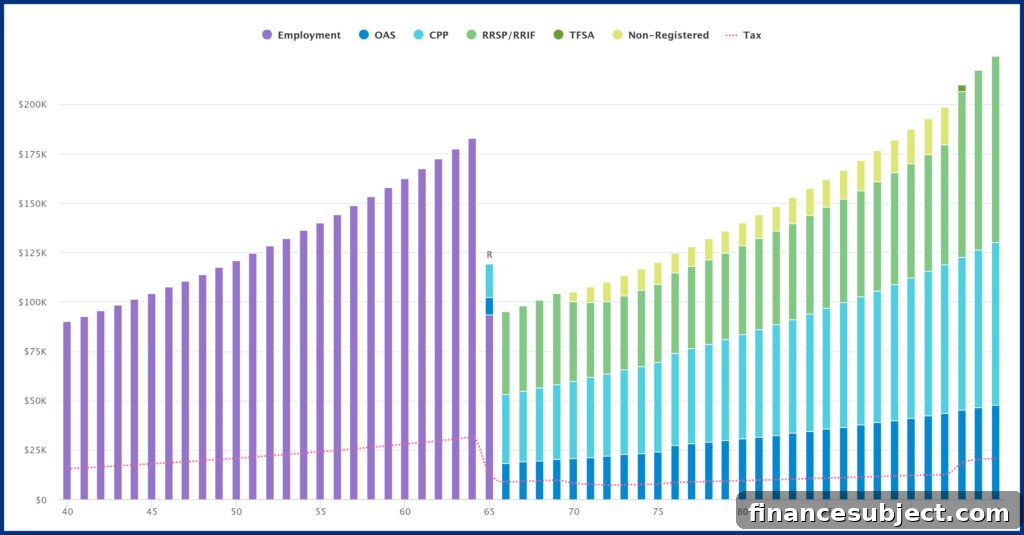
Even starting late, Johnny ends up with a solid retirement by saving consistently and investing within his RRSP. Working to age 65 ensures stronger CPP benefits, and having lived in Canada his whole life means he can expect full OAS entitlement.
Extra credit: more ways to boost your retirement income
Johnny’s paid-off home is a powerful backup. Home equity can be accessed later by downsizing, selling and renting, taking a line of credit, or using a reverse mortgage if needed for cash flow or large one-off expenses.
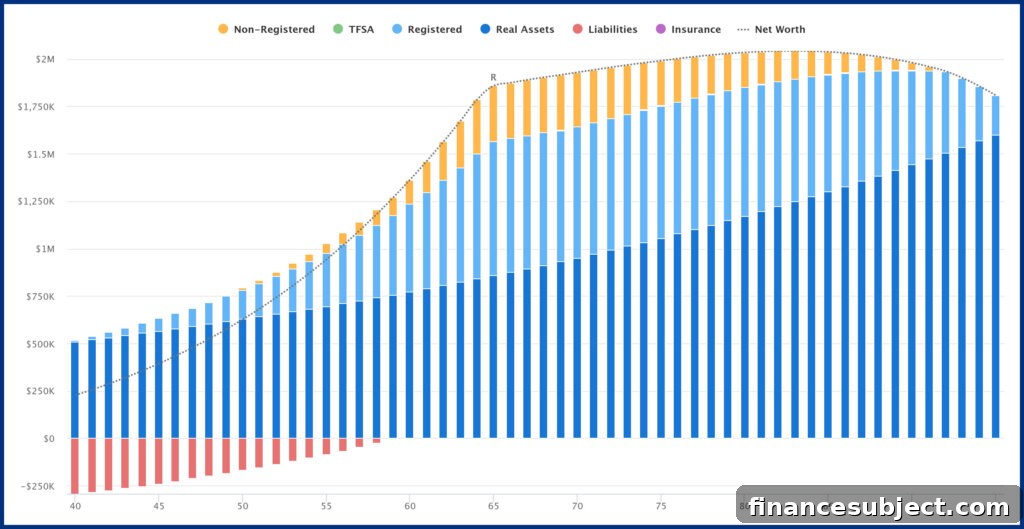
Johnny can do even better by using a tax-free savings account (TFSA) to supplement his RRSP. Starting at age 45, he adds 3% of his salary to a TFSA while still contributing 10% to his RRSP. He continues this for 15 years. When his mortgage is paid off at 60, he redirects the mortgage payments—about $30,000 a year—into his TFSA for the final five working years.
By retirement at 65, Johnny’s TFSA grows to roughly $335,000 and his RRSP stands around $708,000. Together, that puts his retirement savings above $1 million. With that portfolio, he can increase sustainable annual spending from $40,000 to $45,000 (inflation-adjusted) through age 95 without tapping home equity.
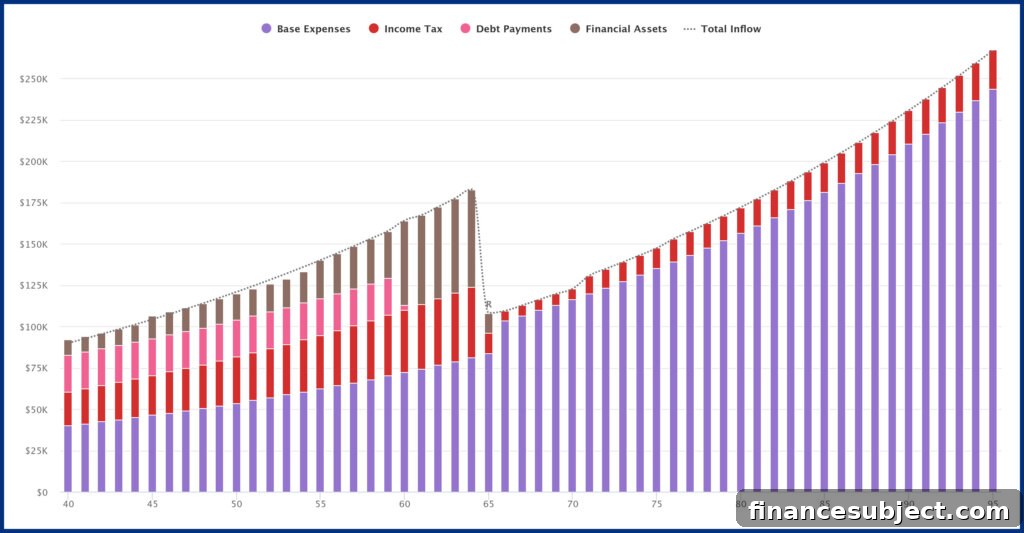
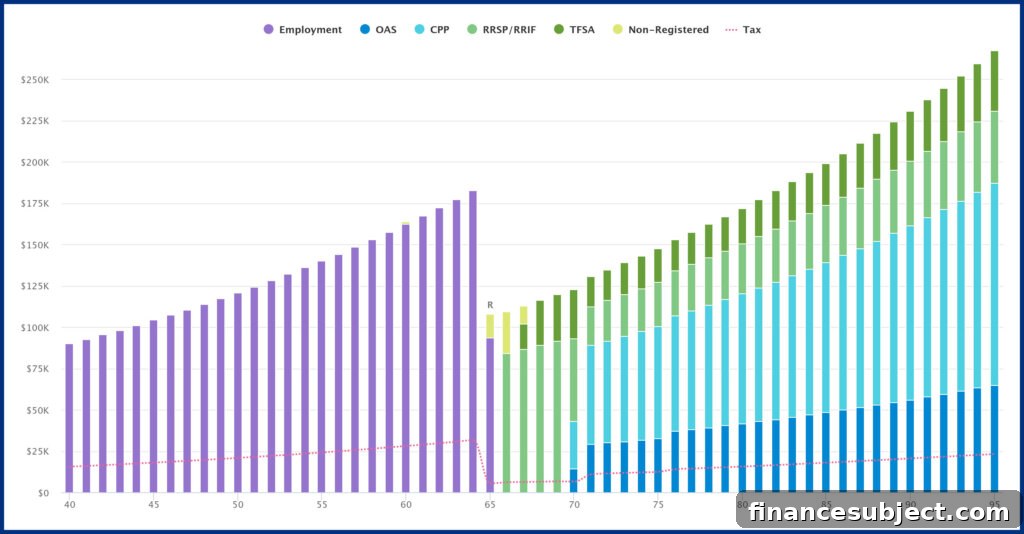
Another useful strategy is delaying CPP and OAS. If Johnny delays both to age 70, his CPP benefit increases by about 42% and OAS by about 36% compared with taking them at 65. Delaying raises guaranteed lifetime income and can improve after-tax lifetime spending, though it requires drawing more from other savings between ages 66 and 70.
Can you eventually retire with enough money if you’re 40 and have no pension?

Yes. It’s possible to retire comfortably without an employer pension. One advantage of not having a pension is flexibility: you’re not locked into mandatory contributions, so you can control how and when you save. That flexibility is useful, but it requires discipline to be effective.
In retirement, CPP and OAS will form a core portion of your guaranteed income. RRSP/RRIF and TFSA savings and any other taxable assets fill the gaps and cover discretionary or one-time expenses such as a car replacement, home repairs, travel, or a gift to family.
Practical steps to take now:
- Identify all potential income sources: CPP, OAS, RRSP/RRIF, TFSA, home equity, and other investments.
- Understand your current spending—this is the best baseline for future needs.
- Automate savings so contributions mimic a pension: set recurring deposits at each payday and target at least 10% of gross income.
- Raise the dollar amount of contributions with each pay increase so you continue saving at least 10%.
- Use the TFSA to boost tax-free growth and flexible withdrawals for early retirement or higher retirement spending.
- Consider delaying CPP and OAS up to age 70 to maximize lifetime income, but plan how to bridge income until then.
- If you own your home mortgage-free in retirement, view equity as a last-resort source of cash via downsizing, renting after selling, a line of credit, or a reverse mortgage.
With consistent saving, smart use of registered accounts, and prudent planning around government benefits, someone who is 40 with no pension can still build a secure and comfortable retirement.
More on retiring without a pension:
- 30 and no pension
- 40 and no pension: what to do
- Self-employed and no pension
- Single and no pension: retirement planning