

Kyle Prevost, editor of Million Dollar Journey and founder of the Canadian Financial Summit, summarizes the latest financial headlines and provides context for Canadian investors.
Bank of Canada hikes rates again
On Wednesday the Bank of Canada raised its policy interest rate from 4.50% to 4.75%. The move surprised some observers who hoped for a pause after recent tightening; however, stronger-than-expected economic indicators and persistent inflation gave the central bank room to act. As a result, commentary now suggests the BoC could continue raising rates if incoming data remains “too good,” and earlier speculation about rate cuts by the end of the year has mostly faded.
Canadian lenders reacted quickly. Major banks increased their prime lending rates, pushing advertised prime to roughly 6.95%. That rapid rise has translated into significantly higher payments for many variable-rate mortgage holders, an adjustment unprecedented in recent memory. The speed and magnitude of these increases are squeezing household budgets and are likely to reduce consumer spending across other categories.
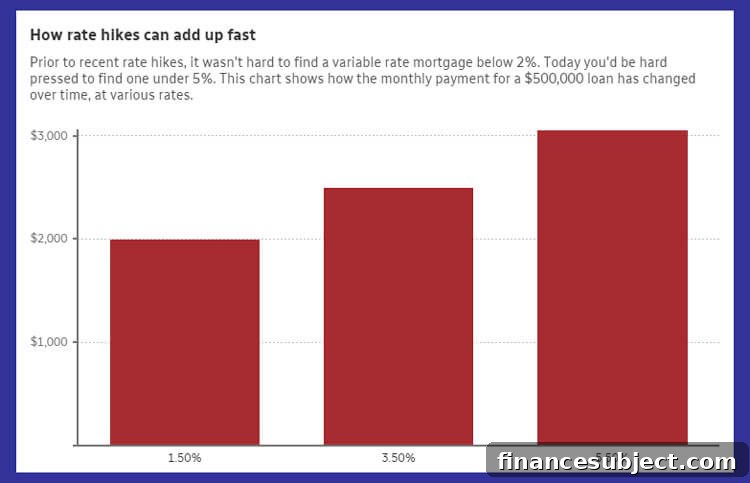
Policymakers face difficult trade-offs. Aggressive rate hikes are intended to slow inflation, but they also restrain economic activity and raise political questions about whether a 2% inflation target justifies the pain inflicted on households and certain sectors. Expect debates over these choices as higher borrowing costs reverberate through consumer spending, housing affordability and government finances.
Canadian consumers prefer a good deal
Recent earnings reports highlight shifting consumer behaviour in Canada. While some outdoor lifestyle and premium brands have struggled, discount and dollar-store retailers have generally performed well as shoppers hunt value.
Canadian earnings highlights
- Dollarama (DOL/TSX): earnings per share of $0.63 (consensus ~ $0.59) and revenues of $1.29 billion (consensus ~ $1.24 billion), a slight beat that helped the stock.
- Roots (ROOT/TSX): reported a loss per share of -$0.19 (versus -$0.16 expected) and revenues near $41.5 million; management cited weaker casualwear demand for the shortfall.
- The North West Company (NWC/TSX): EPS of $0.43 (versus ~$0.59 expected) and revenues of $593.6 million (versus ~$588.7 million), where higher shipping costs and changes to sales mix weighed on profits.
Dollarama’s results reinforced that value-oriented retailers can outpace lifestyle brands when consumers prioritize price. By contrast, Roots and The North West Company experienced downward pressure from shifting product demand and rising operating costs. For investors wanting exposure to the sector without single-stock risk, Canadian consumer staples ETFs offer diversified options—but investors should be aware of concentration risks, since some ETFs are heavily weighted to a few large grocery and convenience-store chains.
READ NOW
Is investing a gamble?
Some people equate the stock market with gambling, but that comparison misses important distinctions. Short-term speculation can resemble betting, yet long-term investing is fundamentally about owning shares of real businesses that generate profits and reinvest capital. Ben Carlson’s widely read commentary, “The Stock Market Is Not a Casino,” captures this distinction: disciplined, long-term ownership of diversified companies is not the same as wagering at a table.
Across global markets, long-term returns come from company earnings growth and dividends. Interestingly, international stocks have outperformed U.S. stocks over certain five- and ten-year periods, underscoring the benefits of diversification beyond a single country. Lower-cost discount brokerages and passive funds have also reduced the ability of large financial intermediaries to extract excessive fees, improving net returns for everyday investors.
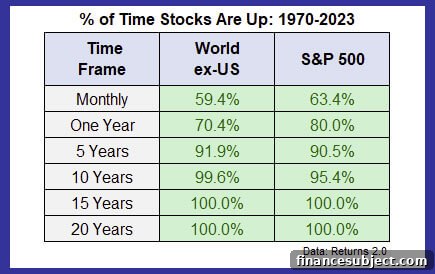
For most investors, a diversified, low-cost portfolio that reflects risk tolerance and time horizon remains the most reliable path to long-term wealth accumulation. Treating investing as ownership of businesses rather than a series of short-term gambles helps maintain discipline during market swings.
READ NOW
Worries set in about lack of panic?
Given headlines about debt ceilings, geopolitical risk, climate impacts and inflation, many expected 2023 to be a volatile year for equity markets. Instead, large-cap companies have remained profitable and stock indices, particularly the S&P 500, have traded within a relatively narrow range so far this year.
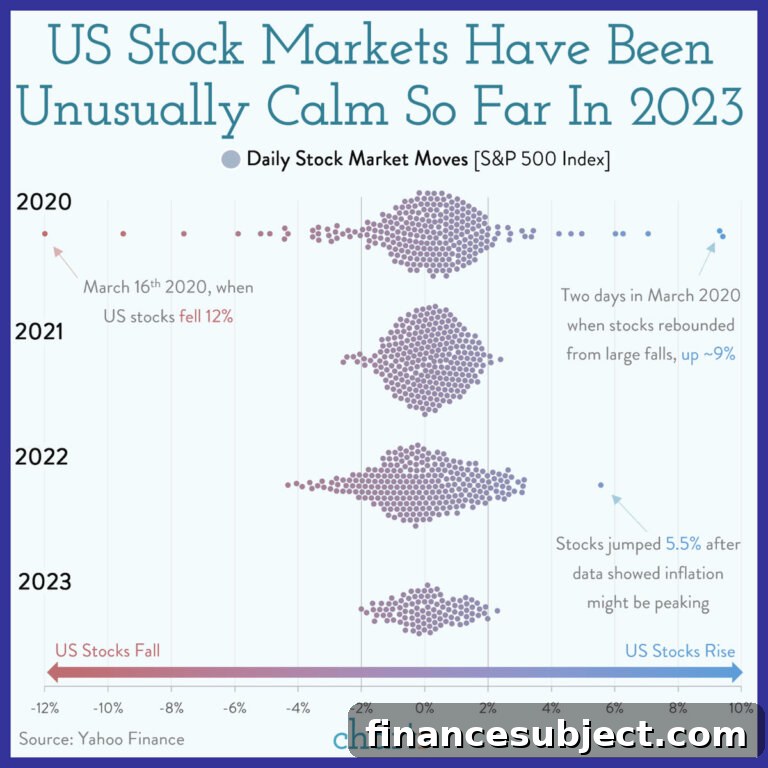
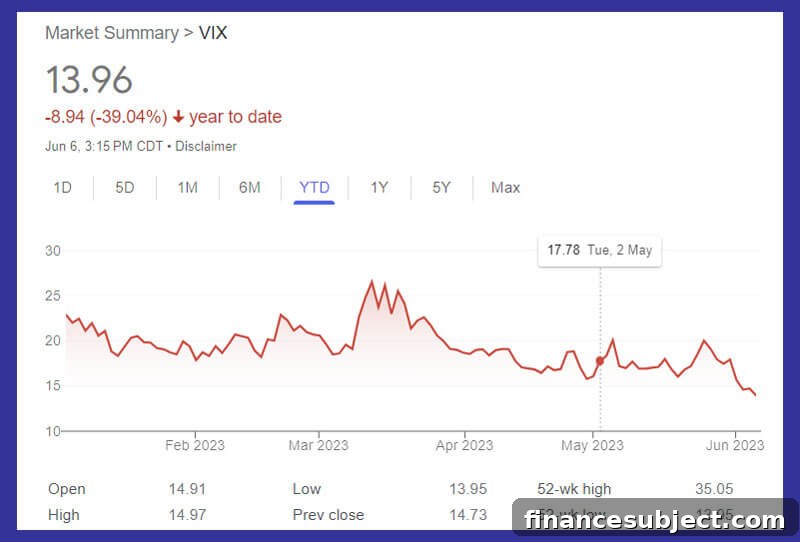
Market volatility, measured by gauges such as the CBOE Volatility Index (VIX), has been comparatively low, leaving traders who bet on large price swings disappointed. The year’s single largest down day so far was about -2% and the best day about +2.3%, illustrating how muted intrayear moves have been compared with past episodes.
For individual investors, the key takeaway is to focus on the long term. Short-term headlines and social-media noise amplify pessimism, but long-term investors who maintain diversified portfolios and stick to a disciplined plan generally capture the returns that compound over time. Optimism combined with patience and prudent risk management tends to reward investors more often than frantic market timing.