
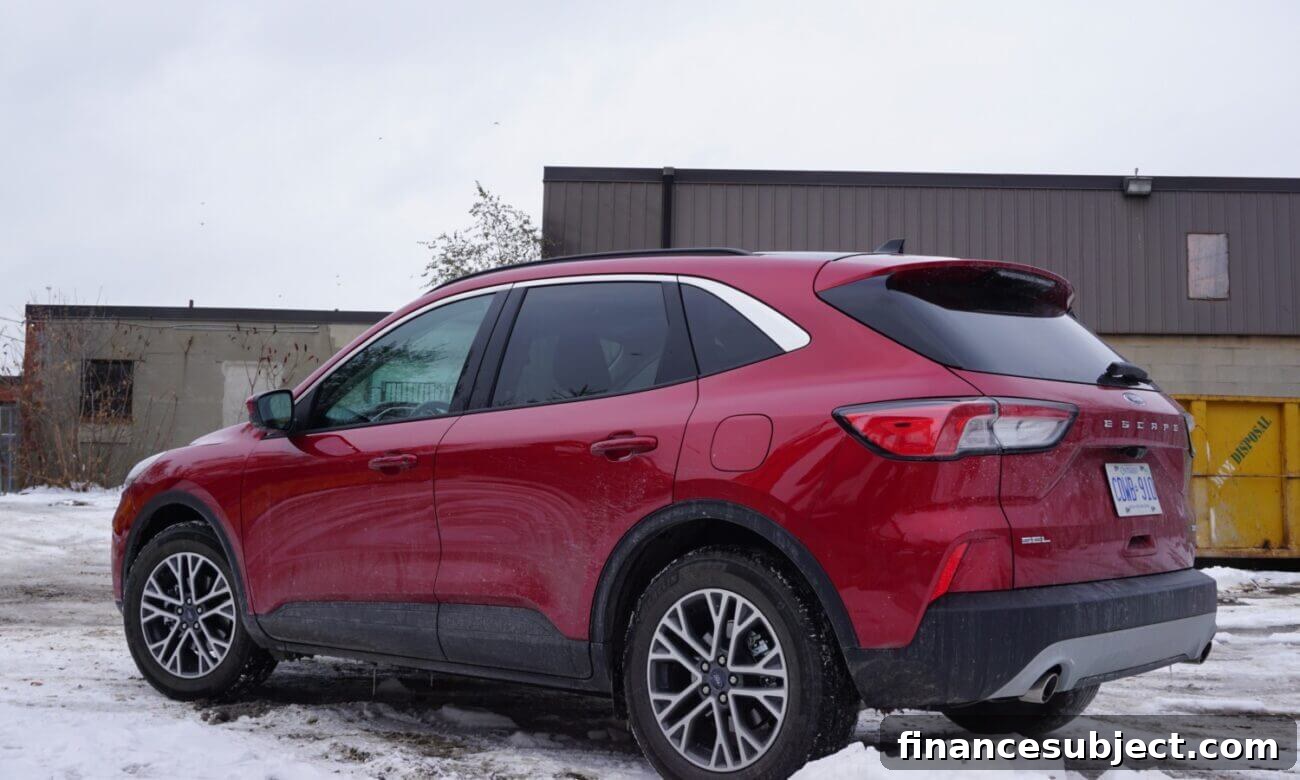
The Ford Escape combines reliability, attractive styling and strong fuel efficiency, which is why I consider it one of the best used hybrid cars available in Canada. The fourth-generation Escape, introduced for the 2020 model year, brought a significantly revised hybrid powertrain and a more refined driving experience. If you want a used compact crossover that blends good features, comfortable packaging and economical hybrid operation, the Escape Hybrid is a top choice among used cars in Canada.
Resource highlight
LoanFinder is moments away from showing your personalized loan matches
In under 60 seconds, get matched with a list of loan providers tailored to your needs and approval odds. No SIN required.
Powered by ratehub.ca
Unlike most conventional cars that return their best fuel economy on the highway, the Escape Hybrid often shines in city and stop-and-go driving. Its hybrid system recovers and deploys electric power where non-hybrid models typically consume the most fuel, making it an especially appealing option for commuters and urban drivers.
Get to know the great Escape (Hybrid)
When shopping for a used Escape, you’ll find front-wheel and all-wheel-drive models, standard gasoline variants, conventional hybrids and a plug-in hybrid (PHEV) introduced with the 2020 redesign. The 2020-onward Escape is larger and more accommodating than earlier generations—longer and wider but slightly lower—giving passengers and cargo more usable space.
The Escape Plug-In Hybrid uses Ford’s fourth-generation hybrid propulsion with a 2.5-litre hybrid engine and an electronic continuously variable transmission. Regular Escape Hybrids operate like a conventional vehicle: fill them with gasoline and drive. The PHEV adds the option to plug in and recharge for a stretch of all-electric driving, but plugging in is never required for normal operation.
Drivers often report the hybrid powertrain in the Escape feels smoother and quieter than some key rivals, such as the RAV4. In 2021 Ford added new appearance packages, improved interior materials and colour choices, speed sign recognition, and made a Class II trailer hitch available on select hybrid and PHEV trims.
Is the Ford Escape a good car?
Yes. The 2020 redesign marked a meaningful step forward. Exterior styling improved considerably, and the cabin moved toward a more refined, quieter environment. Even mid-level SEL trims feel upscale compared with older models.
Ford addressed noise, vibration and harshness effectively, so road and wind noise are reduced and engine sounds are better controlled, creating a calm cabin at all speeds. Interior surfaces and touchpoints were upgraded, and Ford’s SYNC infotainment has a cleaner interface and faster response than before.
Cargo and passenger room were expanded, making longer trips more comfortable. Real-world durability is supported by the Escape Hybrid’s use in fleet and taxi work in some markets, which speaks to its ability to withstand heavy use.
The Ford Escape engine: What’s really inside this used car?
The Escape Hybrid pairs a 2.5-litre four-cylinder gasoline engine with two electric motors and a dedicated hybrid battery pack to produce about 200 horsepower. The hybrid battery charges automatically while driving, allowing the system to boost power or, in some conditions, run the vehicle on electric drive alone to reduce fuel use.
The Plug-In Hybrid version adds a larger battery and an external charge port, allowing roughly 60 kilometres of all-electric driving in typical conditions. All-wheel drive is available and operates automatically, providing extra traction in adverse weather—especially when combined with a good set of winter tires to maximize braking and grip in Canadian winters.
Ford Escape issues to know about
Although interior quality improved significantly with the latest generation, some fit-and-finish elements—such as door panel trim—still fall short of class-leading rivals. The rotary gear selector opens up center-console storage but can feel less precise than a conventional shifter. The start/stop button placement on the dash takes some getting used to but is more of an ergonomic quirk than a defect.
What to look for when test-driving the Ford Escape
During a test drive, open and close all doors and operate every window to ensure they latch and function properly. Some early 2020–2021 models were noted to have spot-weld issues at the door check arm attachment—signs of heavy use can reveal these faults.
Pay close attention to transmission behavior. Hesitation, harsh shifts or inconsistent throttle response can often be corrected with a software update, but they might also indicate more serious transmission problems. If anything feels off, have a qualified technician inspect the vehicle before purchase.
Check for outstanding safety recalls; this generation of Escape has had several recalls in Canada, and dealers will perform recall repairs free of charge. Verify the spare tire and related tools are present and in good condition, and inspect the cabin air filter if the A/C feels weak—an obstructed filter can reduce HVAC performance and, over time, impact system health.
If you’re considering a PHEV, closely inspect the charge port and any charging cable for signs of burning, melting or heavy wear. Damaged charging components can be costly to repair, and non-factory chargers may void coverage or cause damage.
featuredSpring FinancialApply for a personal loan with a 9.99% to 34.95% APR. Fast e-transfers and minimal impact on your credit when you prequalify.find your rate
featuredgoPeerPre-qualify to borrow up to $35,000, with rates from 8.99%.Find your rate
Should you buy a used Ford Escape?
The refined 2020-and-newer Escape offers an appealing blend of practicality, efficiency and comfort for used buyers. If you’re upgrading from an earlier Escape, you’ll notice better interior materials, quieter operation and a smoother powertrain. First-time SUV buyers will find strong dealer support, a solid safety profile and many used examples to choose from, making the Escape a sensible and accessible option.
Alternatives to the Ford Escape
If you want other hybrid SUVs, key competitors include the Hyundai Tucson and Toyota RAV4, both of which offer hybrid and plug-in hybrid choices. For a larger hybrid SUV, consider the Mitsubishi Outlander PHEV or the Toyota Highlander Hybrid. If maximum interior space and PHEV efficiency are priorities, the Chrysler Pacifica Hybrid minivan is another option worth considering.
Example: 2020 Ford Escape Titanium Hybrid AWD specifications
- Base price (when new): $38,049
- Body type: 4-door, 5-passenger SUV
- Powertrain layout: Front engine / all-wheel drive
- Engine: 2.5-litre inline-4 hybrid
- Horsepower: 200 HP
- Transmission: Electronic Continuous Variable Transmission (eCVT)
- Curb weight: 1,681 kg (3,706 lb)
- NRCan fuel economy (combined): 5.9 L/100 km
- EPA fuel economy (combined): 40 MPG
How much is insurance for a used Ford Escape Titanium Hybrid?
Insurance costs vary by age, location and driving history. Estimated monthly premiums to insure a 2020 Ford Escape Titanium Hybrid AWD in Toronto with a clean record might look like:
- Female, age 35: $179
- Male, age 35: $178
- Gender X, age 35: $177
These example quotes reflect policies with $1 million liability coverage and $1,000 deductibles for collision and comprehensive. Actual premiums will vary and may include discounts for bundling or usage-based insurance.
More reading on autos
- Honda Accord review: The best used car for families
- Kia Soul review: The best used small SUV
- GMC Yukon review: The best used large SUV
- Dodge Grand Caravan review: The best used minivan
Newsletter