
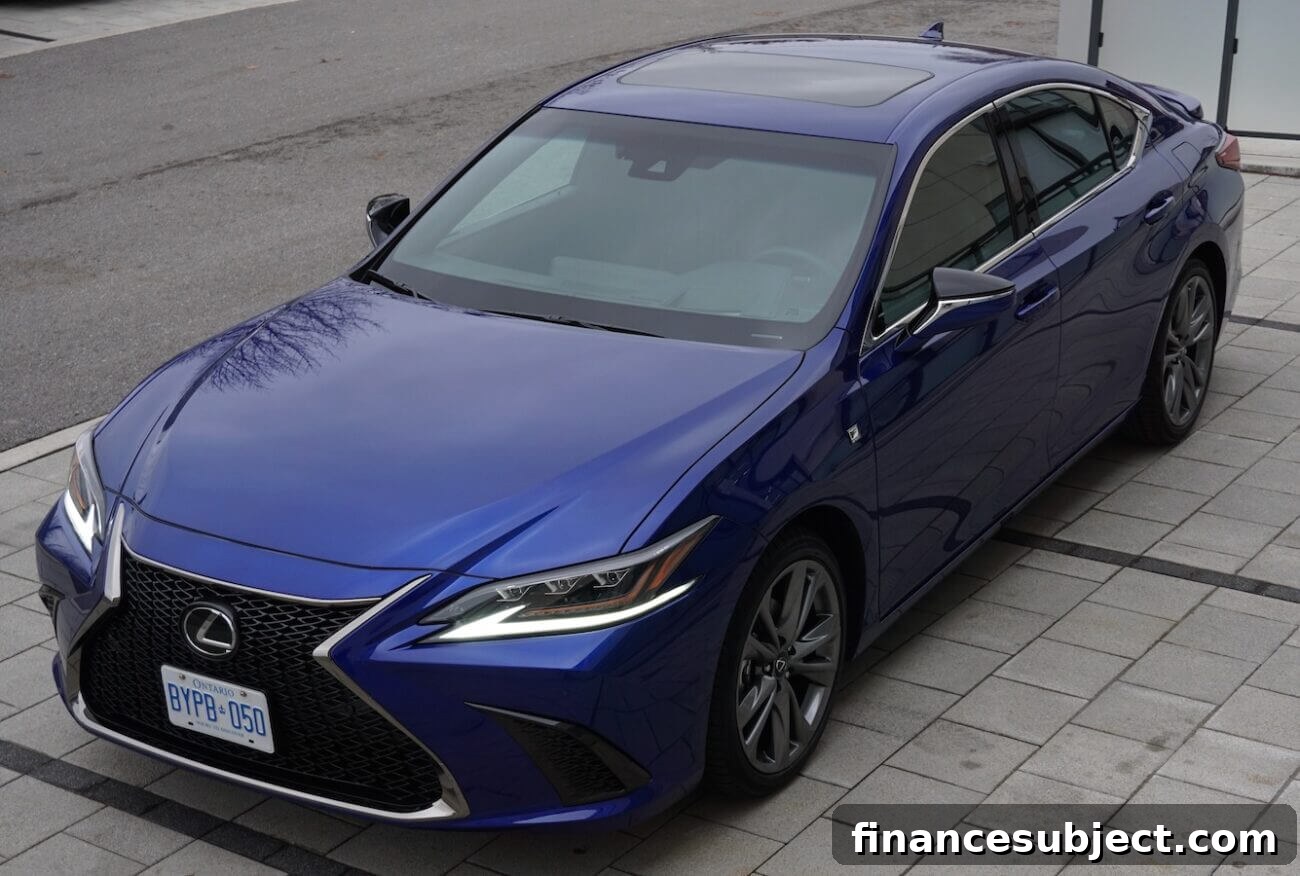
Since its debut in 1992, the Lexus ES has become a favorite among buyers seeking a comfortable, well-equipped luxury sedan at a reasonable price. Backed by Toyota’s reputation for long-term reliability, the ES often appears on lists of top used cars in Canada and remains a strong choice for shoppers who prioritize refinement, low ownership costs and a quietly upscale cabin.
As an automotive reviewer who has driven the ES through several iterations, I can attest to its consistent strengths: an impeccably built interior, whisper-quiet highway manners and ride comfort that makes long distances feel effortless. Compared with some European competitors, Lexus electronics typically prove less problematic with age, and many owners report fewer infotainment and electrical issues over the years. The lineup includes conventional gasoline engines, fuel-saving hybrid powertrains and, in newer model years, available all-wheel drive.
The sixth-generation ES (model years 2013–2018) remains a particularly attractive option on the used market. Look for a 2017 or 2018 example if your budget allows: these later builds received a mid-cycle refresh that improved styling, features and overall value. An all-new, seventh-generation ES arrived for the 2019 model year with updated styling, new engines, enhanced connectivity and more advanced safety technology.
Across generations, the ES offers a strong safety package and the luxury features buyers expect: premium Mark Levinson audio, climate-controlled seats, 10-way power front seats, a heated steering wheel, real wood trim, panoramic moonroof and a power rear-window sunshade. Few sedans in its price bracket deliver such consistent comfort, and many owners describe the cabin as a relaxing, lounge-like environment ideal for commuting or long-distance cruising.
Recent ES models use the Lexus Safety System+ suite, which expanded its capabilities and handling scenarios over time. Android Auto and Apple CarPlay were added in later years, improving smartphone integration. For Canadian buyers who face snowy or icy winters, the addition of all-wheel drive in 2021 makes the ES even more practical. Lexus has also offered sportier trims and special editions—such as the Black Line package and F SPORT variants—that add sharper styling and performance-oriented hardware, including a Dynamic Handling Package (DHP) on some models.
Is the Lexus ES a good car?
Yes—especially if you value comfort, refinement and reliability. The ES 350 is a polished midsize luxury sedan, and the F SPORT trim brings more athletic steering and styling for drivers who want a slightly more engaging drive. Still, Lexus tunes the ES primarily for comfort rather than outright sportiness, so the emphasis is on a composed, serene driving experience rather than aggressive handling.
The ES shares its basic platform with the Toyota Avalon and borrows engineering from the Camry family, meaning its foundation is proven and mass-produced. However, Lexus extensively reworks the chassis, suspension and interior to create a genuinely upscale experience. The result is a cabin that stands out for materials, fit and finish, and an overall sense of quality that impresses immediately.
Safety features added over recent model years include advanced pre-collision systems with daytime cyclist detection and nighttime pedestrian detection. Lexus also introduced a novel “swing valve” shock absorber design to improve low-speed ride quality and overall comfort. Independent reviewers and industry groups have repeatedly recognized the ES: it has won multiple awards for value and quality and often ranks highly in reliability surveys.
Powertrain choices are straightforward: many used ES models have the well-known 3.5-litre V6 producing around 302 horsepower, while hybrid versions combine efficiency with roughly 215 horsepower. All versions use automatic transmissions and are geared toward smooth, effortless power delivery.
Lexus ES issues to know about
There are only a few notable drawbacks. The signature Lexus spindle grille can be polarizing—some like the bold look, others do not. The ES’s touchpad-based infotainment controller has been the subject of debate: some users find it intuitive, while others prefer simpler, more direct touchscreen controls. If infotainment ease-of-use matters to you, test the system thoroughly during a test drive.
Although the F SPORT badge suggests a sporting character, the ES—even in F SPORT trim—is not a like-for-like rival to compact sports sedans such as the BMW 3 Series or Mercedes C-Class in terms of handling agility. Buyers seeking canyon-carving thrills will find better options elsewhere.
When buying used, maintenance history matters more than badge prestige. A model with consistent dealer service, full maintenance records and any recalls addressed is a better bet than one with unknown care. Consider a Certified Pre-Owned example or a car with complete service documentation to reduce risk. In cold, salty climates, look for evidence of rust prevention or underbody treatments to preserve long-term value.
On a test drive, check that all steering-wheel controls, cruise control and the horn operate correctly—failure here can indicate a worn clock spring requiring replacement. Also listen to the standard audio system; many owners recommend the Mark Levinson upgrade for a truly high-end listening experience. Finally, confirm which smartphone integration the car offers: Apple CarPlay and Android Auto arrived in later model years, so earlier ES models may lack them or require dealer retrofits.
Should I buy a used Lexus ES?
If you want a comfortable, quiet and reliable luxury sedan without paying top dollar, a used Lexus ES is a compelling choice. It rewards drivers who value a plush ride, refined interior and strong long-term ownership experience. If your priorities are driving dynamics and sharp cornering, consider sportier alternatives. For most buyers seeking a true luxury cruiser, the ES delivers excellent value and satisfaction.
Example: 2019 Lexus ES 350 F SPORT specifications
- Price as tested: $57,651
- Body type: 4-door, 5-passenger sedan
- Powertrain layout: Front engine, front-wheel drive
- Engine: 3.5-litre V6, DOHC, 24 valves
- Horsepower: 302
- Torque (lb-ft): 267
- Transmission: 8-speed automatic
- Curb weight: 1,655 kg (3,649 lb)
- NRCan fuel economy (combined): 12.3 L/100 km
- EPA fuel consumption (combined): 19 MPG
How much is insurance for a used Lexus ES 350?
Auto insurance costs depend on factors like age, location, driving history and coverage levels. For illustration only, estimated monthly premiums for a 2019 Lexus ES 350 Signature 4-door with a clean driving record in Toronto might be:
- Female, age 35: $213
- Male, age 35: $216
- Gender X, age 35: $213
Estimates assume typical coverage levels and deductibles. Actual rates will vary by insurer and policy details.
Read more on autos:
- Genesis G90 review: The best used large luxury car
- Kia Soul review: The best used small SUV
- Honda Accord review: The best used car for families
- Best EVs in Canada