

Credit cards are a common part of daily life. They offer a convenient, secure way to pay for goods and services, often include perks and benefits, and—when used responsibly—help you build a credit history and improve your credit score. A strong credit score makes it easier to qualify for loans, mortgages and other forms of credit and can earn you better terms and lower rates. If you are new to Canada or new to credit, you likely won’t have a Canadian credit history; using a credit card responsibly is one of the fastest and simplest ways to begin building that history.
What is a credit score?
A credit score is a three-digit number, typically ranging from around 300 to 900, that lenders use to assess how likely you are to repay borrowed money. The higher the score, the more credit-worthy you appear to lenders. Your score is derived from your credit file and reflects factors such as payment history, the amounts you owe, the length of your credit history, the types of credit you use and recent credit inquiries.
For newcomers to Canada and others without a Canadian credit file, lenders have no local payment history to review. That absence of information makes it harder to qualify for credit products and can limit access to competitive offers. Establishing and demonstrating responsible credit behaviour is essential for building a positive credit profile.
Getting your first credit card in Canada
If you are young, new to Canada, or have not used credit before, you should start with a basic or entry-level credit card. A starter card gives you the opportunity to prove your credit-worthiness by making on-time payments and managing your credit limit responsibly. Over time, this can help you qualify for more feature-rich cards.
Entry-level cards generally offer fewer perks than premium products, but they typically come with lower or no annual fees and lower income requirements. That makes them a practical first step for building credit without taking on costly obligations.
Some issuer-branded starter cards are designed specifically for customers with limited or no credit history. Those cards may offer modest rewards, purchase protections, and simple benefits like mobile phone insurance or extended warranties.
Four practical tips for using a credit card
Using a credit card responsibly means more than simply avoiding debt. The following actions will help you protect your finances and build your credit score:
- Stick to a budget
Even if your card has a higher limit than you expect, spend only what you can afford to repay. A clear monthly budget prevents overspending and reduces the chance of carrying costly balances. - Pay your balance in full
Aim to pay your statement balance in full each month. Credit card interest rates are typically high, and carrying a balance can lead to fast-growing debt. Paying in full preserves your credit score and saves on interest charges. - Always pay at least the minimum
If you cannot pay your balance in full, make sure you pay at least the minimum amount shown on the statement by the due date. Payment history is a major factor in your credit score, and a single missed payment can lower your score substantially. - Pay on time
Timely payments signal to lenders that you manage credit responsibly. If remembering due dates is difficult, set up automatic payments for at least the minimum amount through your bank to avoid late payments.
Consistent, on-time payments and reasonable use of available credit will gradually strengthen your credit score. Over time, that progress opens the door to upgraded cards and more competitive financial products.
Which credit card might be right for you?
When choosing a card, consider your current needs: low cost and accessibility if you are building credit, or richer rewards and travel benefits if you have an established income and credit history. Below is a comparison of three cards from one issuer to illustrate how annual fees, rates, rewards and eligibility can differ.
| National Bank mycredit Mastercard | National Bank Platinum Mastercard | National Bank World Elite Mastercard | |
| Annual fee | $0 | $70 | $150 |
| Purchase rate | 20.99% | 20.99% | 20.99% |
| Balance transfers and cash advances | 22.49% | 22.49% | 22.49% |
| Rewards | Up to 1% cash back on restaurant purchases and recurring pre-authorized payments; 0.5% on other purchases | Up to 2 points per $1 spent | Up to 5 points per $1 spent |
| Key benefits | Extended warranty on many purchases; purchase protection for theft or damage up to 90 days; mobile phone insurance for theft or damage up to two years | Travel insurance for short trips; mobile device insurance | Comprehensive travel and purchase insurance; airport lounge access at a specific location; annual travel expense reimbursements up to $150 |
| Minimum income required | None | None | Personal income or household income requirements apply |
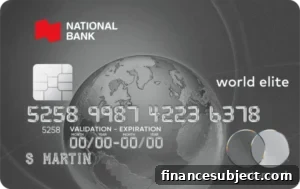
National Bank World Elite Mastercard
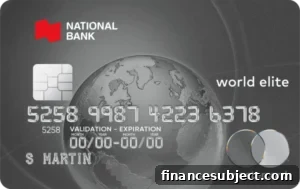
- Annual fee: $150
- Interest rates: 20.99% on purchases; 22.49% on balance transfers and cash advances
- Earn rate: Up to 5 points per $1 on grocery and restaurant purchases; 2 points per $1 on gas, EV charging, recurring bill payments and travel booked through the issuer’s rewards platform; 1 point per $1 on other purchases.
- Welcome and bonus offers: Promotional points and incentives may be available for new cardholders who meet specific enrollment and spending conditions. Terms and eligibility apply and offers may be time-limited.
- Annual income requirement: Personal or household income thresholds apply for eligibility for this premium card.
Building a solid credit score gives you access to better financial options—lower interest rates, higher credit limits and cards that offer enhanced rewards and travel benefits. Responsible credit card habits, such as paying on time and keeping balances low relative to your limits, show lenders you can manage credit, which increases your chances of being approved for those upgraded products.
Sponsored content
This post is a paid feature that highlights and explains products available from a financial provider. It is produced with editorial oversight and includes information supplied by the sponsor. Readers should review the card terms, qualifications and conditions directly with the issuer before applying.
Further reading about credit cards
- Choosing a credit card with travel benefits for domestic and international trips
- Using credit card rewards to offset rising grocery and household costs
- Credit reports and scores: What newcomers to Canada should know
- Common credit card mistakes to avoid when trying to improve your score
® Mastercard and World Elite are registered trademarks, and the circles design is a trademark of Mastercard International Incorporated. Authorized user: National Bank.
® National Bank and À la carte rewards are registered trademarks of National Bank of Canada.
Newsletter