

Kyle Prevost, creator of 4 Steps to a Worry-Free Retirement, Canada’s DIY retirement-planning course, reviews financial headlines and provides context for Canadian investors.
Bitcoin goes mainstream—the exact stream that was supposed to run dry
A few years ago, bitcoin advocates positioned the cryptocurrency as a way to bypass traditional financial institutions: peer-to-peer trading, self-custody and a rejection of legacy systems. The rhetoric was: “Keep your fiat currencies and archaic trading systems,” and “not your keys, not your crypto.”
Last week’s launch of 11 new bitcoin exchange-traded funds (ETFs) in U.S. markets shows how quickly that narrative has shifted. Major asset managers, previously the target of much crypto skepticism, are now front-and-center offering spot-price bitcoin exposure. In effect, bitcoin has been absorbed into the mainstream financial ecosystem as another ticker symbol—tradable on regulated exchanges, subject to the flows and behaviors of institutional investors.

The cryptocurrency’s story has changed multiple times: it was pitched as a currency, then as a safe-haven asset like gold, then as an inflation hedge. Each claim ran into limits when bitcoin’s price behavior didn’t align with the narrative—correlating with tech stocks during risk-on periods or falling amid high inflation. Now the new story is that bitcoin can be a convenient ETF for investors to gain exposure through familiar brokerage accounts.
If you missed the headlines around the U.S. ETF launches, here’s a concise update on where things stand:
- Eleven new bitcoin ETFs began trading in the U.S. last week.
- The U.S. previously offered derivative-based bitcoin ETFs; the new funds are designed to track the spot price more closely.
- Canadian investors have been able to buy spot bitcoin ETFs on the Toronto Stock Exchange since 2021, but U.S. approval tends to draw global attention.
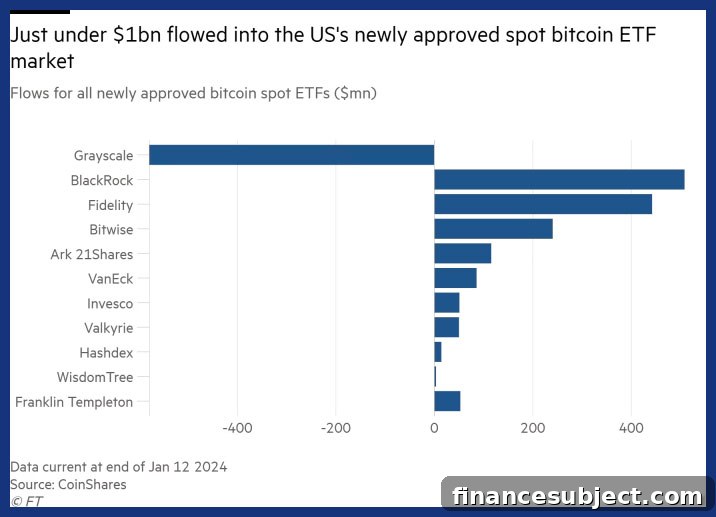
- The first three days of trading brought roughly USD 871 million of net flows into this group of bitcoin ETFs.
- Much of the trading activity represented flows away from higher-fee legacy products—such as Grayscale—into lower-fee alternatives.
- Since the new ETFs started trading, bitcoin’s price has dipped about 6%—a reminder that ETF approval and publicity can coincide with profit-taking and “sell the news” dynamics.
That USD 871 million figure is meaningful for traders, but modest relative to the broader market: it represents well under 1% of bitcoin’s market capitalization and a tiny fraction of the value of major public companies. Predictions of immediate, massive inflows have so far proved overstated.
The latest U.S. bank earnings reports
Major U.S. banks reported a solid quarter overall. Results largely tracked expectations, with a few notable items and some differences in how executives characterized the outlook.
Bank earnings highlights
All figures reported in U.S. dollars.
- JPMorgan (JPM/NYSE): EPS $3.04 (vs. $3.32 expected); revenue $39.94 billion (vs. $39.78B estimated).
- Bank of America (BAC/NYSE): EPS $0.70 (vs. $0.68 expected); revenue $22.10 billion (vs. $23.74B estimated).
- Wells Fargo (WFC/NYSE): EPS $1.29 (vs. $1.17 expected); revenue $20.48 billion (vs. $20.30B estimated).
- Morgan Stanley (MS/NYSE): EPS $0.85 (vs. $1.01 expected); revenue $12.90 billion (vs. $12.75B estimated).
- Citigroup (C/NYSE): EPS $0.84 (vs. $0.81 expected); revenue $17.44 billion (vs. $18.74B estimated).
- Goldman Sachs (GS/NYSE): EPS $5.48 (vs. $4.27 expected); revenue $11.32 billion (vs. $10.96B estimated).
JPMorgan’s quarter drew attention because headline EPS declined about 15% year over year, but management noted a one-time $2.9 billion charge related to the regional banking disruption and the acquisition of First Republic Bank. Excluding that item, the underlying business appeared stronger, and JPMorgan reported that First Republic contributed roughly $4.1 billion in profit for the year.
Executives offered cautious guidance. JPMorgan’s CEO pointed to a resilient U.S. consumer and a market consensus leaning toward a soft landing, while also warning that fiscal deficits could keep inflation elevated and interest rates higher than markets expect. Morgan Stanley’s new CEO highlighted geopolitical risks and the possibility of an economic slowdown as downside scenarios that could pressure markets.
Across the board, U.S. banks increased provisions for credit losses to prepare for higher delinquencies as rising interest rates affect borrowers—an expected drag on near-term profits but a prudent measure for balance-sheet resilience.
Delta benefits from revenge travel; attention, turbulence ahead
Delta Air Lines (DAL/NYSE), the world’s largest airline by revenue, reported strong fourth-quarter results: EPS of $1.28 versus $1.17 expected and revenue of $13.66 billion versus $13.52 billion estimated. Despite that beat, the stock fell after management tempered expectations for 2024.
Key takeaways from Delta’s commentary:
- Demand remains strong, with particular strength in premium cabins—premium revenue rose faster than coach in the quarter.
- There is a near-term oversupply of domestic seats, creating more opportunities for off-peak discounts.
- “Revenge travel” is still playing out, especially for long-haul international trips and among older travelers who deferred travel during the pandemic.
- Early bookings for spring and summer look favorable, but Delta warned that 2024 could be softer than previously expected, prompting investor caution.
Microsoft is the new heavyweight champ of market cap
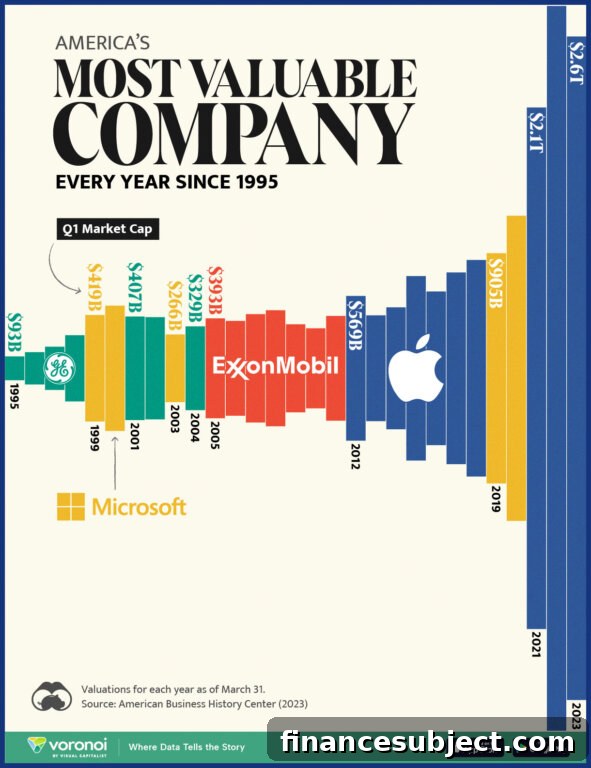
Microsoft (MSFT/NASDAQ) recently reclaimed the title of the world’s largest public company by market capitalization, surpassing Apple (AAPL/NASDAQ). Microsoft’s leadership has been driven by investor enthusiasm for artificial intelligence and the ongoing strength of its cloud-computing business—areas that have less impact on Apple’s primarily hardware-driven revenue mix.
Apple, meanwhile, maintained momentum as a top seller of smartphones globally. The competition for market-cap leadership between the two tech giants remains tight and can shift quickly with changes in investor sentiment or earnings performance.
Further reading on investing
- How might inflation impact your retirement plans?
- What is a cashable GIC?
- Will GIC rates keep going up?