
Canadians have been debating whether a recession is underway for months—ever since the Bank of Canada began raising interest rates in March 2022. So what’s the verdict: are we in a recession?
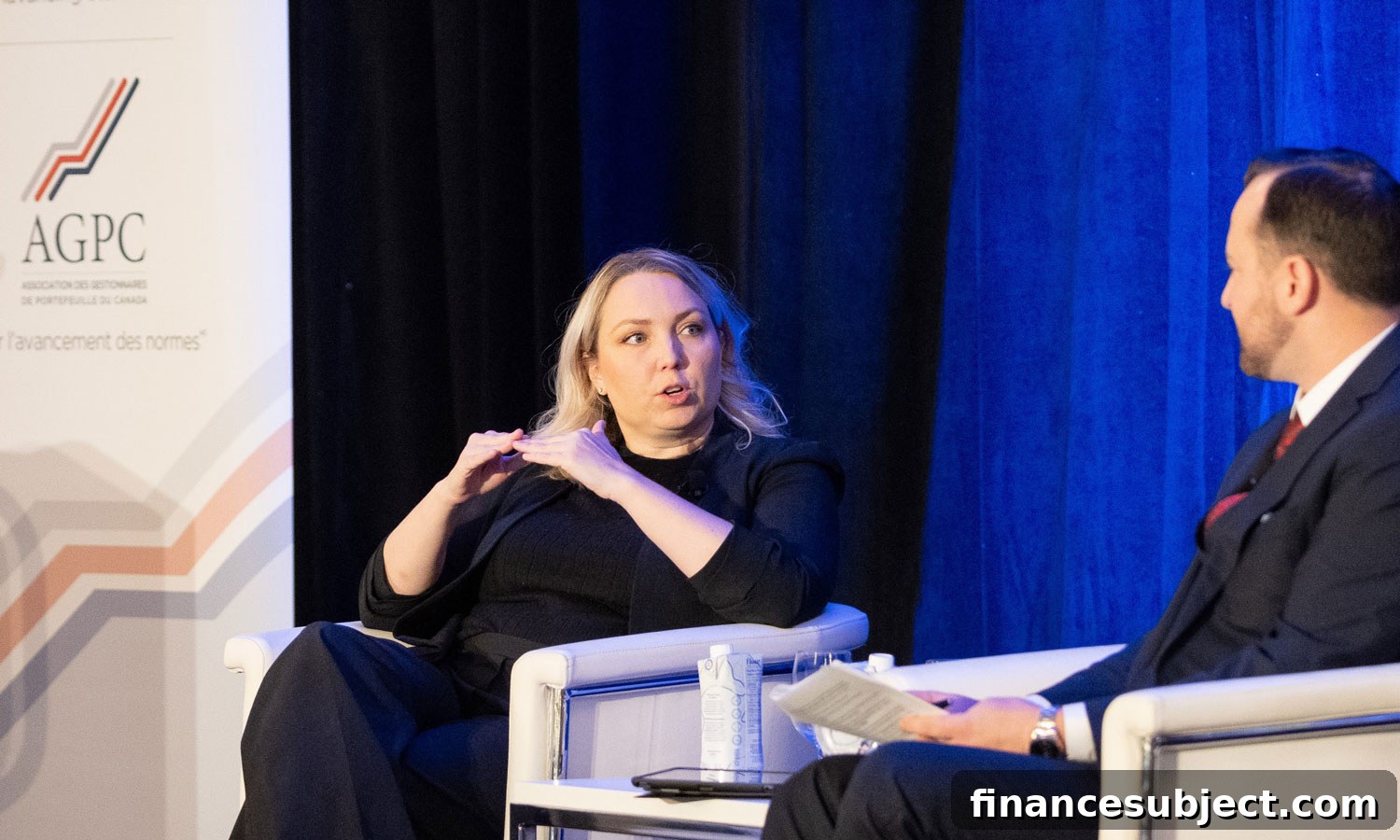
According to Frances Donald, global chief economist and strategist for Manulife Investment Management’s multi-asset solutions team, the answer is “technically, yes.” Speaking at the Portfolio Management Association of Canada (PMAC) national conference in Toronto on Nov. 15, 2023, Donald called for a modest downturn lasting a few quarters while acknowledging that economists differ on exact measurements and timing.
Is Canada in a recession?
Donald described a “mild recession” lasting roughly two to three quarters. Economists may argue over precise GDP figures—a single quarter of negative growth versus two—but the broader consensus she presented is that Canada has entered a short, shallow contraction rather than a deep, prolonged slump.
Will the recession end in 2024?
What makes this downturn feel unlike previous recessions is that standard economic models struggle to capture today’s realities. Donald warned that many forecasting tools rely on historical patterns that don’t fully reflect current drivers: persistent inflation, ongoing labour shortages and lingering effects from the 2020 pandemic. Those factors mean past recession playbooks—such as those used in 1990–92 or 2008–09—may be of limited use.
What’s happening with the stock markets?
Despite short-term weakness, Donald said she is relatively optimistic over a five- to ten-year horizon. Manulife’s outlook points to stronger prospective returns across several asset classes compared with recent years. That view rests on scenario planning that acknowledges current uncertainty while looking beyond the immediate slowdown.
When will the cost of living become more affordable?
Inflation remains a central concern for Canadian households. The consumer price index (CPI) showed elevated readings, and everyday costs—groceries, housing and services—are noticeably higher than in recent years. Donald expects inflation to ease toward roughly 2.5 percent in 2024, a move that would ease pressure on family budgets but still leave costs above the low-inflation era of the early 2010s.
When will the Bank of Canada lower interest rates?
Donald predicted the Bank of Canada will begin cutting rates in early 2024, likely in the first half of the year. She suggested the U.S. Federal Reserve could follow a similar timeline. For prospective homebuyers and those renewing fixed-rate mortgages, falling policy rates would translate into relief in borrowing costs.
What about fiscal policy?
Former federal finance minister Bill Morneau, who delivered the conference’s lunchtime keynote, emphasized the pressure governments face to support services while managing a large debt load. He advised fiscal prudence: it’s not the moment for major new programs, but for careful management of existing expenditures to balance support with long-term sustainability.
Do Canadians have enough savings?
The answer varies. Donald highlighted uncertainty around estimates of “excess savings” amassed during the pandemic—estimates range widely and depend on the datasets and assumptions used. That ambiguity affects how resilient consumers will be through a slowdown. For some households, elevated interest rates have made safe, low-risk investments such as guaranteed investment certificates (GICs) and high-interest savings accounts more attractive; for others, debt burdens and rising living costs remain a strain.
Next steps to address the economy and inflation
Repairing the economy and bringing inflation back to target requires a multi-pronged approach. Donald noted that excess savings, if present, can obscure more important structural shifts: a historic increase in government spending, changes to global supply chains, climate and geopolitical disruptions, and labour market dynamics. Central banks have limited tools and must weigh the trade-offs between controlling inflation and avoiding unnecessary damage to employment and growth.
Inflation today is driven by a complex mix of supply-side constraints, weather and geopolitical events as well as consumer choices. That complexity means policymakers will need to adapt how they measure and respond to inflationary pressures going forward.
How is Canada doing economically?
Donald admitted that forecasting feels especially uncertain right now. She singled out the labour shortage as a structural issue that predates the pandemic and will influence how employers respond during a recession. Because it took so long to restore staff levels after COVID-era layoffs and labour market disruption, businesses may be less willing to shed employees this time around—weakening the traditional link between economic contraction and sharp job losses.
Canada’s population growth through immigration supports demand, but housing supply has not kept pace, keeping prices elevated despite higher interest rates. Donald argued that addressing housing shortages requires supply-side solutions. Overall, her projection of only a mild recession reflects an assumption that unemployment will not spike as dramatically as in past downturns.
In short, Canada faces a shallow economic contraction shaped by new dynamics rather than a repeat of past recessions. The hope is that this mild recession will pass quickly, allowing inflation to fall and interest rates to normalize so policymakers and households can return to more predictable planning.
Read more about recessions:
- How to prepare for possible job loss in Canada
- What is a soft landing?
- How to prepare for a recession
- How recession fears are shaping investor behaviour and emotions