
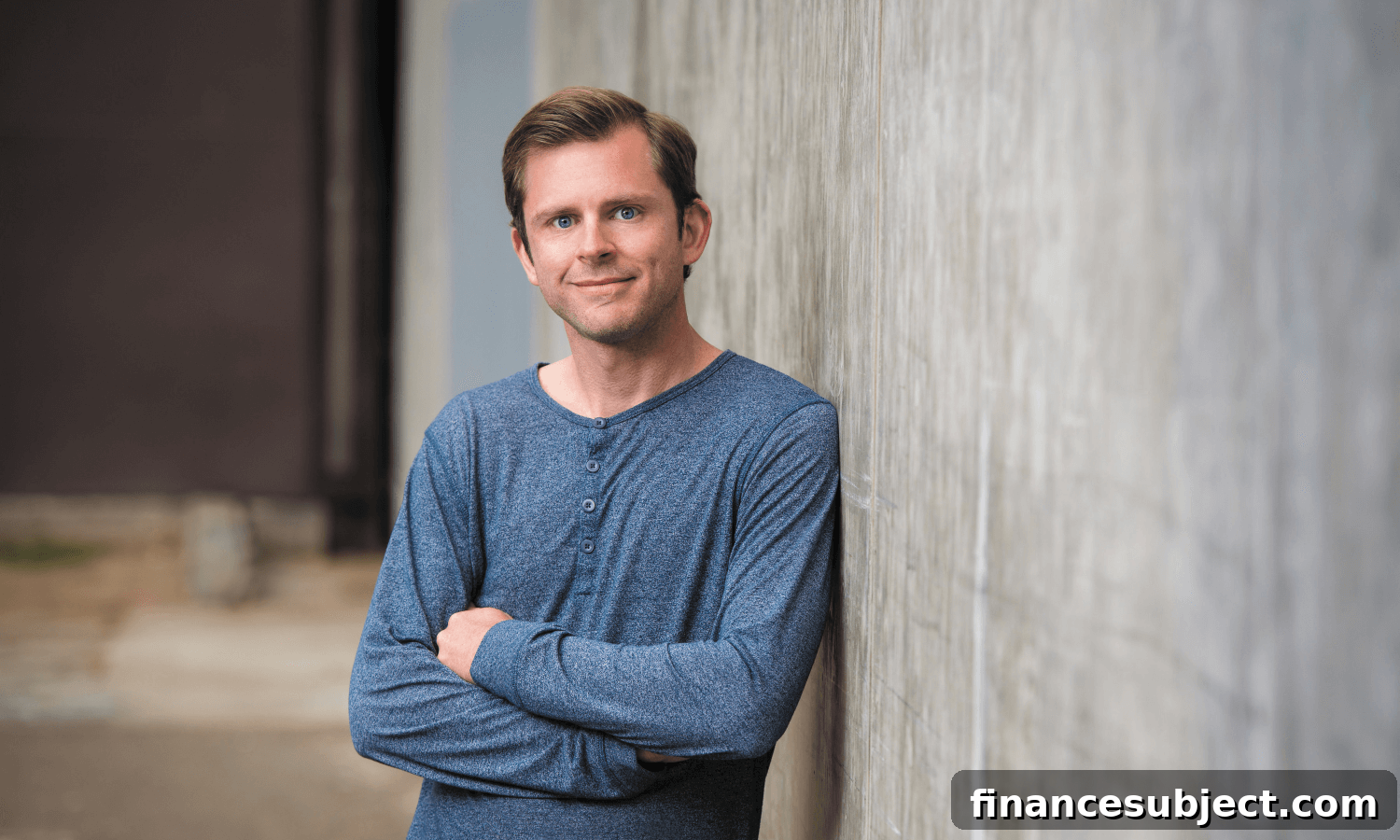
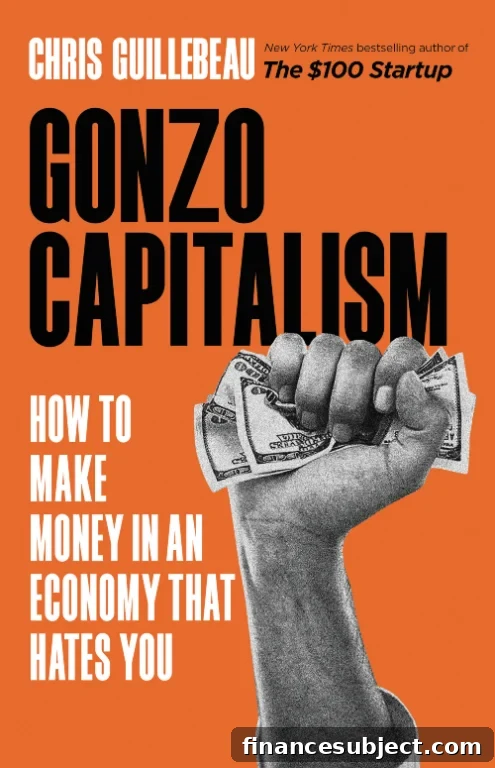
Chris Guillebeau has long taken an unconventional approach to work and life. He is the author of bestselling books about building independence and income on your own terms, including Side Hustle, The $100 Startup and The Art of Non-Conformity, and he hosts the daily podcast Side Hustle School. In his latest book, Gonzo Capitalism: How to Make Money in an Economy That Hates You (Little, Brown Spark), Guillebeau examines how Millennials and Gen Z are shaping new income streams using technology and online platforms. In the book he profiles AI artists, TikTok creators, crypto stakers, blockchain gamers and many others who are forging income paths in what he calls a fast, weird and decentralized post-pandemic economy. Below, he talks about his money lessons, early experiences with cash, how he spends his time and what he’d change about his financial choices.
What’s the biggest money lesson you’ve learned as an adult?
Spend on things that genuinely make you happy and that feel meaningful. I grew up learning to delay gratification and keep spending to a minimum, which led me to be excessively frugal for many years. Over time I learned that small purchases that improve your daily life are often worth it. The key is to balance prudence with spending that increases your enjoyment or advances your purpose.
How do you like to spend your free time?
I enjoy running, reading and traveling. I’m fortunate to love much of the work I do, so I don’t feel the need to escape from it. Travel and exploration remain a big part of my life, and when I’m not speaking or creating, I’m often reading or out on a run.
If money were no object, what would you be doing?
Mostly the same things I do now. I travel frequently from my home base in Portland, Oregon, and speak to groups. If money truly weren’t a concern, some inconveniences—like delayed flights—would matter less. But even those small frustrations are a reasonable trade-off for the freedom to live and work the way I do.
What was your earliest memory about money?
One memory that stands out is from when I lived in the Philippines for two years starting at age six. My father was back in the U.S., and each week he sent a letter with a one-dollar allowance inside. After about a year I asked if he could send an extra dollar so I could buy a small gift to bring back for him. He agreed, and I began receiving two dollars each week. That early exchange of small sums and the idea of trading money for meaningful items may have been an early spark of entrepreneurial thinking.
What’s the first thing you remember buying with your own money?
Video games—first at arcades and later for home consoles. I had an Atari 2600, then an original NES, and many systems after that. Gaming and small consumer purchases were the first tangible ways I used my own money.
What was your first job?
My first paid job, at age 14, was as a dishwasher in a restaurant. The job didn’t last long. I began working on my own at 19 by reselling goods, first on eBay, and that quickly led to other opportunities. I spent four years as an aid worker in West Africa and later pursued a personal goal of visiting every country in the world.
What do you think is the most underrated financial advice?
Buy both experiences and things. There’s too much moralizing about minimalism; if a purchase like a comfortable couch brings you joy and improves your life, buy it without guilt. Recognize what brings you genuine value and spend in alignment with those priorities.
What’s the worst money advice you’ve ever received?
“All debt is bad.” I used to offer that advice myself, but my view has evolved. Not all debt is equal. High-interest consumer debt should be paid off and consolidated, but some borrowing—such as a mortgage or a car loan—can be a useful tool. Corporations and governments routinely use debt strategically, and when managed prudently, debt can enable investments that improve your life.
Would you rather receive a large sum of money all at once or a smaller amount every week or month for life?
If income were genuinely guaranteed forever, I’d choose a steady periodic payment. Because guarantees are rare and institutions can fail, I’d take a lump sum in many realistic scenarios. It comes down to the reliability of the income stream and your own risk tolerance.
What is the biggest misconception people have about growing money?
Many believe that simply saving and following standard investment plans will make them better off than others. Systems are designed for average outcomes. If your goal is to be average, follow the average system. If you want to exceed average results, you will need a different approach—often by taking different risks, seeking additional income streams and tailoring strategies to your unique situation.
Can you share a money regret?
I spent $32,000 and two years earning a graduate degree in international studies. While I value the relationships and parts of the experience, in retrospect it wasn’t the best financial investment for me. Many peers who pursued degrees with clearer career links felt similarly dissatisfied with the return on that investment.
What does the word “value” mean to you?
Value means enjoyment and fairness: did the purchase give you pleasure or save you time, and did it feel like a fair trade for the money spent? I place high value on time, so I’m willing to pay to buy it back—whether that means working from my laptop between travels, outsourcing small tasks I dislike, or avoiding low-value hassles like long customer service phone calls.
What’s the first major purchase you made as an adult?
My first big purchase after moving back from Africa was a round-the-world plane ticket that cost about $5,000. It allowed me to visit more than 15 countries over several months and was an excellent investment in experience and opportunity.
What was your most recent splurge?
On a recent delayed flight I upgraded to first class. For a long trip with many passengers, a modest amount of extra space and comfort made a noticeable difference. Small splurges like that can be worth it for quality of life.
What’s a money-related book you enjoyed?
I enjoyed Money: A Love Story by Kate Northrup and I appreciate books by Jill Schlesinger. I tend to read more fiction and narrative nonfiction than business or personal finance books, in part because I write in that space myself.
What is something you always have in your wallet?
With mobile payments common, I don’t always carry a wallet anymore. When I do, it’s a slim one with my driver’s license, three credit cards and about $100 in cash—enough for the occasional situation that requires it.
What is your favourite possession?
I thought about this at length and realized I don’t have a single possession that feels indispensable. I’m not opposed to owning things; I simply don’t have one item that stands out as my favorite. Maybe a cold plunge tub would change that.
What’s your next money goal?
In my book I wrote about the play-to-earn movement—blockchain-based games where players can earn real income. I became engaged with that space during the pandemic. Although the broader crypto sector faced downturns, some games are still active. A personal goal is to generate about $100,000 a year from online gaming without letting it overshadow my other work. I believe that outcome is achievable with the right balance.
My MoneySense quick questions
Budget or not?
I don’t keep a detailed spreadsheet budget anymore. Instead, I set major priorities at year end and make spending decisions for the next year to reflect those priorities.
Save or invest?
Both. It’s important to keep cash reserves while also investing for growth and future goals.
Buy or lease?
For me this refers to cars: I don’t own or lease a vehicle. Driving is stressful for me, so I usually use rideshares or public transit instead.
Rent or own?
I favor renting. Home ownership can be right for many people, but it’s not a universal solution. Renting suits my lifestyle and flexibility needs.
More from My MoneySense:
- Reni Odetoyinbo on why you should pay yourself first and have multiple income streams
- Kristy Shen on living the FIRE lifestyle and using money to buy back time
- Shane Murphy on how real value comes from giving people meaningful work and preventing burnout
- Kristine Beese on why financial plans aren’t gender-neutral
- Mallory Greene on building wealth, leveraging debt and spending without guilt