
Kyle Prevost, editor of Million Dollar Journey and founder of the Canadian Financial Summit, summarizes key financial headlines and explains what they mean for Canadian investors.
Inflation isn’t slowing down yet
Tuesday’s 3.3% inflation reading from Statistics Canada complicates the Bank of Canada’s path forward. While inflation fell steadily over the past year—from a peak near 9.1% to 2.8% in June—much of that improvement was driven by a sharp drop in gasoline prices starting in mid-2022. That makes sustaining a month-to-month decline in the headline rate more difficult.
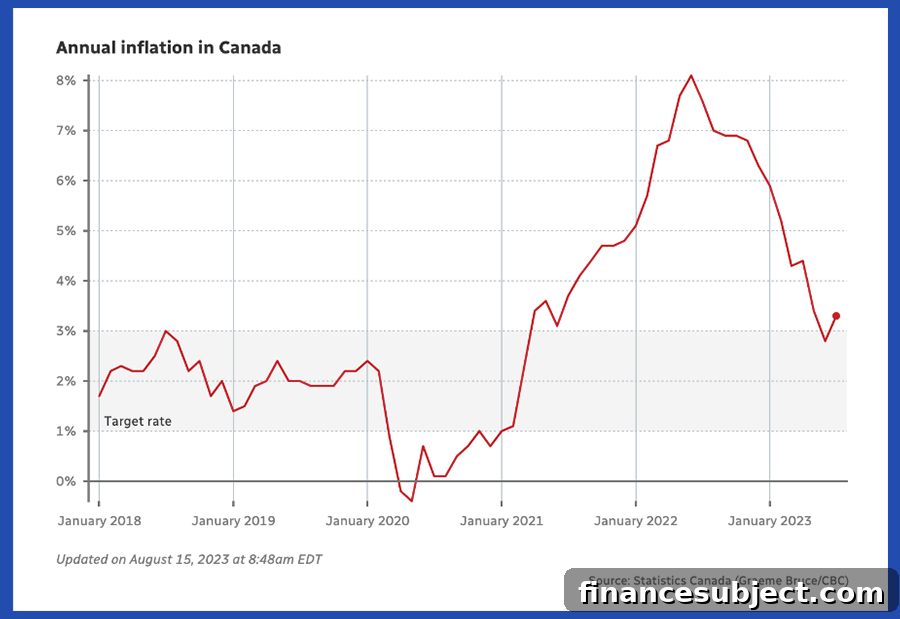
Notable year-over-year inflation changes include:
- Services: up 3.3%
- Food: up 7.8%
- Shelter: up 5.1%
- Health care: up 5.8%
- Alcohol and tobacco: up 5.3%
- Traveller accommodation: up 4.2%
Some categories did show modest increases—durable goods, clothing, transportation, and household furnishings each rose by less than 0.5%. Core inflation eased slightly to 4.2% from 4.6% in June, but the overall 3.3% headline is well above the Bank of Canada’s 2% target and may increase pressure for another rate hike in September. Economists remain split on whether the BoC will act.
BMO chief economist Douglas Porter summed it up bluntly: “There’s no sense sugar-coating this one—it is not a good report for the Bank of Canada.”
Former Bank of Canada governor Stephen Poloz painted a more measured medium-term outlook, noting higher productivity driven by data sharing and artificial intelligence could support an orderly disinflation. He cautioned that the future remains uncertain—recession, stagflation, or a soft landing are all possible—and advised households and businesses to prepare for a range of outcomes.
For investors looking for inflation-resistant options, consider established strategies that hedge rising prices and protect purchasing power.
U.S. retail signs of recovery
Recent quarterly reports from major U.S. retailers suggest the sector is stabilizing. While we’re not returning to the extraordinary retail environment of the pandemic, earnings show resilience and some improvement. Figures below are in U.S. dollars.
Walmart (WMT/NYSE): EPS was $1.84 versus $1.71 expected, and revenue reached $161.63 billion versus $160.27 billion forecast. Walmart’s e-commerce sales rose 24% year-over-year. The stock initially rallied on the news but retreated amid a broader market pullback.
Target (TGT/NYSE): EPS came in at $1.80 versus $1.39 predicted, while revenue was $24.77 billion versus $25.16 billion expected. Target’s CEO noted that consumers still face inflationary pressure—particularly in food, beverages, and household essentials—which limits discretionary spending.
Home Depot (HD/NYSE): EPS beat estimates at $4.65 versus $4.45 expected, with revenue of $42.92 billion versus $42.23 billion forecast. Management emphasized ongoing consumer caution around larger, discretionary purchases.
TJX (TJX/NYSE): EPS was $0.85 versus $0.77 expected, and revenue reached $12.76 billion versus $12.45 billion expected. The discount retailer reported that a portion of its profit growth stemmed from acquiring higher-end merchandise from brands that needed to reduce inventory quickly.
Overall, retailers reported cautious tones and conservative guidance, signaling expectations of a tighter consumer later in the year. Nonetheless, many chains have managed cost pressures effectively and delivered solid profits.
Energy companies ease off the gas
Canada’s major energy producers reported healthy earnings, but lower oil prices versus last year have trimmed some gains. Both Suncor and Canadian Natural Resources (CNQ) beat expectations, though operations were briefly affected by wildfires in Western Canada.
Oil earnings highlights
- Suncor (SU/TSX): EPS $0.96 versus $0.83 expected; revenue $11.72 billion versus $10.18 billion expected.
- Canadian Natural Resources (CNQ/TSX): EPS $1.14 versus $1.06 expected; revenue $7.89 billion in line with forecasts.
With Western Canadian Select prices expected to remain relatively strong in the near term, oil sands operators should continue to generate robust results. CNQ has outperformed this year and reported $4.3 billion returned to shareholders so far—$2.9 billion in dividends and $1.4 billion in share buybacks. Suncor has returned about $1 billion to shareholders in 2023. Dividend yields remain notable: Suncor around 4.70% and CNQ about 4.37%.
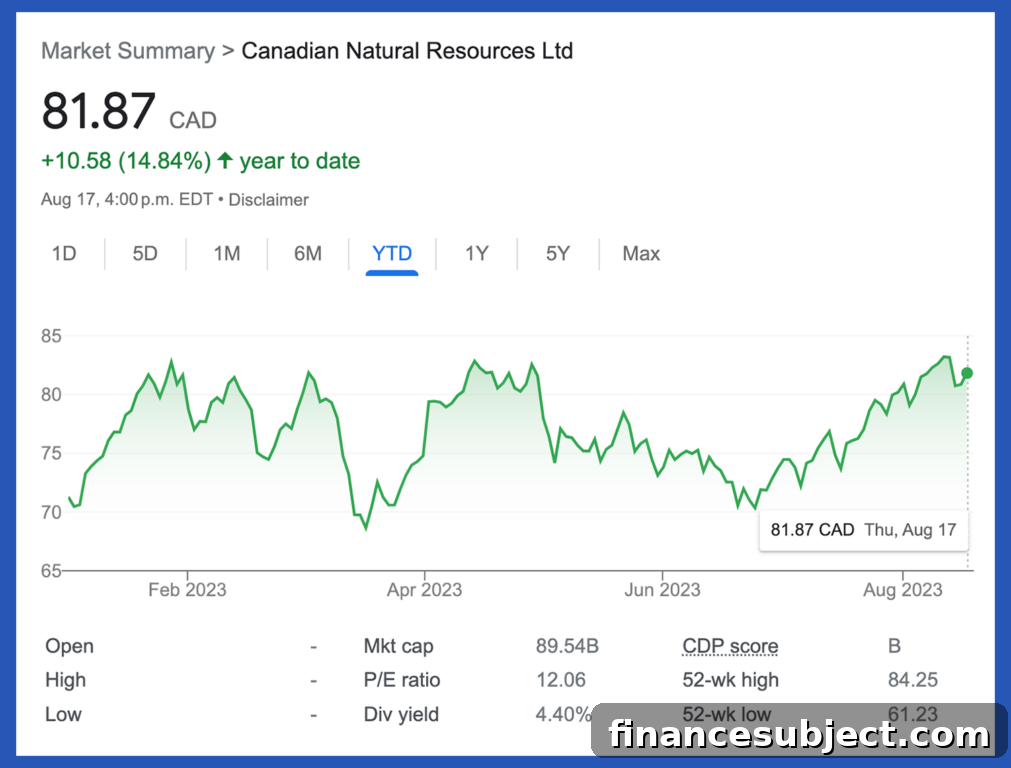
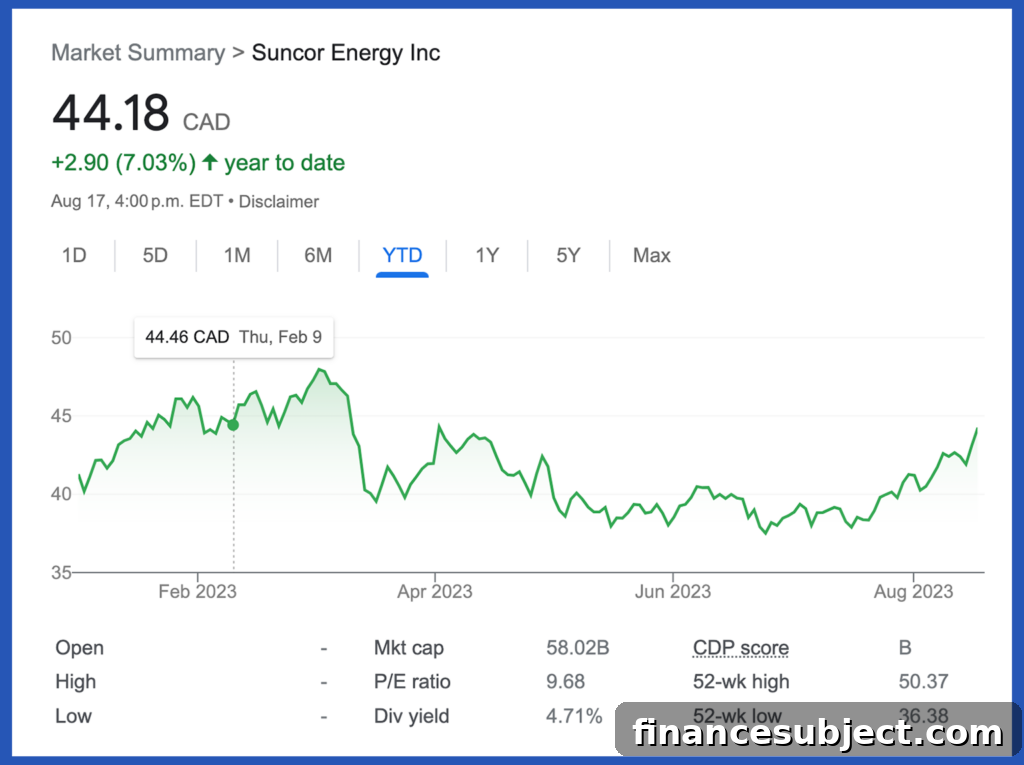
If you’re evaluating energy stocks, consider both cash returns to shareholders and the impact of commodity price cycles when weighing investment decisions.
Do stock valuations still matter?
Ben Carlson offers a thought-provoking perspective on market valuations. Traditional measures like the cyclically adjusted price-to-earnings (CAPE) ratio—price relative to 10-year average earnings—were long considered key indicators of market timing. Yet their predictive power has weakened over recent decades.
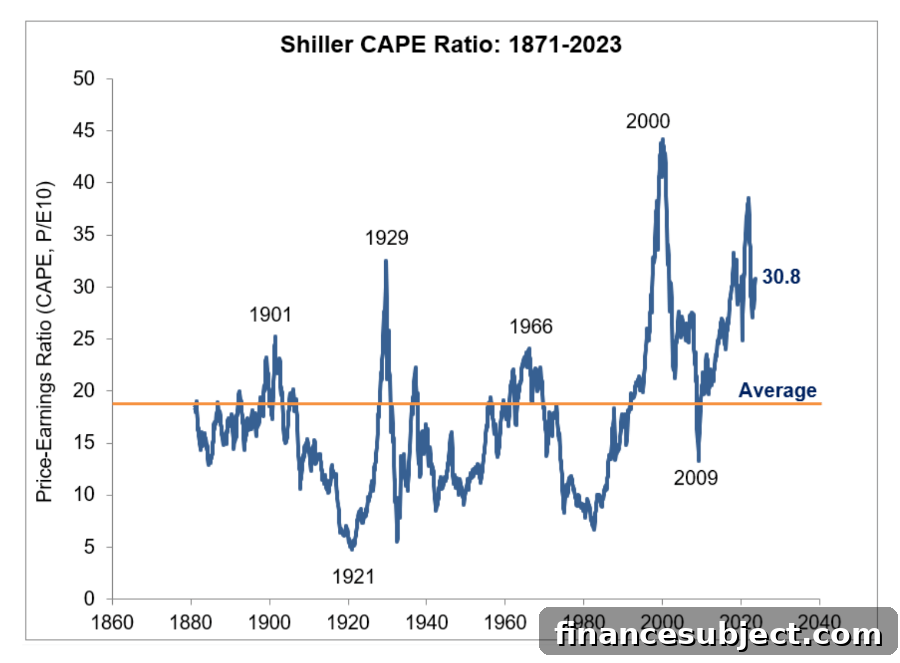
Some notable observations about CAPE and market returns (U.S. market focus):
- The long-term average CAPE since 1871 is roughly 17.4x.
- Since 2010, the CAPE has not fallen below about 19.6x in any month.
- Since 1990, the CAPE has been below its long-term average only around 5% of the time.
- The U.S. stock market has delivered annualized returns above 10% since 1990.
- From January 2020 onward—including pandemic shocks and high inflation—the S&P 500 has still risen more than 11% annually.
These facts suggest multiple explanations: perhaps markets have been persistently overvalued, or structural forces—lower taxes, rising productivity, broader participation in equities, tax-advantaged retirement accounts, and institutional flows—have supported higher valuations. Carlson argues that valuations remain useful for assessing individual stocks, but overemphasizing them for broad market timing can be misleading. He recommends considering demographics, allocation decisions, investor risk appetite, and institutional positioning when interpreting valuation signals.
“Things like demographics, money allocation decisions, investor risk appetite, the prevalence of tax-deferred retirement vehicles, the trillions of dollars controlled by financial advisors, how institutions are positioned matter more. The past 15 years of U.S. stock market returns are a wonderful example of how hard it is to predict what’s going to happen next. … Do valuations matter? The majority of investors would probably be better off if they ignored them most of the time.”
Keep valuations in perspective as you interpret market signals this week—use them as one input among many rather than a definitive road map.