
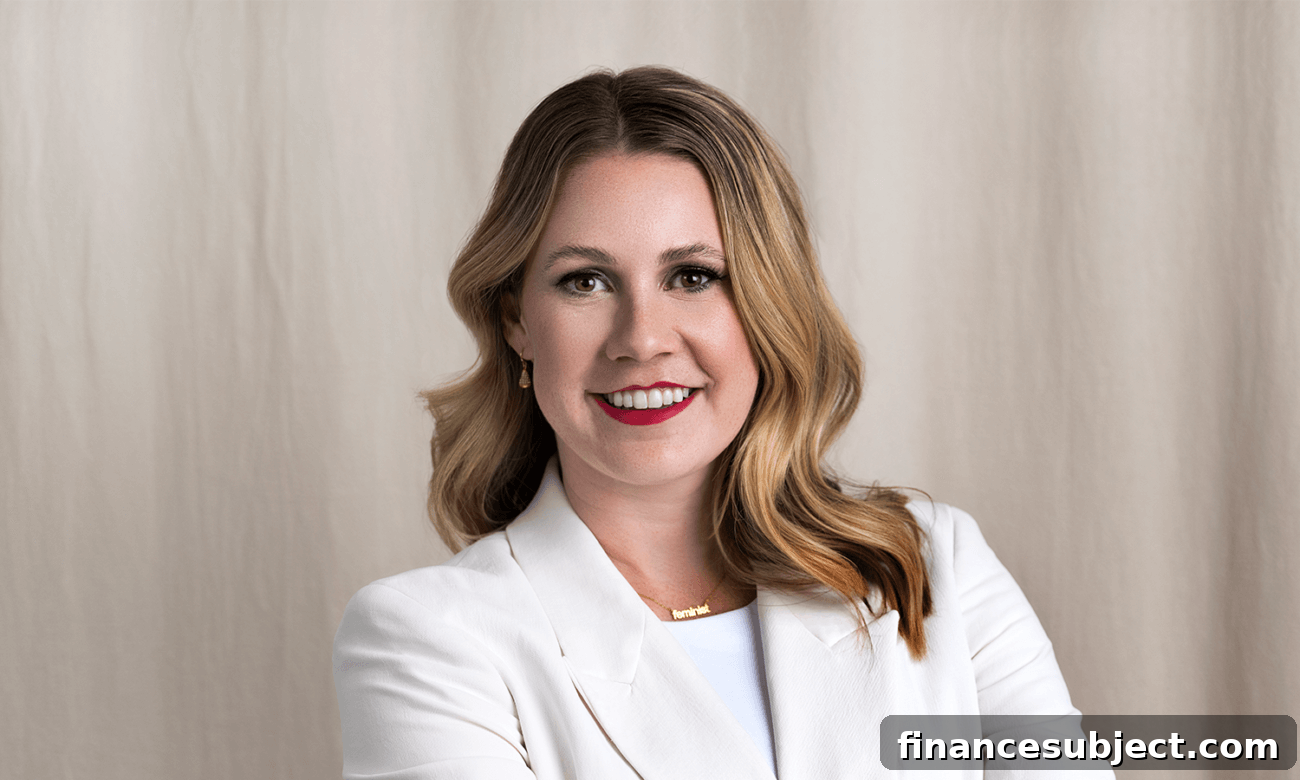
Janine Rogan, a Chartered Professional Accountant, recently analyzed the gender wealth gap in her first book, The Pink Tax: Dismantling a Financial System Designed to Keep Women Broke (Page Two Books, May 2023). Rogan is also the founder of The Wealth Building Academy, an online education platform she launched in 2020 to help women learn about investing and achieve financial independence. Her book makes clear that closing the gender wage gap remains a long-term challenge, but Rogan’s message is practical and empowering: women can challenge economic inequality by making informed financial decisions and investing consistently. Below, Rogan discusses her investing inspirations, early money memories, the best and worst financial advice she’s received, and the habits that have shaped her approach to money.
Who are your investing heroes?
One of the groups I admire most is The 51, the team behind a venture capital fund that prioritizes businesses and founders who traditionally face barriers to capital. Their work is shifting the investment landscape by directing resources where they’re often missing, and that creates opportunities for underrepresented entrepreneurs and communities.
How do you like to spend your free time?
I enjoy baking, reading, playing with my two-year-old, and planning trips. Travel is one of my favorite ways to recharge and connect with family and friends.
If money were no object, what would you be doing right now?
I’d live somewhere warmer and spend several months at a time living in different cities around the world. I’d also consider starting a charity to support single mothers—an issue I care about deeply.
What was your earliest memory about money?
My first money memory is running a lemonade stand with two boys from down the street. I pretended not to know the difference between a loonie and a quarter so I could keep the loonies. My dad corrected me later, but I like to think I was an early student in the realities of money and fairness.
What’s the first thing you remember buying with your own money?
Probably five-cent candies with friends or a pop music CD—small purchases that felt like independence at the time.
What was your first job?
After babysitting, my first salaried role was as a hostess at a restaurant near my house. I don’t recall exactly how I spent my first paycheck, but I was surprised by the taxes—likely I spent it at Starbucks.
What was the biggest money lesson you learned as an adult?
I learned that money can and will run out if you don’t plan for the future. Early in my career I spent impulsively on clothes and things that didn’t last or add real value. Once I stopped impulse buying and focused on building savings and investments, I felt much more secure and content. Understanding what truly matters to you is essential for making mindful spending choices.
What’s the best money advice you’ve ever received?
Invest for the long term. Social media makes it tempting to chase hot stocks or panic when the market dips, but a long-term perspective matters. Historically, the overall trend of the stock market has been upward, and staying invested through volatility typically rewards patience.
What’s the worst money advice you’ve ever received?
“Pay off all your debt before you start investing.” While it’s important to prioritize high-interest debt, delaying investing until all debt is cleared can cost you years of compound growth. Starting early—even with small amounts—lets time work in your favor and can make a substantial difference in long-term outcomes.
Would you rather receive a large sum of money all at once or a smaller amount regularly for life?
It depends on the size, but I’d choose a lump sum. A larger amount upfront gives more flexibility to invest and create impact immediately. Receiving a smaller regular payment for life sounds interesting, but I suspect I might spend more of it. With a lump sum, I can plan and invest strategically.
What do you think is the most underrated financial advice, tip or strategy?
Automate everything. We all make countless decisions daily; automating bill payments, transfers to savings and investment accounts, and contributions to retirement plans reduces cognitive load and prevents missed payments. Automation helps you build consistent habits without constant effort.
What is the biggest misconception people have about growing money?
That you need a lot of money to get started. I opened an investment with $100 at 19 and added $25 a month. It felt small, but what mattered was the habit of investing. Small, consistent contributions grow over time thanks to compound interest.
Can you share a money regret?
I avoid calling past decisions “regrets” and instead view them as lessons. I’ve paid penalties for over-contributing to my TFSA, held investments too long, and bought things I didn’t need. Those experiences taught me to be more deliberate. Everyone makes money mistakes; the key is learning from them.
What does the word “value” mean to you?
Value means what brings me joy and deep connection. Travel is a meaningful expense because it creates experiences and memories with loved ones. Above all, I value connection and quality time with family and friends—those are the expenses I’m happiest to make.
What’s the first major purchase you made as an adult?
Vehicles. I dislike shopping for cars: they’re expensive, depreciate quickly, and can lead to costly surprises. I tend to rely on others’ expertise because I don’t have formal training in automotive mechanics or valuation.
What’s your take on debt?
I’m neutral on debt. Society often stigmatizes it, but debt can be a useful tool when used strategically—real estate investors and business owners often use leverage to build wealth. The danger comes when people take on debt without understanding the risks or terms.
What was your most recent splurge?
A memorable dinner with my best friend at our favorite upscale sushi restaurant in Vancouver. Worth every penny for the company and the experience.
What is the last money-related book you read?
I don’t read many personal finance books. I focus more on economics and feminism, and I recently read Pay Up: The Future of Women and Work by Reshma Saujani.
What is something you always have in your wallet?
Either my credit card or my ID. I carry a minimal wallet—the one attached to the back of my phone—so usually only three cards. I also tend to forget Marriott Bonvoy key cards in my purses.
What is your favourite possession?
A simple Melanie Auld necklace engraved with our family initials. It comforts me when I’m stressed or missing loved ones and helps remind me of the priorities that guide my decisions.
What’s your next money goal?
To grow The Wealth Building Academy to six figures in revenue. I’m focused on scaling the business and helping more women gain financial confidence and skills.
My MoneySense quick questions
Rent or own?
Rent. I prefer not to own a home right now because of the expense and maintenance burdens. At the same time, many Canadian cities lack affordable rental options that support families.
Buy or lease?
Lease. I like the idea of returning a vehicle before major issues arise.
Save or invest?
Invest. Investing is my preferred way to build wealth because money typically grows more when invested than when simply saved.
Budget or not?
Not in a strict sense. I prefer high-level oversight rather than obsessing over every line item. That said, a practical budget or framework usually exists for any household that wants financial stability.
Read more My MoneySense profiles:
- The one thing influencers Steph & Den want you to know about retirement
- Meet Michelle Hung: The Sassy Investor who shows clients how to realize their worth
- Kristy Shen on living the FIRE life and using money to “buy back time”
- Shannon Lee Simmons defines “emotional return on investment” and her take on personal debt
- Mixed Up Money’s Alyssa Davies on striving for CoastFIRE, the value of time, and more